
Introducing Soils 101: Learning Soil Science to Build Soil Health
A new, cost-free course provides a comprehensive introduction to soil science and its application to agricultural management.
Author: Dani Gelardi
March 5, 2026
Interest in soil health has grown dramatically over the past decade. Farmers are experimenting with cover crops and reduced tillage, policymakers are investing in climate-smart agriculture, and consumers are increasingly aware of the links between soil, environmental quality, and nutrition. At the same time, farm advisors are being asked to deliver more sophisticated guidance grounded in soil processes.
Despite broad public interest, there is a lack of accessible, high-quality training in soil science and soil health management. Many existing courses are oversubscribed, designed for narrow audiences, or are not relevant to Washington’s soils and cropping systems. This leaves a gap for Washington growers, technical assistance providers, agronomists, and members of the public who want a strong grounding in the science behind soil health.
A new, cost-free curriculum from the Washington Soil Health Initiative aims to change that.
Soils 101: Learning Soil Science to Build Soil Health
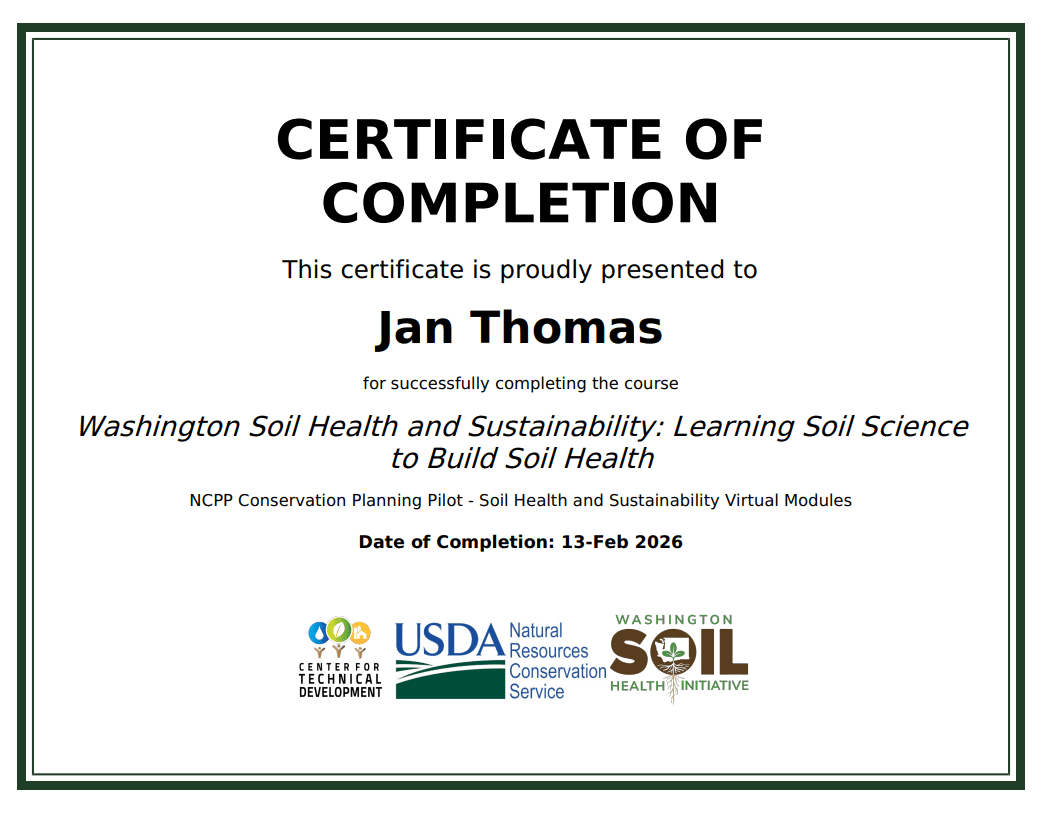
Soils 101: Learning Soil Science to Build Soil Health is a newly launched, FREE, and publicly available online course developed through a two-year collaboration between the Washington State Department of Agriculture and the Center for Technical Development.
The course provides a comprehensive introduction to soil science and its application to agricultural management, balancing scientific rigor and accessibility. Filling a critical training gap, Soils 101 creates a scalable, on-demand learning option for Washington practitioners.
Excitingly, the course has been approved by the Natural Resources Conservation Service (NRCS) for Washington state as an equivalent to their Soil Health and Sustainability for Field Staff course.
This means eligible Conservation District and NRCS staff can receive planner credit for completing it, alleviating pressure on the NRCS waitlist, supporting workforce development, and expanding Washington’s capacity to steward our soil.
What the Course Covers
Soils 101 consists of interactive modules that build a strong foundation in soil science and soil health management. Topics include:
- Soil health principles
- Soil forming factors
- Soil physical properties
- Soil water dynamics
- Nitrogen and carbon cycles
- Soil chemistry and fertility
- Soil biology
- In-field soil health assessments
- Best management practices
- Social and economic constraints on soil health management
For those eligible for planner credits, an additional in-person field component will be required. Details will be announced shortly.
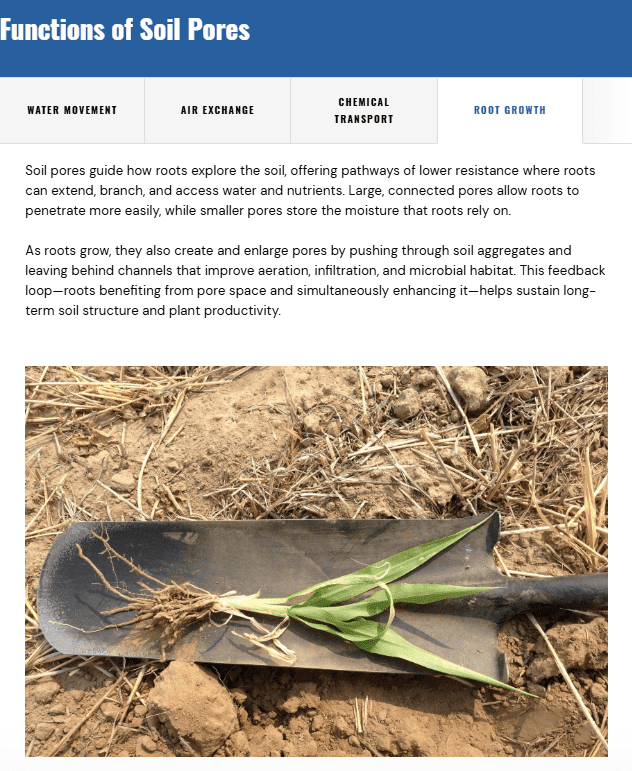
Rather than presenting soil health as a checklist of
one-size-fits-all practices, the course emphasizes the why
behind management outcomes.
Students explore how soils—with their inherent physical and chemical properties—function as biological, dynamic systems shaped by and shaping their environment. Soil health is explored through a scientific lens, as well as through the social, economic, and environmental contexts that constrain management decisions and present tradeoffs. The goal is for students to learn how to tailor universal soil science principles to site-specific conditions.
Each module begins with learning objectives so participants know what to expect. Content is delivered through interactive materials, readings, and videos that accommodate different learning styles. Modules conclude with short knowledge checks that reinforce key concepts and allow learners to gauge their understanding.
Who Should Take Soils 101?
Soils 101 was designed for a wide audience in Washington, including:
- Technical assistance providers
- Agronomists and crop advisors
- Conservation district and NRCS staff
- Farmers and land managers
- Students and early-career professionals
- Interested members of the public
No advanced background in soil science is required. And while course fundamentals apply beyond Washington, registration is limited and only available to Washingtonians at this time.
Learn More and Enroll
As soil health continues to gain attention, the partners behind Soils 101 aim to democratize access to soil science knowledge, while building Washington’s enthusiasm and expertise in soil health management.
To start learning:
1. Make a free account at CTD Online Learning (www.wactd.skyprepapp.com)
2. Locate Washington Soil Health and Sustainability: Learning Soil Science to Build Soil Health in the Course Catalog on the top banner
3. Enroll!
And That’s Not All!
Soils 101 partners are continually seeking to improve our work. Exciting future features include a series of embedded videos of Washington farmers and scientists at work; an in-person soil health workshop for students who’ve completed the course; practice- and crop-specific deep dives; and continued refinement based on user feedback.
As always, we love to hear from you with questions, comments, and ideas.
- For course registration or to discuss Washington training broadly: training@wactd.org.
- For course content, soil health, or ideas for future projects: WaSHI@agr.wa.gov

Dani Gelardi
Dani Gelardi is the Senior Soil Scientist and Climate Coordinator at the Washington Department of Agriculture where she leads soil and climate efforts for the agency including the Washington Soil Health Initiative.
This article was published by the Washington Soil Health Initiative. For more information, visit wasoilhealth.org. To have these posts delivered straight to your inbox, subscribe to the WaSHI newsletter. To find a soil science technical service provider, visit the Washington State University Extension website or the Washington State Conservation District website.