
© Leslie Michel, WSDA
Announcing WSDA’s Climate Smart Equipment Grants Program in Fall 2026
A new grant program supports farmers and the environment by making conservation practices easier and cheaper to implement.
Author: Dani Gelardi
June 15, 2026
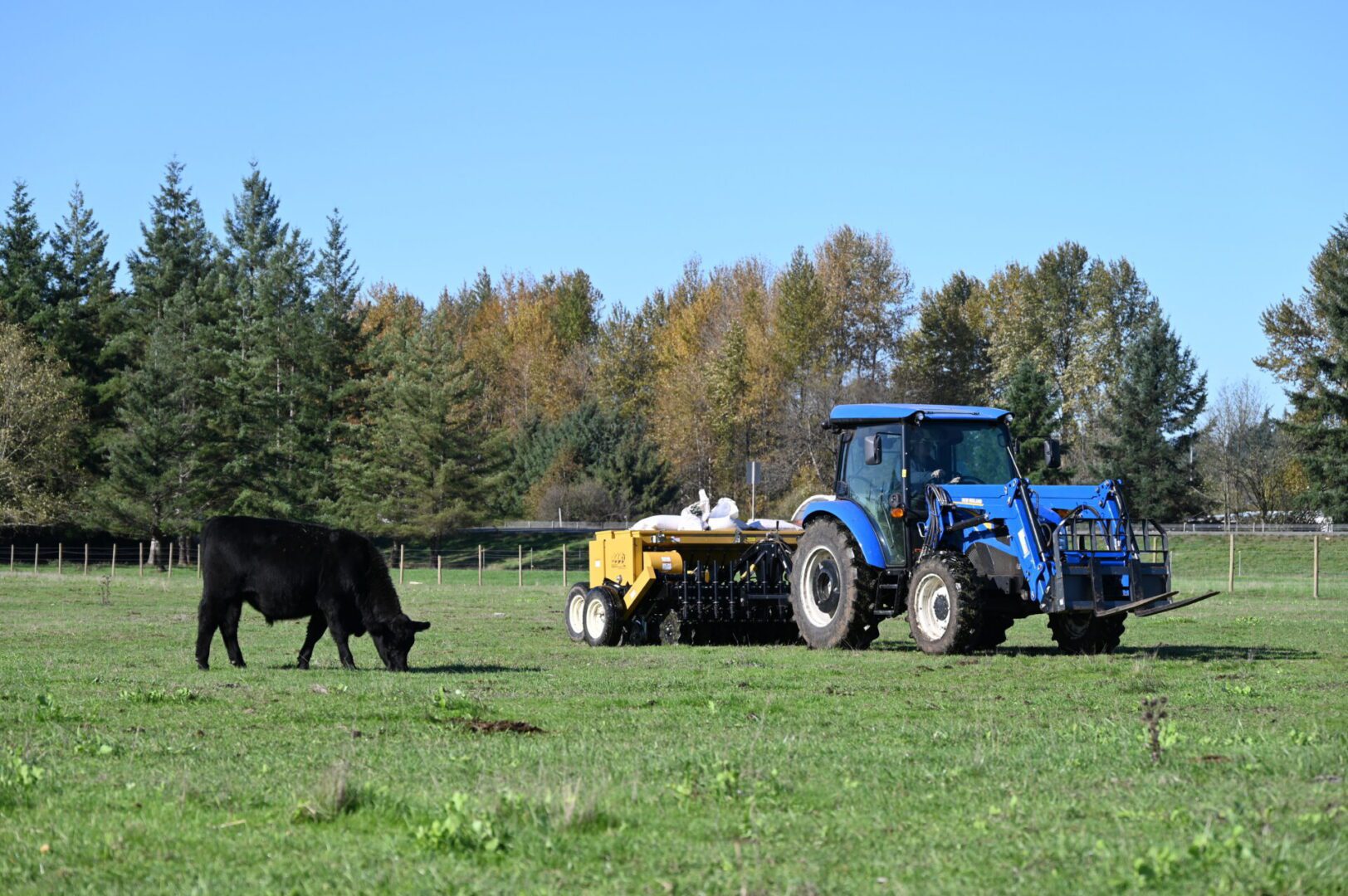
In Fall 2026, the Washington State Department of Agriculture will launch a new $4.6 million grant program to help producers purchase equipment that reduces greenhouse gas (GHG) emissions while improving soil health and farm profitability. Funded through Washington’s Climate Commitment Act (CCA), the program represents one of the largest direct investments in regenerative agriculture in state history. At a time marked by budget shortfalls, shuttered conservation programs, and increasing threats to agricultural viability, this investment arrives at a critical moment for Washington producers.
WaSHI thanks the many agricultural and environmental partners who helped make this program possible, including The Nature Conservancy, Tilth Alliance, and leadership from the potato, onion, and tree fruit industries. The program reflects years of work to ensure that agriculture has a meaningful place within Washington’s climate investments, and that funding is practical, producer-focused, and grounded in real operational needs.

Expanding a 2025 Pilot Program
The upcoming program builds off a successful 2025 pilot in which WSDA awarded approximately $1 million to 12 farm operations across the state. Funded projects included no-till drills, GPS guidance systems, precision fertilizer and pesticide application equipment, and electrification upgrades. Collectively, these projects reduced an estimated 5,641 metric tons CO2e—equivalent to removing 1,316 passenger vehicles from the road for one year— at an estimated cost of $162.60 per ton of CO2e reduced. This makes agricultural equipment upgrades some of the most cost-effective CCA investments to date.
Importantly, the benefits of these projects extend beyond GHG reductions alone. Many of the supported practices also reduce fuel use, improve nutrient efficiency, increase soil organic matter, reduce erosion, improve water infiltration, and strengthen resilience to drought and extreme weather. In many cases, these investments also improve operational efficiency and reduce long-term input costs for producers.
“This was an amazing process that went so smooth. It is very exciting to have a strip till machine on our yard ready to put in the field in a couple of weeks, when two months ago it was still only a distant dream.”
– 2025 Farmer Grant Recipient

Looking Forward to the Fall 2026 Climate Smart Equipment Grants Program
While final details of the 2026 program are still under development, producers can expect applications to open directly through WSDA in Fall 2026. Two distinct application tracks will be available.
The first track will support equipment tied to established NRCS Conservation Practice Standards (CPS) with well-developed GHG accounting methodologies. This category is intended to streamline funding for practices with a strong existing scientific and technical foundation. Likely examples include no-till drills, compost spreaders, precision pesticide and fertilizer application equipment, and similar technologies associated with established conservation practices. Applicants under this track will not be required to independently estimate GHG reductions.
The second track is intended to support emerging climate-smart practices that may not yet be fully represented in existing federal GHG modeling tools such as COMET, but for which there is growing scientific evidence of climate benefits. This category is designed to create space for innovation while still maintaining scientific rigor and accountability. Potential examples may include advanced precision agriculture technologies, novel manure management systems, climate-smart livestock equipment, or emerging soil amendment approaches.
Applicants under the emerging practices track will be required to submit a well-cited estimate of expected GHG reductions per acre, along with supporting scientific literature. WSDA is developing a scientific review process to ensure funded projects are supported by credible evidence.
Additional details regarding reimbursement rates, eligibility requirements, historically underserved applicant categories, and application procedures are expected later this year.
Program at a Glance:
- Estimated opening date: Fall 2026
- Eligible projects: Equipment that reduces production-related GHGs
- Total funding: $4.6 million
- Eligible applicants: Commercial Washington-based farms, ranches, and aquaculture operations
- Funding type: Reimbursement grants
- Application process: First-come, first-served in multiple independent queues
More information, including application materials and program guidance, will be posted as it becomes available at the WSDA Grants Webpage. Reach out to WaSHI@agr.wa.gov with questions.

Dani Gelardi
Dani Gelardi is the Senior Soil Scientist and Climate Coordinator at the Washington Department of Agriculture where she leads soil and climate efforts for the agency including the Washington Soil Health Initiative.
This article was published by the Washington Soil Health Initiative. For more information, visit wasoilhealth.org. To have these posts delivered straight to your inbox, subscribe to the WaSHI newsletter. To find a soil science technical service provider, visit the Washington State University Extension website or the Washington State Conservation District website.