
Photo by Leslie Michel, WSDA
First Joint NRCS, CTD, and WaSHI Soil Health Training
Learn about the first joint soil health training for Soils 101: Learning Soil Science to Build Soil Health training day.
Author: Kristoffer Mills, NRCS
September 3, 2026
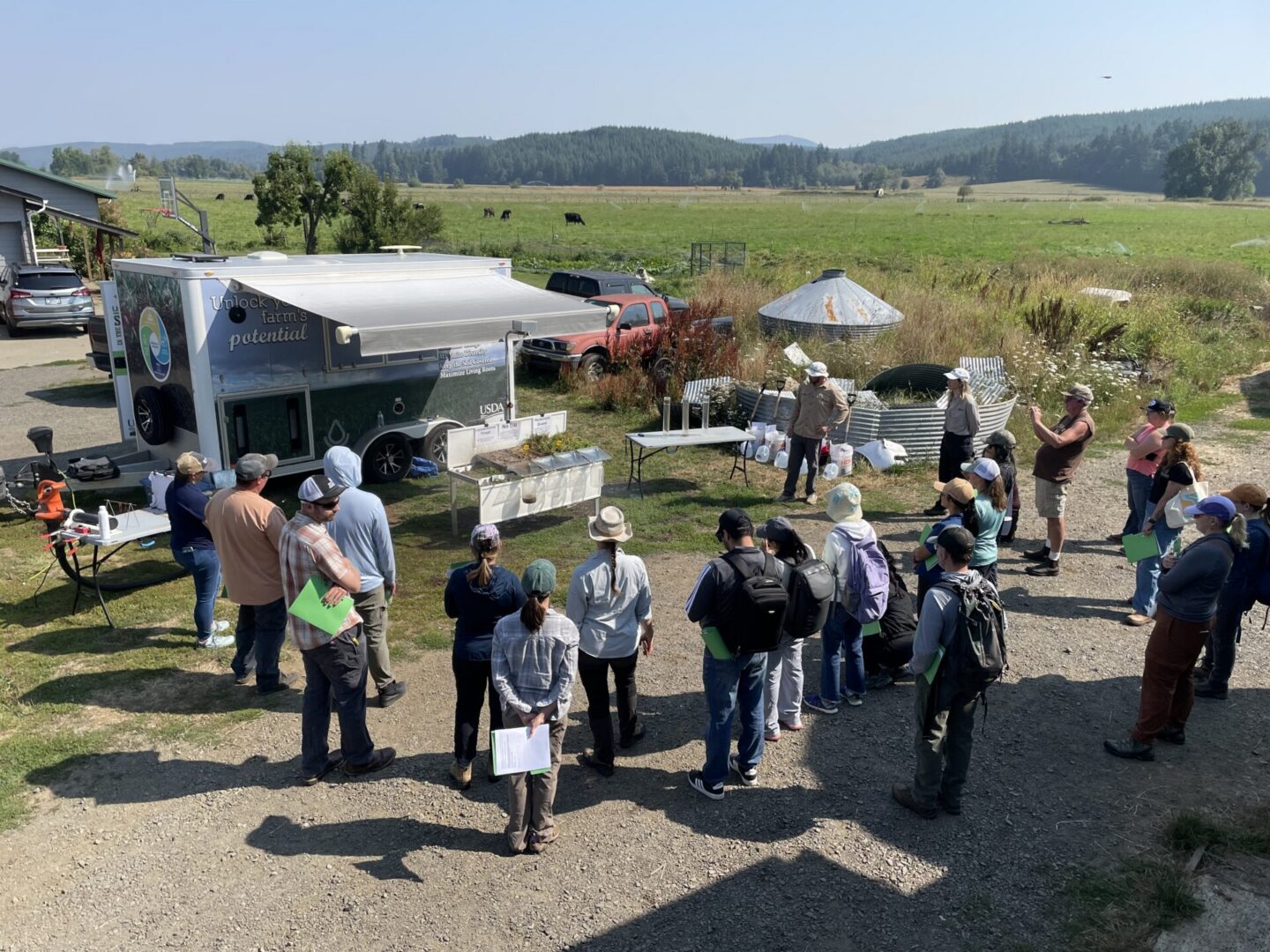
CURTIS, Wash. – The Natural Resources Conservation Service in Washington (NRCS-WA) the Washington State Department of Agriculture (WSDA), and the WA Center for Technical Development (CTD) collaborated to bring In-Field Soil Health Assessment Training to Mallonee Farms in Curtis on Aug. 6.
The field training session was the hands-on component of the recently developed hybrid course Soils 101: Learning Soil Science to Build Soil Health. The course, developed in partnership by the Washington Soil Health Initiative (WaSHI), CTD, and NRCS, trains agricultural professionals on soil mechanisms and functions, soil health indicators, and best management practices, and guides them in helping farmers and ranchers develop soil health plans. Approved as an equivalent training course for the NRCS Sustainability and Soil Health Course, it also provides credits for certified planner certifications. Participants from across the state represented Master Gardeners, Washington State University, Conservation Districts, Seattle Public Schools, community colleges, and WSDA.
Maynard Mallonee, owner of Mallonee Family Farm, hosted the event on his property which is an organic dairy operation that has been in in family since 1949. The farm was one of the first organic dairies in Washington State, and they have been producing organically certified milk since 2004.
The operation uses no till drill practices in the permanent grazing pastures. Mr. Mallonee mentioned that his grandfather “didn’t believe in plowing” so has implemented grazing practices that reduce tilling and promote healthy soils.
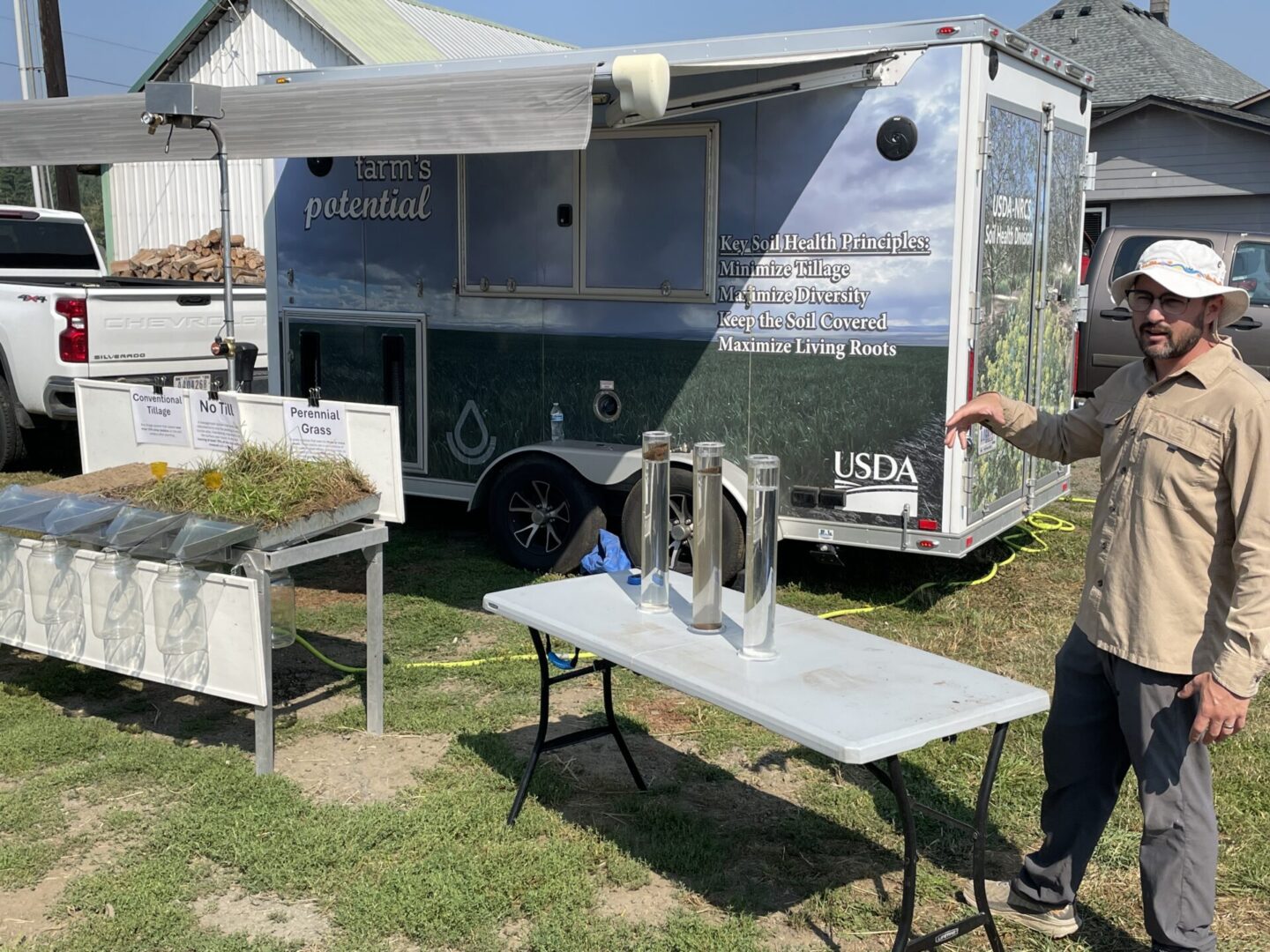
NRCS-WA State Resource Soil Scientist, Max Ross, along with WSDA Soil Scientists Dani Gelardi and Leslie Michel, provided instruction throughout the day. Max presented the rainfall simulator, wind erosion simulator, and slaking test demonstrations during the training. He used perennial grasses from pastures on the farm, and samples of no-till and conventional till soils to demonstrate the characteristics of healthy soils.
The Soils 101: Learning Soil Science to Build Soil Health course is open to everyone. You can learn more on the Center for Technical Development website.

Kristoffer Mills
Kristoffer Mills is the Washington State Outreach Coordinator for the Natural Resources Conservation Service.
This article was published by the Washington Soil Health Initiative. For more information, visit wasoilhealth.org. To have these posts delivered straight to your inbox, subscribe to the WaSHI newsletter. To find a soil science technical service provider, visit the Washington State University Extension website or the Washington State Conservation District website.