
What’s in the WaSHI Toolbox?
Discover the tools and people behind WSDA’s soil health work.
Author: Jadey Ryan, WSDA
September 2, 2026
Our work has changed quite a bit since the Washington Soil Health Initiative (WaSHI) began. At the Washington State Department of Agriculture (WSDA), we initially focused on developing soil sampling protocols, training conservation professionals, and collecting soil data. Today, that work has expanded to address barriers to getting soil health practices on the ground. The result is a growing toolbox of tools, resources, and programs.
What can the toolbox help you with?
Working with partners across WaSHI and beyond, we’re building resources to help people understand soils, make informed decisions, assess and plan conservation efforts, and find support for improving soil health.
- Need help understanding lab data or making a nutrient management decision? We’re building decision-support tools that turn soil data into information people can better understand and use.
- Want to find opportunities to build on your current conservation practices? We’re redesigning STAR (Saving Tomorrow’s Agriculture Resources) to help producers assess what they’re already doing, identify areas for improvement, and connect with technical and financial resources.
- Need financial help to try something new? The Climate Smart Equipment Grant Program helps producers invest in equipment that can improve soil health and reduce greenhouse gas emissions.
- Want to learn from another farmer? The Soil Health Ambassador Program connects producers with peers who can share firsthand experience and practical lessons from their farms.
- Looking for a place to start learning about soil health? The Soils 101: Learning Soil Science to Build Soil Health Curriculum is available to producers, educators, conservation professionals, and anyone interested in learning more.
Who’s building the toolbox?
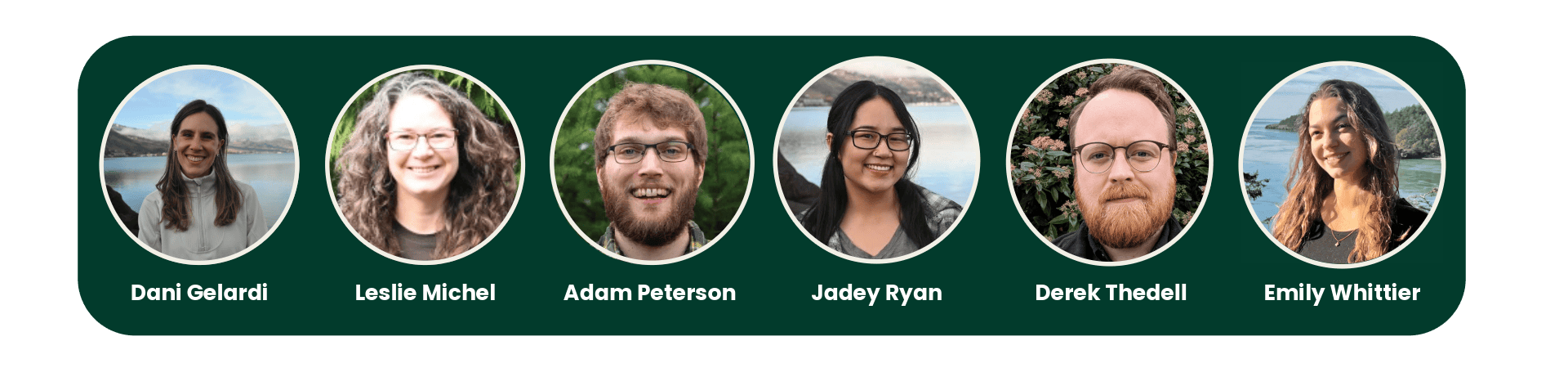
It takes a mix of people to keep all this work moving. Dani Gelardi and I serve as WSDA’s WaSHI leads. Dani focuses on statewide conservation strategy as WSDA’s Director of Conservation Policy & Research, while I coordinate the day-to-day programs and people behind WaSHI’s work at WSDA.
Our team brings together a wide range of expertise and experience:
- Adam Peterson (Agronomist) brings agronomy, nutrient-management, and GIS expertise to our decision-support work.
- Derek Thedell (Climate Services Technical Specialist) provides technical expertise in the science, systems, and processes behind our programs.
- Emily Whittier (Market and Incentives Specialist) focuses on finding, creating, and promoting economic incentives for soil health practices.
- Leslie Michel (Soil Scientist) connects soil science with on-the-ground experience and relationships with producers and conservation professionals.
We each bring different perspectives and skills to our work, but we share a common goal: helping people find practical information, tools, and support to improve soil health.
See the toolbox in action
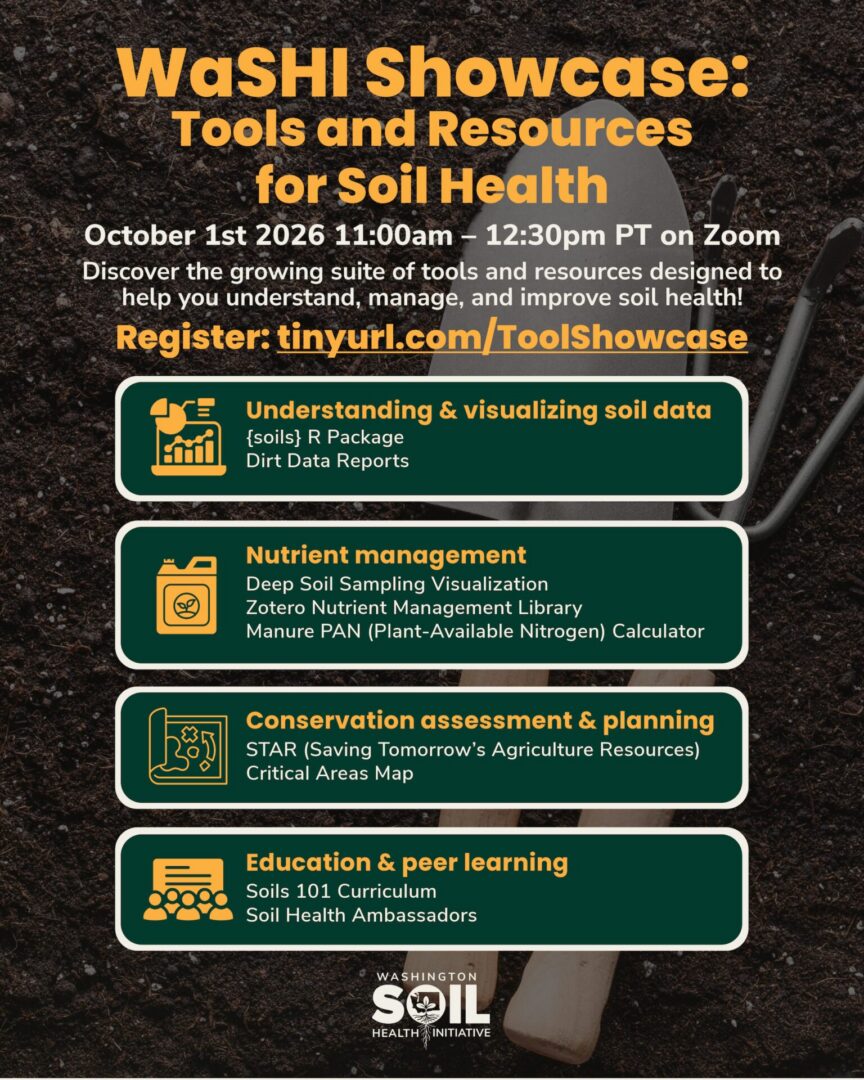
Want to see some of these tools and resources in action? On October 1st from 11:00 AM to 12:30 PM PT, we’re hosting the WaSHI Showcase: Tools and Resources for Soil Health.
It’s a chance to explore what’s available, see demonstrations, ask questions, and learn how these resources can fit into your own work.
We hope to see you there!

Jadey Ryan
Jadey Ryan is the WSDA WaSHI Lead and a Data Scientist for the Washington State Department of Agriculture Natural Resources and Agricultural Sciences section.
This article was published by the Washington Soil Health Initiative. For more information, visit wasoilhealth.org. To have these posts delivered straight to your inbox, subscribe to the WaSHI newsletter. To find a soil science technical service provider, visit the Washington State University Extension website or the Washington State Conservation District website.