Central Washington Tree Fruit Systems LTARE Site

The goal of the Washington Soil Health for Tree Fruit LTARE is to develop and evaluate management systems which optimize fruit yield and quality through sustainable soil health management practices. Objectives include:
- Establish best practices and standard operating procedures for optimal soil health.
- Reduce variability in orchards with organic matter amendments or other soil health building practices.
- Reduce bitter pit and other disorders related to nutrient uptake and water/plant stress.
- Establish soil health practices which conserve water and buffer environmental stress in the face of climate change.
- Identify long-term sustainable approaches to managing soil borne disease and nematodes.
Cropping system and region
Central Washington Tree Fruit Systems
Location
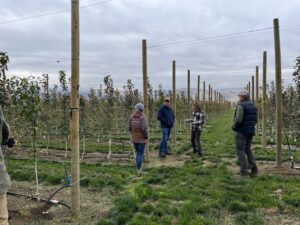
WSU - Tree Fruit Research and Extension Center - Sunrise Farm in Wenatchee, Washington.
Climate and soil type
Annual high temperature: 63 F
Annual low temperature: 42 F
Average annual precipitation: 9 in
Primary soil type: Pogue fine sandy loam
Established
2023
Area
Three trials across 7.5 acres
Site team
Tianna DuPont - Tree Fruit Extension Specialist
Sarah Gafner-Bergeron - LTARE Coordinator
Lee Kalcsits - Tree Fruit Physiologist
Tracy Somera - Microbiologist
Devin Rippner - Soil Scientist
Jessica Waite - Geneticist
Kelly O'Neil - Orchard Manager
Tom Forge - Nematologist
Site advisory committee
Keith Beamann - G.S. Long
Michael Burns - Zirkle Fruit
Glade Brosi - Wilbur Ellis
Mike Brownfield - Orchardist
Paul Carter - McDougall Fruit
Jeff Cleverina - Columbia Fruit
Chelsea Durfey-Campbell - Lighthouse Farms and Natural Selection Compost
Ray Fuller - Orchardist
Apple Otte - Orchardist
Rod Wedel - Stormy Mountain Farm
Orchard soil health resources
Partner with us!
The Soil Health LTARE site offers a unique opportunity to partner on soil health research. LTARE sites are designed to provide a platform for collaboration. Each site has designated areas available to overlay microplot experiments over core long term treatments. For example, the Tree Fruit LTARE site plots have 1 of 3 rows designated as microplot experiments bordering center sampling rows. Adjoining border rows are designated for non-destructive demonstrations.
What we can provide: Long-term soil health data including biological, physical and chemical properties are tracked at this site. Our fantastic team maintains 7.5 acres of apples and cherries at this site. Partner researchers leverage significant investment from the Washington State Soil Health Initiative.
Apply to participate: If you are interested in a project or demonstration at this site, please contact Tianna DuPont for an application form: tianna.dupont@wsu.edu. Fill out the application form and return before November 1 for bi-annual review by our stakeholder advisory board and project team.
Soil Health Trials
Trial 1 and Trial 3:
Experiment 1 planted to honeycrisp apple on Geneva 214 rootstock, and experiment 3 planted to Skeena cherry investigate organic matter additions designed to buffer environmental stress and improve fruit quality. Treatments include a high carbon treatment with compost and grass cover crops mown-and blown into the tree row, a wood chip mulch applied every three years, an organic treatment similar to the high carbon treatment with cultivation and a grower standard.
Standard

Mulch Additions

Integrated Organic

High Carbon Additions

Trial 2:
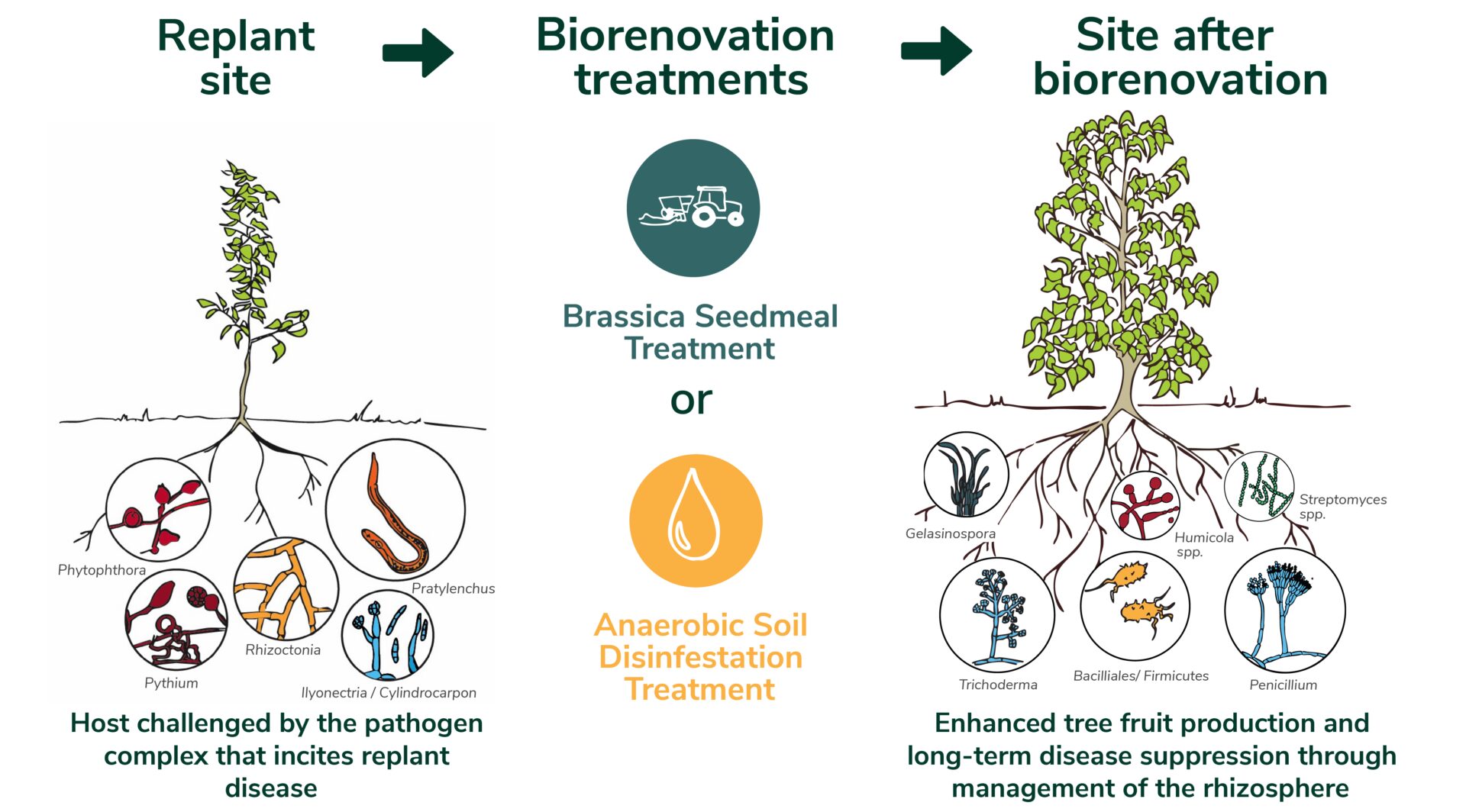
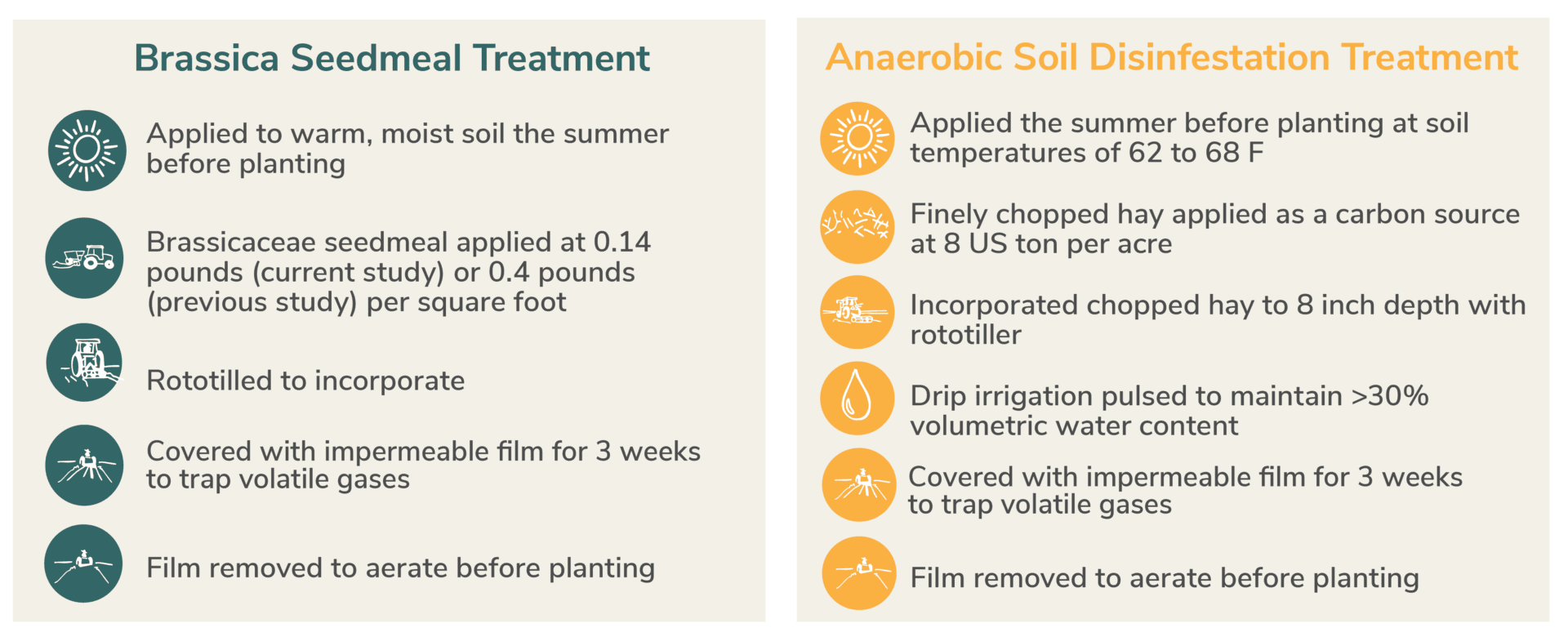
Experiment 2 is focused on identifying long-term sustainable approaches to manage soilborne disease and nematodes. Treatments include a brassica seedmeal biorenovation treatment, an anaerobic soil disinfestation treatment, fumigation as the standard practice and a no-treatment control.
Updates from the Wenatchee LTARE site

WaSHI Annual Report FY25