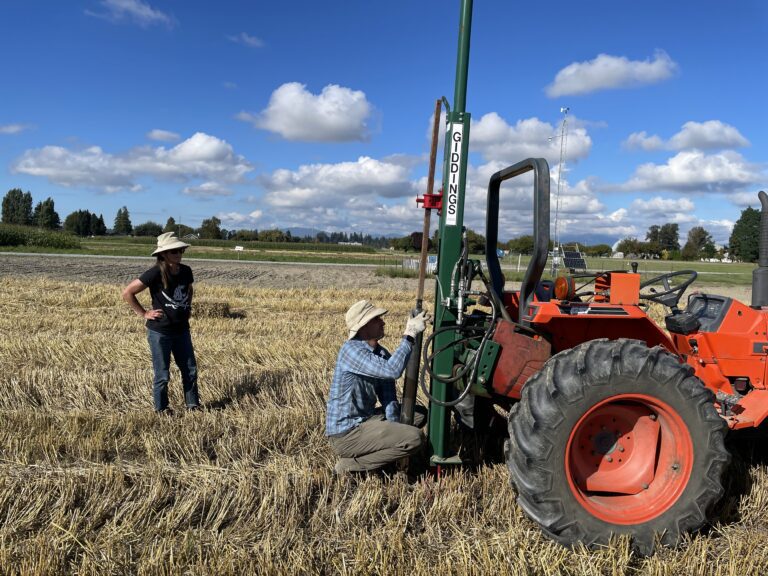
Northwestern Washington Potato-Based Annual Cropping Systems LTARE Site

Key Objective
Identify and promote management practices that enhance soil health, carbon sequestration, and the environmental and economic sustainability of agricultural systems in northwestern Washington.
Cropping System and Region
Northwestern Washington Potato-Based Annual Cropping Systems
Location
WSU - Northwestern Washington Research and Extension Center in Mount Vernon, Washington
Climate and Soil Type
Annual high temperature: 59 F
Annual low temperature: 42 F
Average annual precipitation: 33 in
Primary soil type: Skagit silt loam
Established
2021
Area
16 acres with four primary treatments
Site team
Gabriel LaHue - Soil Scientist
Deirdre Griffin LaHue - Soil Scientist
Chris Benedict - Weed Scientist
Chakradhar Mattupalli - Plant Pathologist
Louie Nottingham - Entomologist
Liz Myhre - Lead Technician
Ed Scheenstra - Scientific Assistant
Bob Hulbert - LTARE Farm Lead
Doug Jensen - NWREC Farm Lead
Graduate students
Austin Kerr, PhD, Soil Science, WSU
Paul Martinez, PhD, Soil Science, WSU
Annah Young, PhD, Soil Science, WSU
Adriana Barsan, MS, Entomology, WSU
Beck Klein, PhD, Soil Ecology, Johns Hopkins University
Site advisory committee
Jack Hulbert, Skagit Seed Services
Darrin Morrison, Morrison Farms
John Roozen, Washington Bulb
Wylie Thulen, Pioneer Potatoes
Jason Vander Kooy, Harmony Dairy
Torey Wilson, Wilbur Ellis
Investigating reduced disturbance and increased organic matter additions
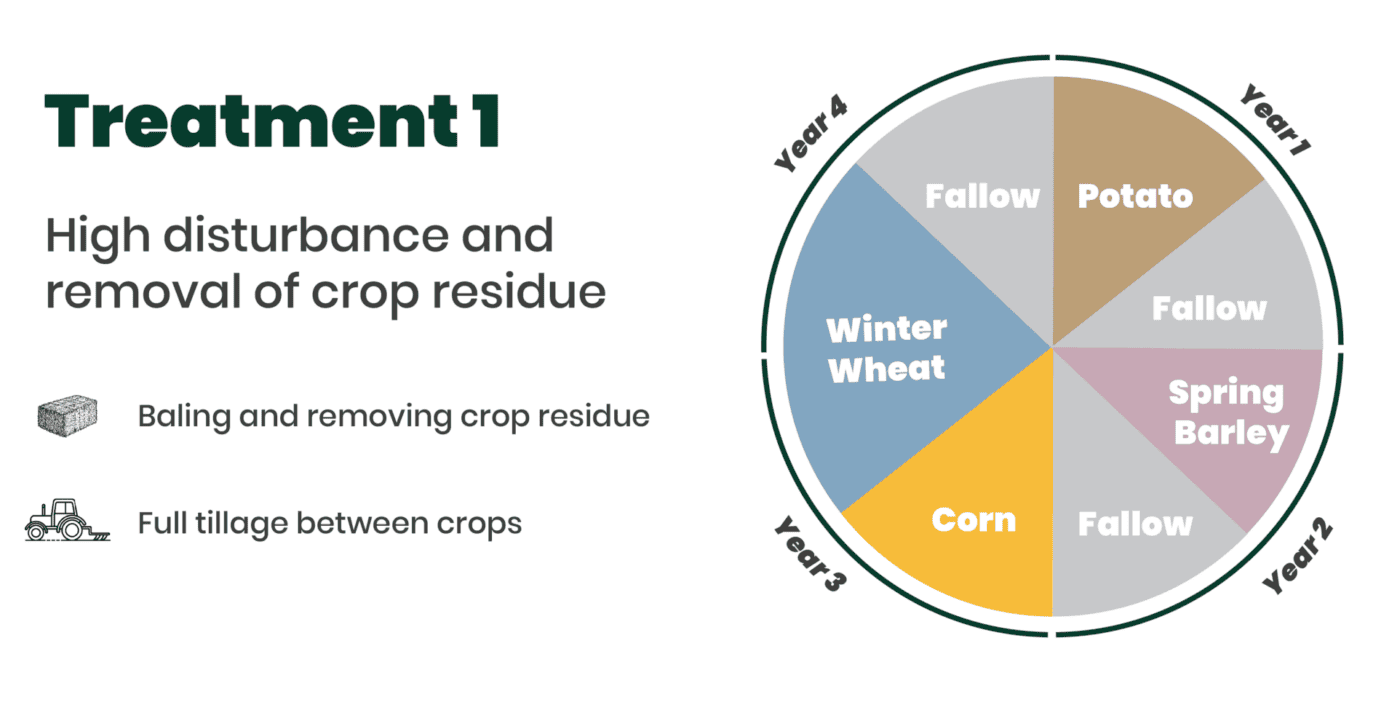
Treatment 1:
High disturbance and removal of crop residue in the typical crop rotation. Year 1: Potato - Fallow. Year 2: Spring Barley - Fallow. Year 3: Corn - Winter Wheat. Year 4: Winter Wheat - Fallow
- Baling and removing residue
- Full tillage between crops
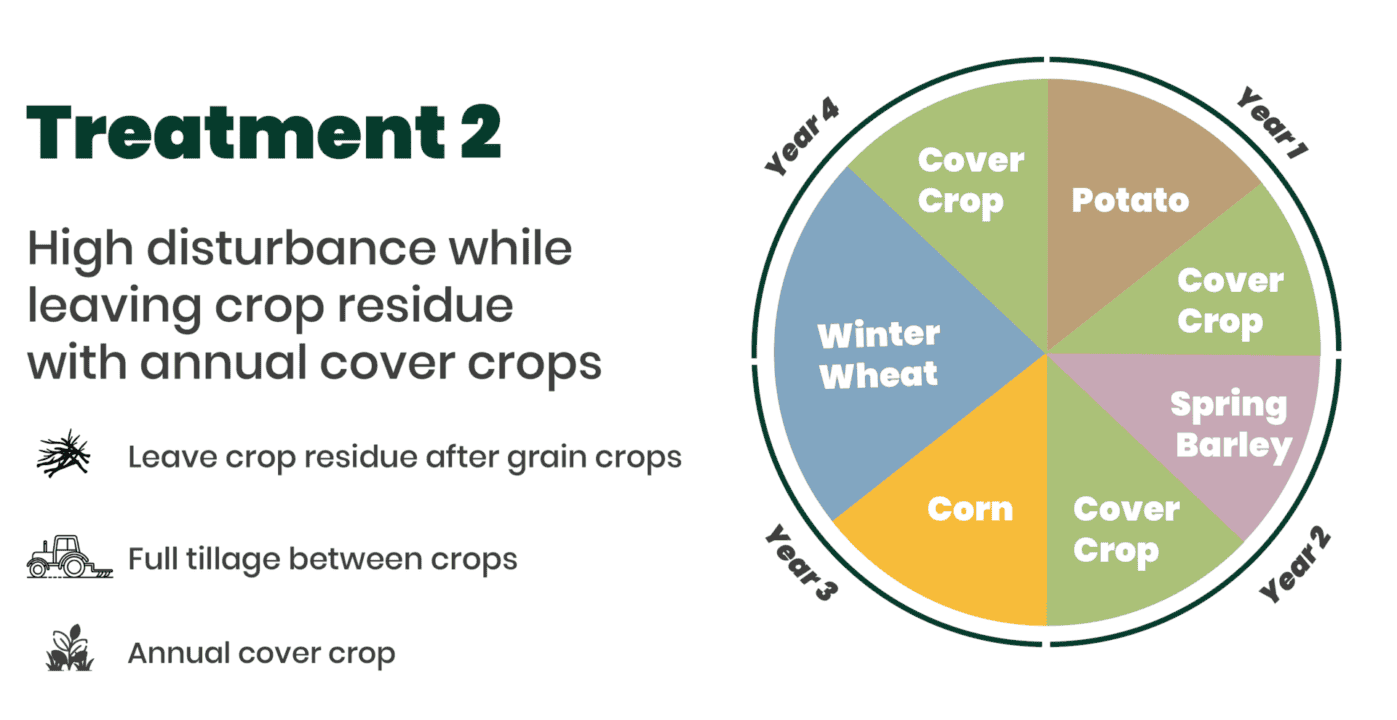
Treatment 2:
High disturbance while leaving crop residue with annual cover crops in the typical crop rotation. Year 1: Potato - Cover Crop. Year 2: Spring Barley - Cover Crop. Year 3: Corn - Winter Wheat. Year 4: Winter Wheat - Cover Crop.
- Leave crop residue after grain crops
- Full tillage between crops
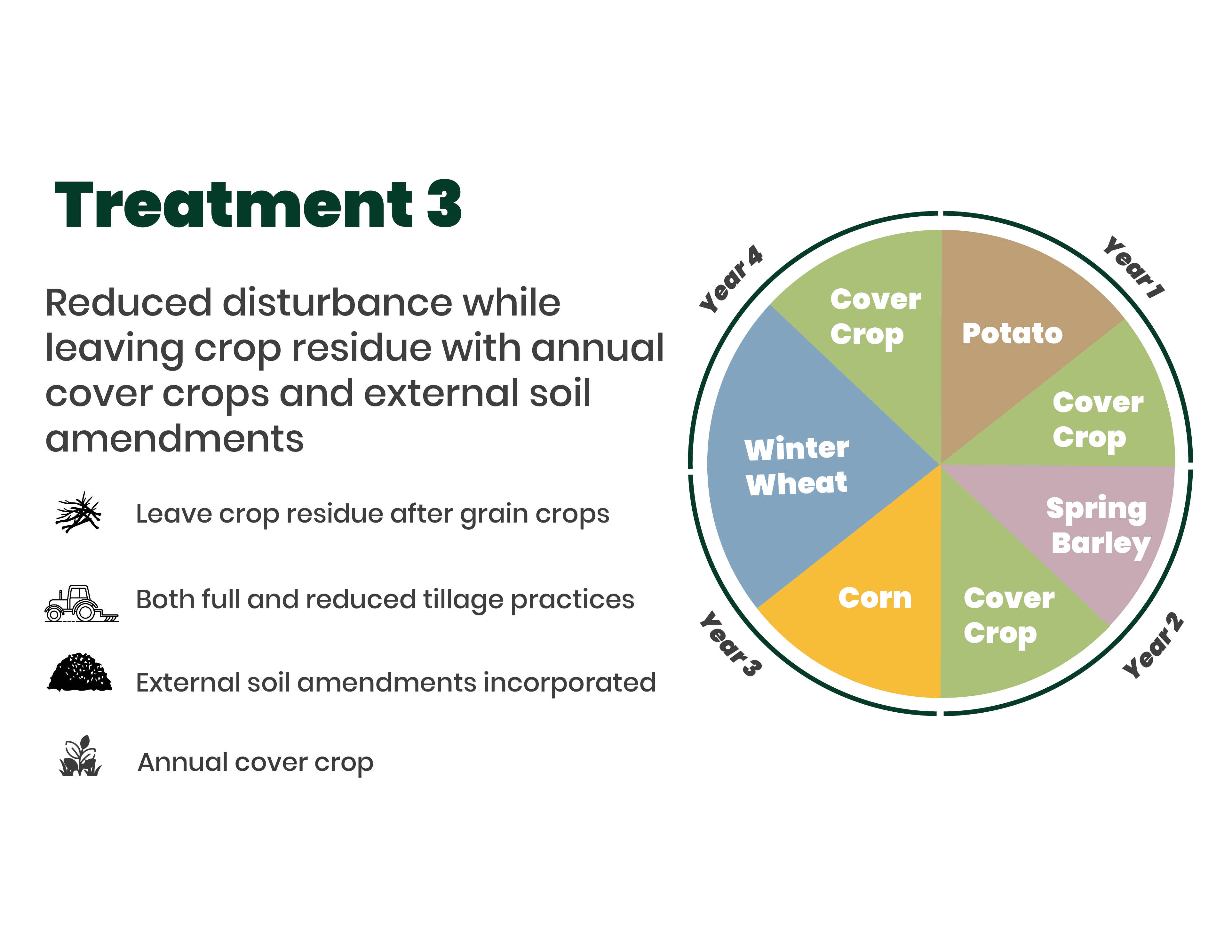
Treatment 3:
High disturbance while leaving crop residue with annual cover crops in the typical crop rotation. Year 1: Potato - Cover Crop. Year 2: Spring Barley - Cover Crop. Year 3: Corn - Winter Wheat. Year 4: Winter Wheat - Cover Crop.
- Leave crop residue after grain crops
- Both full and reduced tillage practices
- External soil amendments incorporated
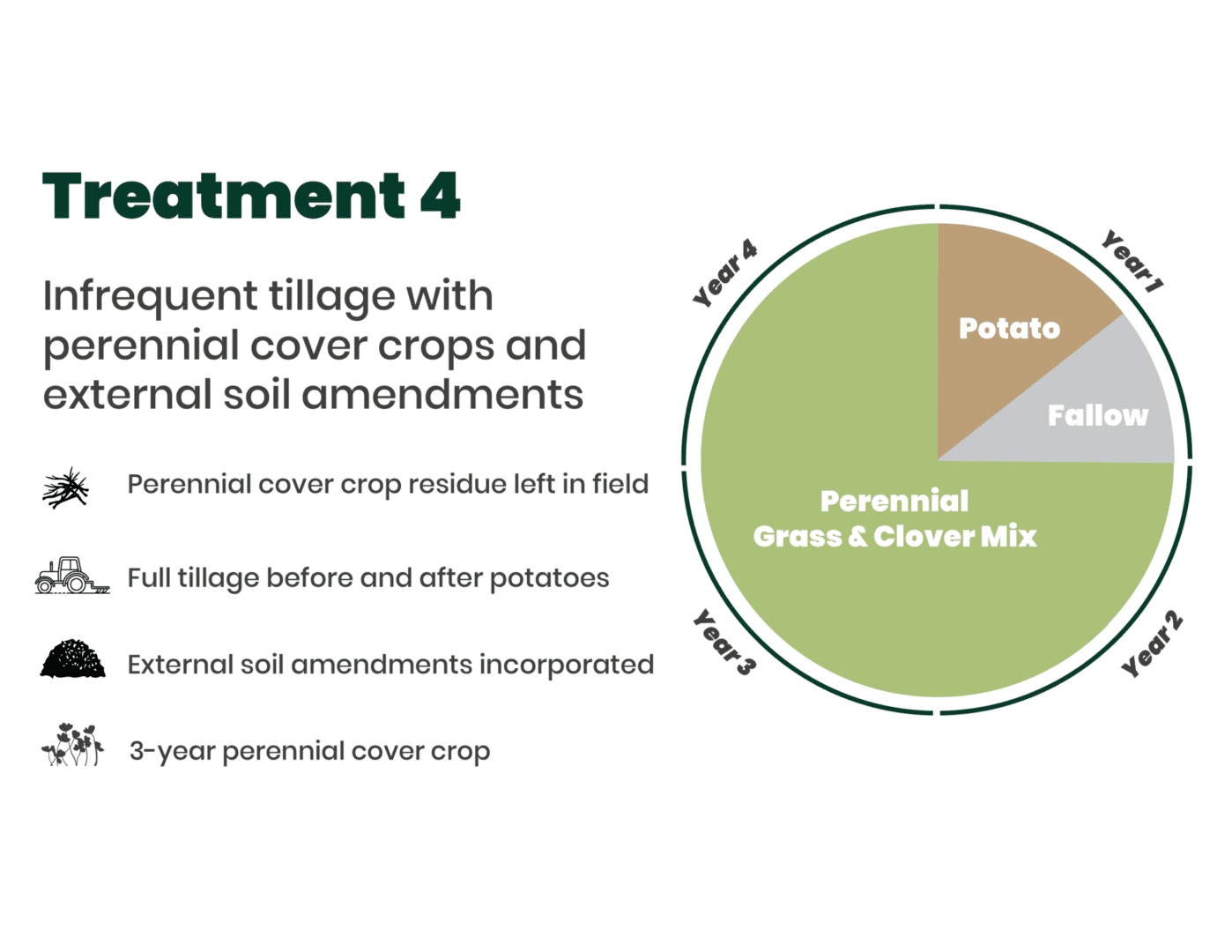
Treatment 4:
Infrequent tillage with perennial cover crops and external soil amendments in a potato rotation. Year 1: Potato - Fallow. Year 2-4: Perennial Grass & Clover Mix
- Perennial cover crop residue left in the field
- Full tillage before and after potatoes
- External soil amendment incorporated
Resources from the Mount Vernon LTARE Site