
© Leslie Michel, WSDA
Soil Health Ambassadors: Shahnnen Elizabeth-Head & Alex Head – Farming Soil with Drone Technology
Learn from Shahnnen Elizabeth-Head and Alex Head of Estelbrook Farms & Vineyard about using drone technology to reduce soil compaction and build resilience in a vineyard system.
Author: Leslie Michel, Washington State Department of Agriculture, Quotes from Shahnnen Elizabeth-Head and Alex Head, Estelbrook Farms & Vineyard
March 5, 2026
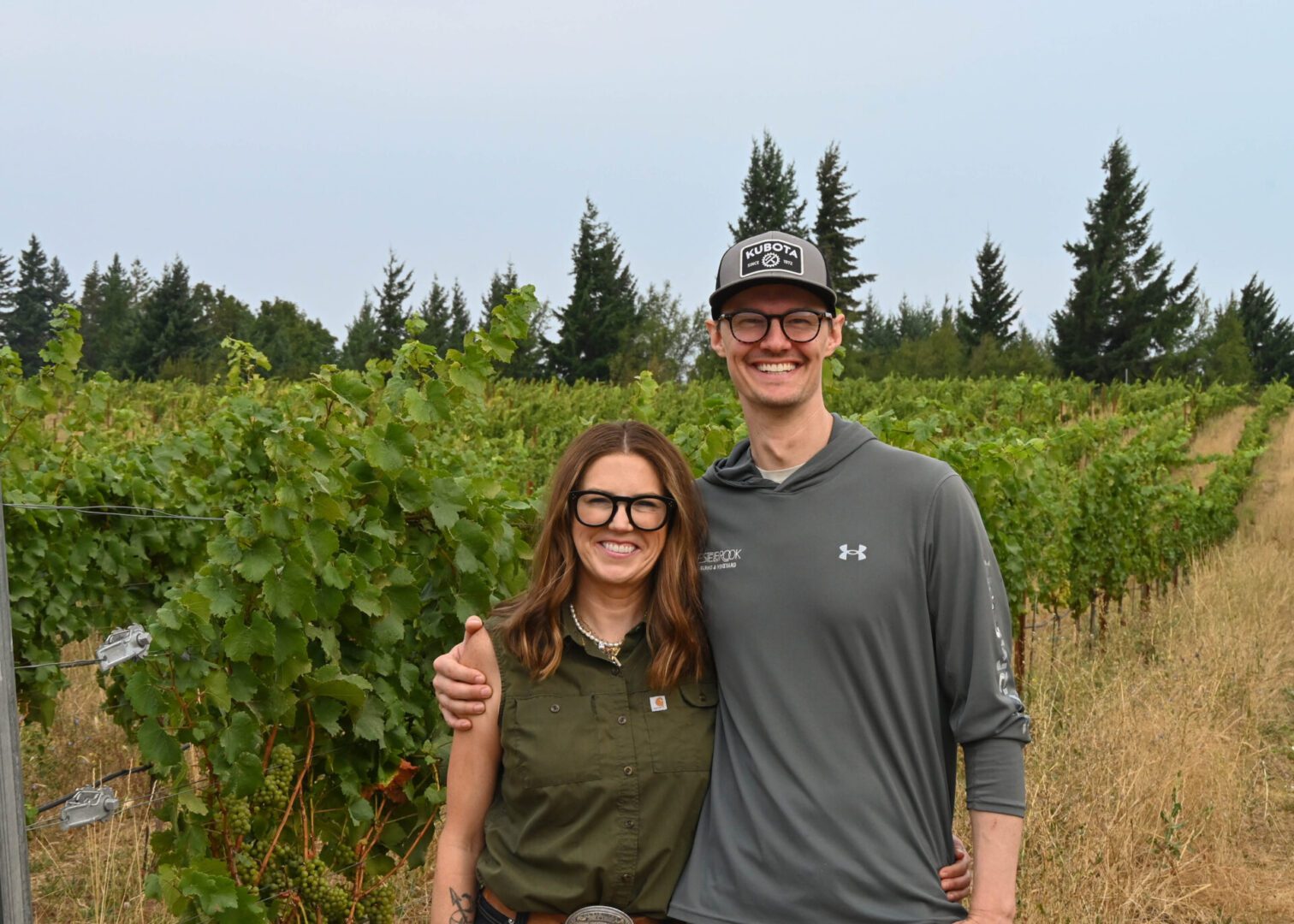
Just outside of White Salmon, Washington, Shahnnen Elizabeth-Head and Alex Head are farming with intention. In 2016, the couple purchased what had once been the site of an old pear processing operation, and began building what is now Estelbrook Farms & Vineyard.
Neither Shahnnen nor Alex started their careers as farmers. “We’re first-generation farmers,” Shahnnen said. “For me, this was a response to climate change anxiety. I kept asking, how can we improve one small patch of the world and maybe create a template for others?”
Today, Estelbrook spans 84 acres, with more than half intentionally left in prairie and wildlife corridors. Ten and a half acres are planted to wine grapes with varieties like Riesling, Chardonnay, Gewurztraminer, and Grüner Veltliner.
“We’re farming the soil, not the grapes,” Shahnnen said. “I don’t need to teach grapes how to grow. But if we build healthy soil, the plants can handle heat, smoke, and stress much better.”
For them, soil health is both practical and philosophical. Healthy soil improves water holding capacity, nutrient cycling, and resilience during increasingly common heat waves and wildfire seasons. It also reflects their long-term commitment to stewardship. “Our soil is the largest living organism on this farm,” Alex said. “Everything else comes out of that.”
Why was it important to you to start using drone technology?
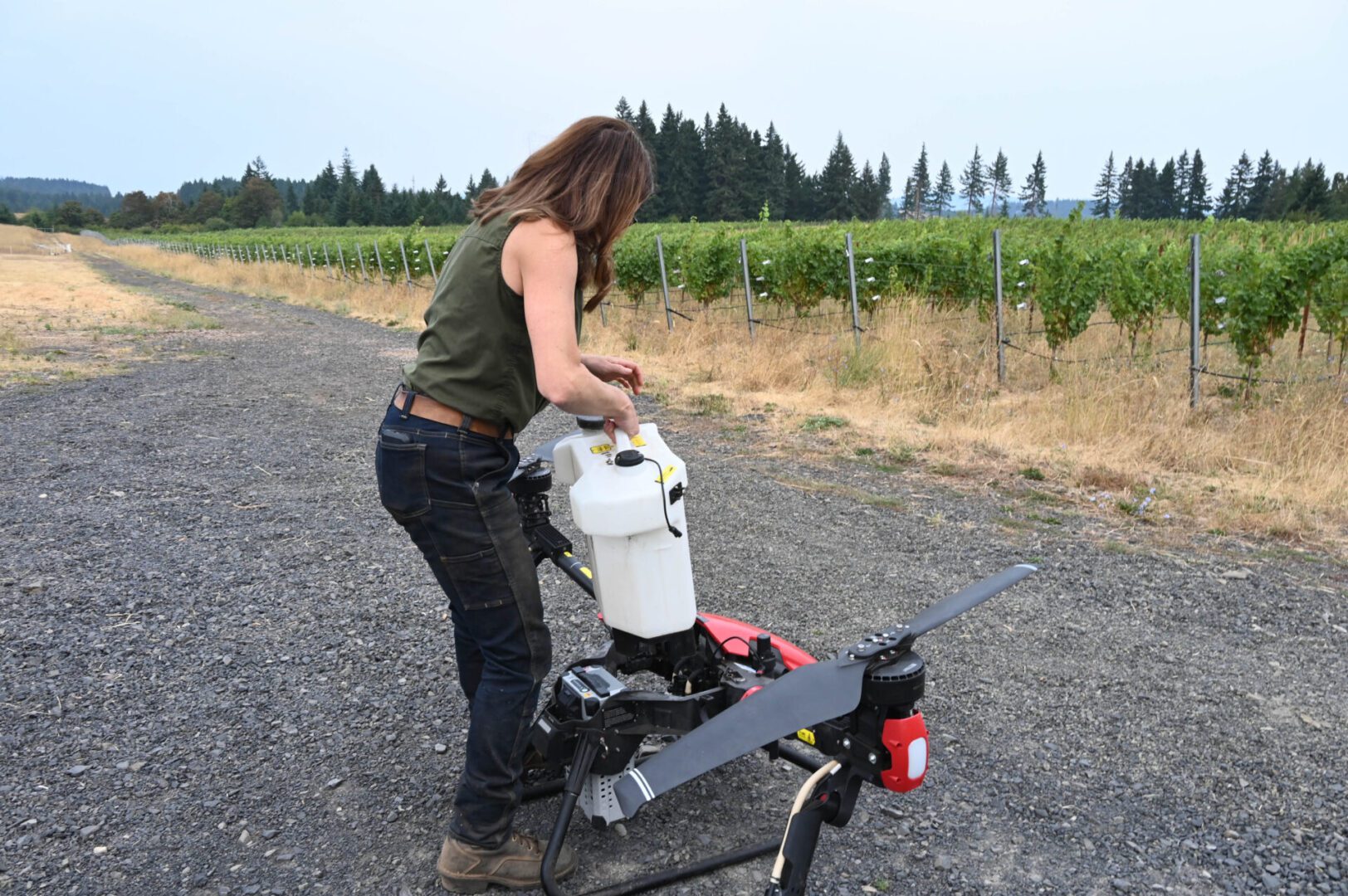
For the Heads, adopting drone technology wasn’t about being cutting-edge. It was about reducing soil disturbance and creating more flexibility in their management system.
During a typical growing season, Estelbrook applies between 14 and 18 sprays as part of their integrated pest management program. Traditionally, that would mean repeated tractor passes through the vineyard, each time running a 4,000–5,000-pound machine over the soil.
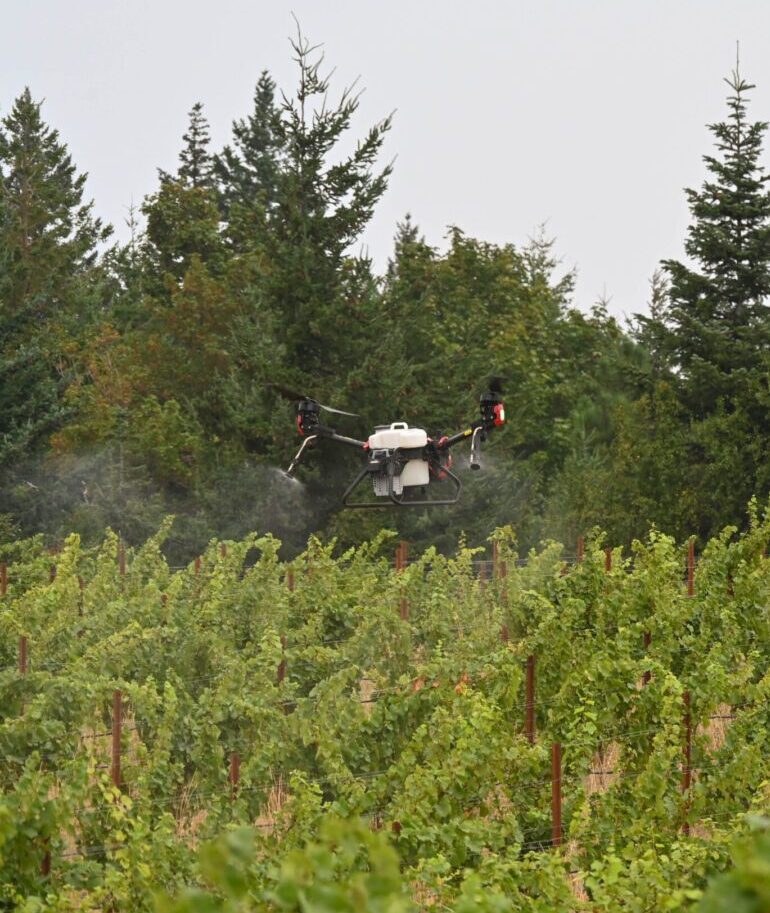
“A full tractor spray takes about seven hours,” Alex explained. “A drone spray takes about two hours, with literally no interaction with the soil.”
By flying instead of driving, they can cut down significantly on soil compaction and disturbance to cover crops. “Every pass matters,” Alex said. “When you multiply that over a season, it adds up to dozens of hours of tractor time removed from the vineyard.”
The drone also allows them to spray during windows when tractors would be impractical, such as in early spring or late fall where wet soils can make fields too muddy to drive through. “The drone extends our season,” Shahnnen said. “We can apply what we need without worrying about getting stuck or compacting the soil.”
Precision is another advantage. Using geofencing and programmable flight paths, they can target specific sections of the vineyard and dial in droplet size, speed, and gallons per acre. “You can get incredibly specific,” Alex said. “That level of control just isn’t possible with a tractor.”
What benefits have you seen since you started using the drone?
The most immediate benefit has been time savings. “Saving five hours per spray is huge,” Alex said. “That changes your week.” The time flexibility allows them to respond quickly to weather events. If a heat wave is forecast, they can apply protective sprays that act like sunscreen for the grapes. If wildfire smoke is approaching, they can respond within hours rather than trying to schedule a full-day tractor operation.
The drone has also enabled more frequent, lower-dose applications of nutrients and biological products. Shahnnen described applying soil inoculants, including mycorrhizal fungi, before winter to build stronger soil systems. “It helps improve water holding capacity and organic material in the soil,” she said. “You’re building something long term.”
Regular soil testing has shown measurable improvements, including reductions in bulk density and compaction. While it can be hard to “see” less compaction, the data confirms progress. “You don’t get an award for good soil tests,” Alex joked. “But you should.”
There are environmental benefits as well. Drone applications run on batteries, and their electricity comes from wind and hydroelectric sources. Fewer tractor passes mean fewer emissions and less fuel use. “It’s just a lighter footprint,” Alex said.
What have been the biggest challenges, and how have you overcome them?
Cost is the first barrier most farmers think about. “The upfront investment is high,” Alex acknowledged. “That’s probably the biggest barrier to entry.”
Regulatory requirements can also be intimidating. FAA licensing, registration, and compliance involve paperwork and time. “You’re standing on the ground, but you still have to go through the process like you’re flying an aircraft,” Alex said.
Technology management presents another challenge. The drone relies on firmware updates, software apps, battery systems, and calibration. “It’s not like a tractor you can just start up,” Shahnnen said. “There’s a learning curve.”
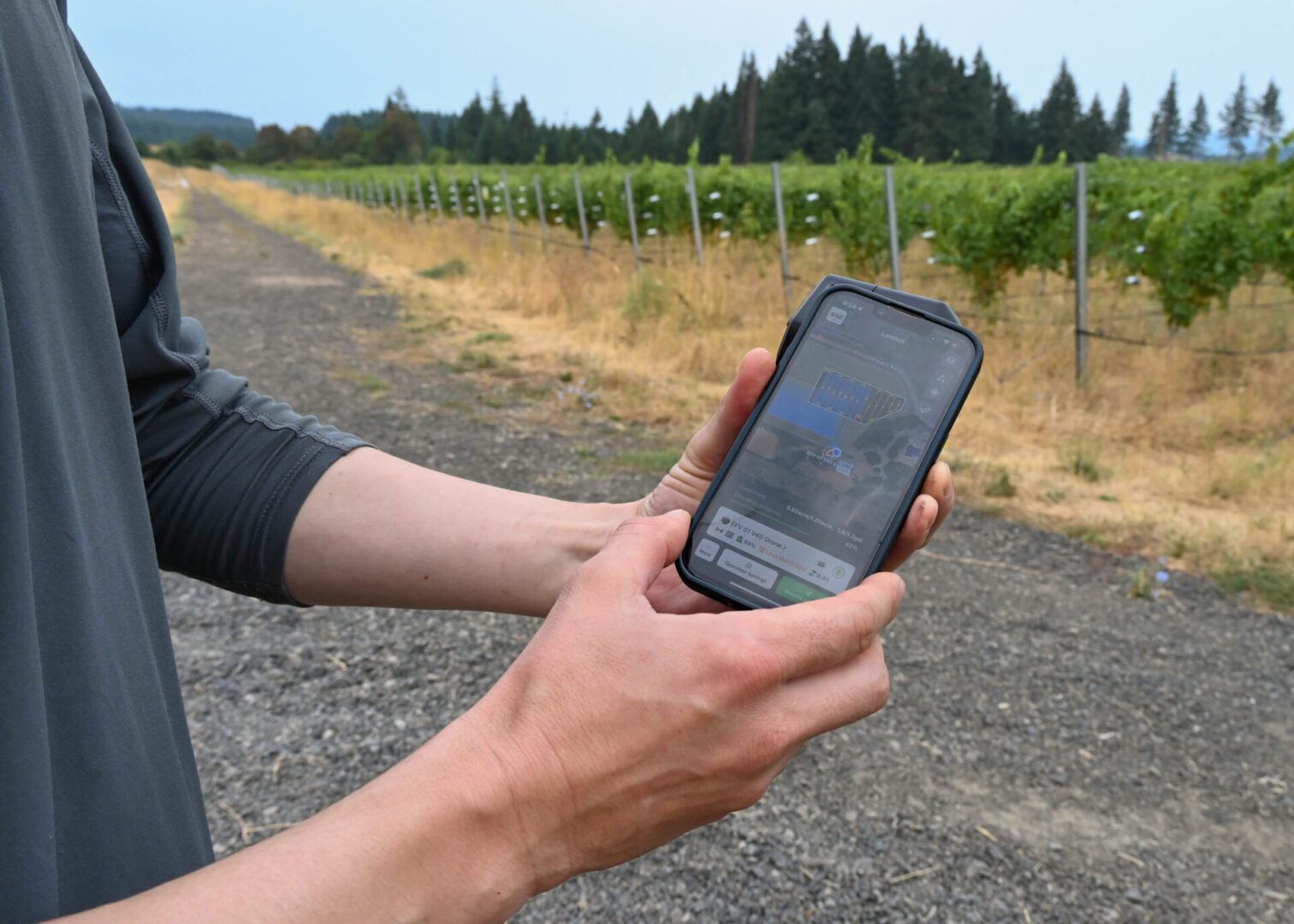
Their solution has been persistence and documentation. “We write everything down,” Shahnnen explained. “Settings, lessons learned, what worked, what didn’t. That documentation has been huge.”
Both Shahnnen and Alex come from technology backgrounds, which helped them adapt. But they emphasize that practice builds confidence. “The first season, every spray felt like relearning it,” Alex said. “Now it takes about ten minutes to get up and running.”
What would you tell other farmers interested in using drones?
“Find someone who’s doing it and talk to them,” Alex said. “Do a test flight. Use spray cards. Look at the data.”
Shahnnen encourages curiosity and openness. “Being first-generation farmers allowed us to question why things are done a certain way,” she said.
“You don’t have to adopt everything at once. Start small and see what works for your system.”
They acknowledge that drones won’t fit every farm or every budget. But they believe the technology is becoming more accessible and can be a valuable tool, especially in systems where soil health and compaction are top concerns.
Farming like the world depends on it
For Shahnnen and Alex, drone technology is just one tool in a broader soil health strategy. Their long-term vision is rooted in resilience and education. “We think consumers want to know not just that the wine tastes good, but how it was grown,” Shahnnen said. “If drones get people interested in asking about soil health, that’s a win.”
At Estelbrook, innovation is guided by their stewardship philosophy: farm like the world depends on it. Build the soil first. Let the rest follow.
Want to connect with Shahnnen and Alex?
As Soil Health Ambassadors, they’ve agreed to help other producers interested in improving soil health with drones. To get in touch, email WaSHI@agr.wa.gov.
If you or someone you know would like to participate in our Soil Health Ambassador Program,
email Leslie Michel at lmichel@agr.wa.gov
Leslie Michel
Leslie works with counties on the Voluntary Stewardship Program through the Washington State Department of Agricutlure, providing technical support on their monitoring plans. She also assists with the Washington Soil Health Initiative and Sustainable Farms and Fields program by providing support for soil sampling.
This article was published by the Washington Soil Health Initiative. For more information, visit wasoilhealth.org. To have these posts delivered straight to your inbox, subscribe to the WaSHI newsletter. To find a soil science technical service provider, visit the Washington State University Extension website or the Washington State Conservation District website.