
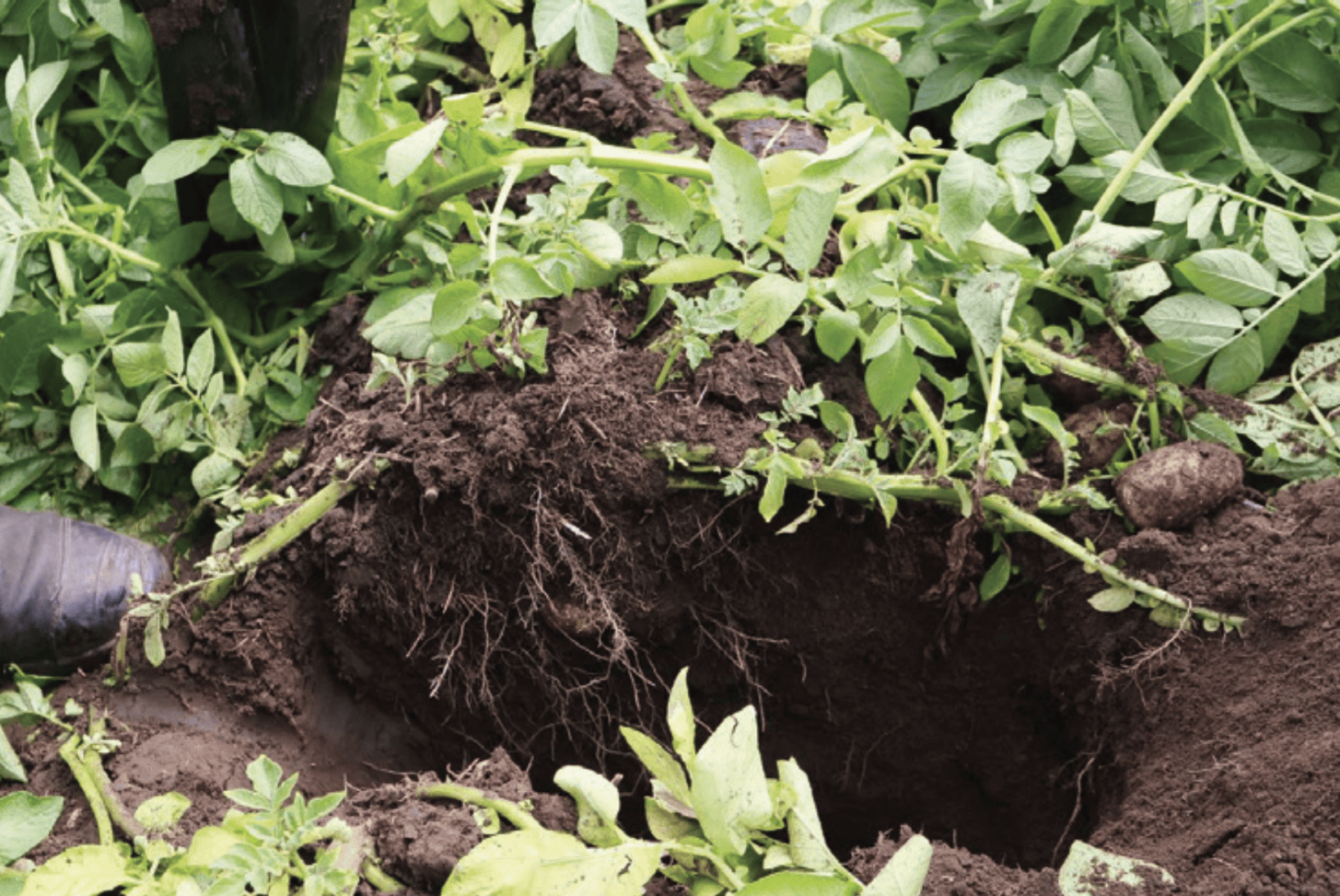
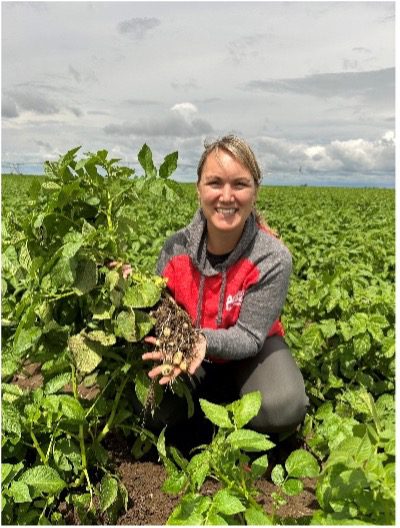
Photo by the Soil Health Institute
Resilient Potatoes: Keeping Soil Where it Belongs
Scalable strategies to minimize soil disturbance in potato production, drawing from published research and first-hand grower accounts.
Author: Soil Health Institute
August 5, 2026
This article was originally published by the Soil Health Institute. Read the original article here.
Potato growers across North America face a delicate balance when it comes to protecting soil health and growing a profitable crop. The soil needs to be worked to form hills for potato planting, which prevents greening and reduces misshapen tubers, and to harvest the crop at the end of the season. But too much soil disturbance leads to issues with erosion, compaction, nutrient losses, and declining soil organic matter, jeopardizing the land’s long-term health and productivity. Thankfully, there are examples of innovative strategies that demonstrate how this delicate balance can be achieved. In this article, we explore scalable strategies to minimize soil disturbance in potato production, drawing from published research and first-hand grower accounts. Implementing these strategies on different potato operations calls for curiosity, adaptability, and site-specific knowledge. Every operation has unique soils, climates, equipment, and available markets, meaning different approaches may be needed to reach soil health goals.
In-Field Soil Health Diagnostics
Before implementing a new strategy, it helps to understand how the soil is currently functioning and where it could be improved. Some signs of soil health are visible from the road; other times, it takes a shovel, a smartphone, and a closer look.
Here are three simple ways to get a read on soil health in the field:
- Aggregate stability: Aggregates, those small clusters of soil particles, are the backbone of good soil structure. Healthy aggregates are rounded and hold together in water. Aggregates from less healthy soils crumble and slake, a sign that the soil is more prone to erosion and poor water infiltration. Try the free Slakes smartphone app to test aggregate stability in the field.
- Root growth: Roots don’t lie. In healthy soil, they grow deep and straight. In compacted soil, roots can end up growing sideways or bunching up as they meet compacted layers. The same is true for water. If it can’t move through, it will pond or run off. Use a shovel, screwdriver, or metal rod to test for resistance at 6-12 inches deep.
- Water infiltration: Soil that can’t absorb water can’t support healthy crops. After a heavy rain or irrigation, watch how long it takes for the water to disappear. If there is standing water hanging out more than 24 hours later or if runoff channels are visible, there is a water infiltration issue.
These field-based observations are just a starting point. You can find more in our guide to in-field soil health indicators.
Once you know what you want to achieve in terms of soil health, you can start looking at strategies to address it. Because farming systems are dynamic and complex, it’s unlikely that a single practice will solve any one problem or work on all soil types in all regions. Explore a few practices that address different aspects of soil health, like soil structure, soil biodiversity, and soil organic matter.
Strategies from Research
Here are several studied strategies for keeping the soil where it belongs.
- Single–pass planting and hilling: It’s common in potato production to plant and form the final potato hill in separate passes. Rees et al. (2011) found that combining planting and hilling into a single pass reduced soil loss by 40%, lowered fuel costs, and improved water retention. Growers considering this practice should ensure proper planter and hiller alignment to avoid uneven ridges.
- Adjusting tillage timing: Fall tillage leaves soil exposed in winter, increasing erosion risk. In some cases, shifting primary tillage from fall to spring can keep the ground covered to protect soil over the winter without reducing potato yields the following year (Griffin et al., 2009).
- Dammer diking: Research on Prince Edward Island demonstrated that dammer diking—creating pockets in the furrows—reduced water runoff and encouraged water infiltration (Gordon et al., 2011). While being a form of soil disturbance, this provides other soil health benefits in terms of water infiltration.
- Cover crops: Cover crops can be incorporated into potato rotations to protect soil between growing seasons. Studies in Eastern Canada found that winter cover crops planted after potato harvest reduced erosion by nearly 60% (Nyiraneza et al., 2020). However, late-season potato harvest limits cover crop establishment, requiring creative approaches like interseeding before harvest or nurse cropping at potato planting (Jemison, 2019). Overall, cover crops armor the soil, reduce erosion, improve microbial diversity, and enhance soil structure through their rooting systems (Ghosh & Daigh, 2020).
- Reducing tillage in rotation years: Studies have shown that reducing tillage in non-potato years can improve soil organic matter levels and water infiltration (Rees et al., 2014). Hills et al. (2020) reported that eliminating three tillage passes in a potato-sweet corn-sweet corn rotation reduced soil erosion and increased profitability due to reduced fuel and labor costs.
Grower Innovations
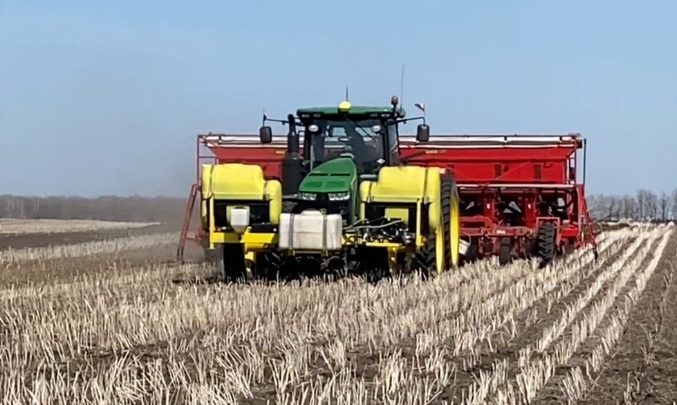
Farmers are often ahead of the curve with testing, adapting, and proving ideas in their fields long before they appear in the research literature. Two growers in Canada, Chad Berry and Alison Davie, push the boundaries of what is typical for their region, one through single-pass hilling and planting, and the other by significantly reducing the use of power hilling. Each approach reflects a thoughtful balance between efficiency and innovation, offering a glimpse into the creativity and problem-solving that defines growing potatoes today.
Less disturbance, more residue
On the light sandy loam fields that Chad Berry farms in Manitoba, Canada, keeping soil in place is a yearly battle. A three-year mixed grain and potato rotation with minimum tillage on the grain fields helps him combat blowing soil.
Chad successfully implemented a one-pass planting and hilling system for potatoes without any prior soil preparation, reducing soil disturbance and retaining some residue on the surface while the crop gets established. “When we plant potatoes, we know there will be four to five weeks of black dirt before emergence. Anything that we can leave out there to keep the dirt from moving helps a lot.”
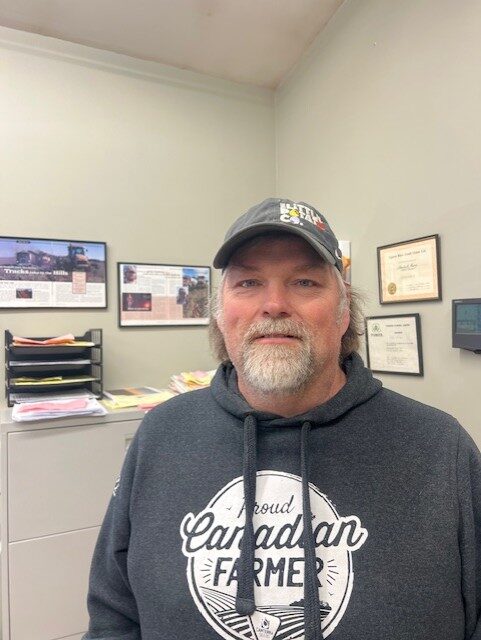
Berry points out that erosion isn’t just about soil loss—it impacts crop health, too. “We’ve cleaned up so many fencerows where the soil blew away,” Chad recalls. “That’s organic matter and nutrients leaving the field. And when young potato plants get sandblasted by wind, it creates openings for disease. We see better disease resistance in fields where the soil stays put.”
Chad has also worked a lot with cover crops, particularly after harvest. Now, he’s considering planting covers at the same time as potatoes, as what some may call a nurse crop. “Some growers are trying it, and it looks good. Having green material growing early could help shade the soil and prevent soil overheating,” he says.
For those thinking about making similar changes, Chad advises starting small. “I wouldn’t do everything at once. Try a few patches and see what works,” he says. “So much depends on soil texture and weather. Every field is different, but if you keep making small improvements, it adds up.”
Rethinking the power-hiller
In southern Alberta, power-hilling is a common practice. A power-hiller is effectively a large rototiller that reshapes the soil into neat, fluffy hills. Many growers use a power-hiller to create a uniform seedbed and break down any soil clods that risk being dug up with the potato crop at the end of the season. But for Alison Davie, a potato grower in the region, power-hilling is more of an exception than a rule.
“We don’t use it as a matter of practice,” Davie explains. “Only if the field requires it.” Instead, Alison leans on the natural freeze-thaw cycles to do the work over the winter. Over the years, she has run side-by-side comparisons, weighing the results of the power-hilled fields versus those left.
“We don’t own a power-hiller, and we’ve farmed this way for years,” she shares. “I’m not opposed to using one under certain conditions, but I don’t think it needs to be an every-year, every-field thing.”
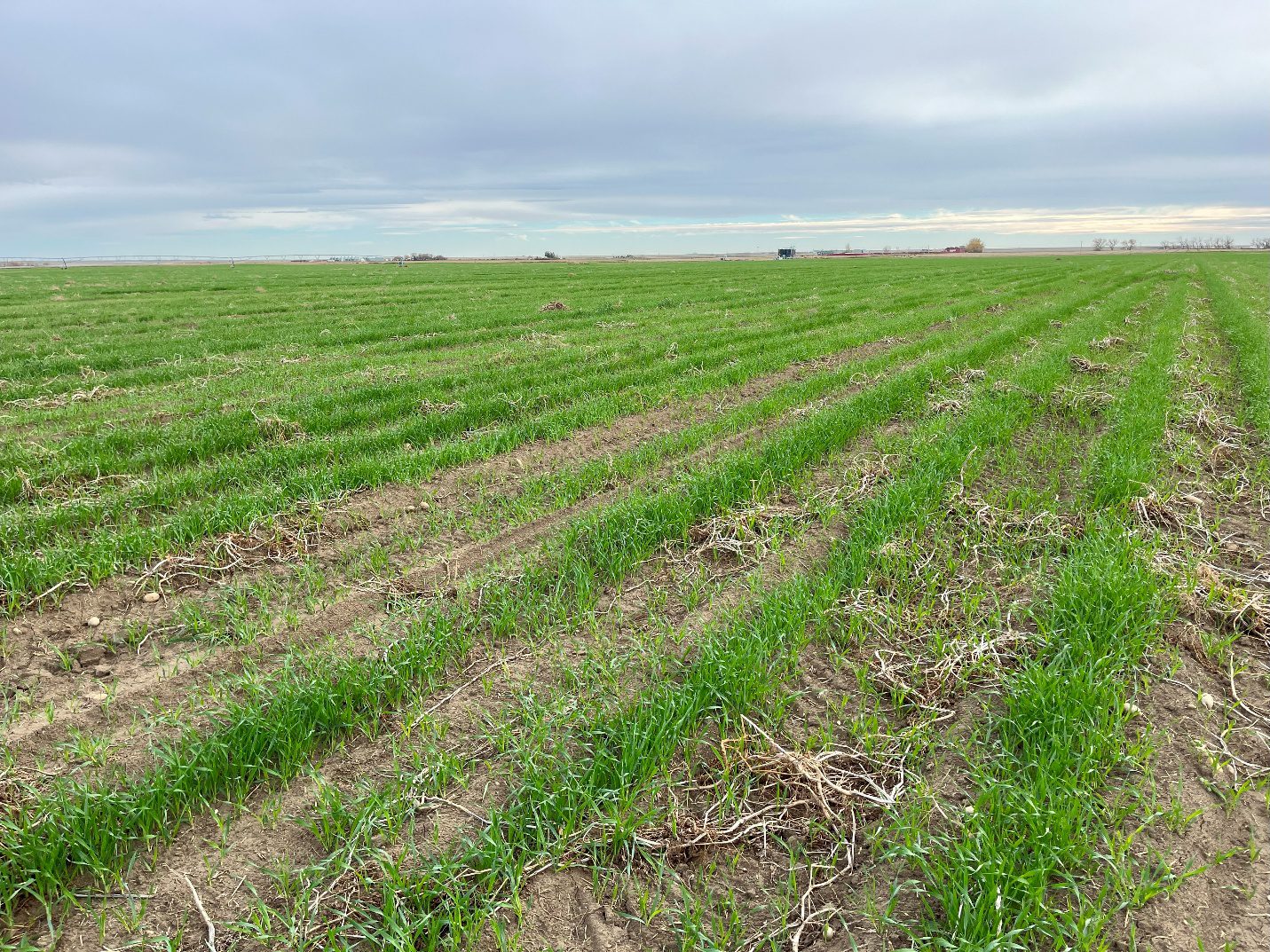
Alison brings the same thoughtful trial-and-error approach to cover cropping. She has tested several approaches over the years with mixed results. One method that has worked well is broadcasting barley just ahead of potato harvest. “If we harvest potatoes before September 20, we’ve had good success with barley coming up between the vines,” she says.
But she has stayed realistic about cover crops. “I would love to say let’s put cover crops on everything, but there’s a financial cost and logistical side to that. It doesn’t always make sense,” she says. She has also experimented with winter wheat, pushing the seeding window with varying outcomes. “That’s farming. You look at why it failed. Was it the weather? The seeding rate? And you adjust.”
Through it all, Alison continues to learn, not just from her field but from her peers, too. “Even reaching out on social media,” she says. “It’s amazing how many farmers are willing to share their experiences.”
By choosing when to power-hill and when and where cover crops make sense, Alison demonstrates a thoughtful, practical approach to soil management, one that prioritizes minimal disturbance and demonstrates an integrated approach to keeping the soil where it belongs.
Anticipating Challenges
Even the best-laid plans can run into trouble once the tractor hits the field. That’s why it’s important to troubleshoot before challenges arise. One useful approach is the “pre-mortem.” Instead of waiting to assess what went wrong, a pre-mortem starts from the assumption that a plan has failed and then works backward to identify potential causes. This exercise can reveal design flaws early and create space to build smarter, more resilient strategies. It’s not about pessimism, it’s about preparedness.
Here are a few challenges that growers may face when trying out new strategies.
Compaction: Potato growers often face a challenging cycle: Wet field conditions during critical operations with heavy equipment can lead to compaction. Introducing cover crops can counteract this issue by improving soil structure and adding organic matter over time (Mundy et al., 1999). Many regions have Cover Crop Councils that provide guidance on species and characteristics.
Penalties from the processor: Many processors impose financial penalties for soil clods and residue in shipments, which can incentivize more tillage. Monitoring soil conditions post-harvest and evaluating whether clod breakdown really necessitates additional passes can save fuel, labor, and soil structure. Where residue decomposition is slow, encourage strategies that stimulate microbial activity, like cover crops and organic amendments, to facilitate faster breakdown.
Narrow cover crop window: Processing varieties often have a long growing season, limiting the post-harvest window for cover crop establishment. Interseeding before harvest and relying on digging operations to incorporate seed can offer a creative workaround. Ensure to match species and timing to local conditions to ensure effective establishment.
Of course, not every season will go perfectly, and that’s okay. Small refinements in timing, equipment, and working around weather constraints can make a difference without requiring a full system change. Treat each season as an opportunity to learn and adapt. When introducing new practices, it is often best to start small. A gradual rollout across test strips or individual fields allows growers to track performance and troubleshoot issues before scaling up. Accurate records, such as planting dates, yield, irrigation, and rainfall, are essential for assessing outcomes and guiding future improvements. To support adoption, it is also worth exploring USDA-NRCS conservation programs that help reduce upfront costs. Advisors play a key role in helping growers navigate funding requirements, including specific seeding windows, termination protocols, and documentation needs.
Looking Forward
Potato systems won’t look like corn and bean systems, and true no-till potatoes aren’t on the table. But as growers like Chad and Alison have shown, even small adjustments, whether it’s refining tillage timing, experimenting with cover crops, or integrating less disruptive practices into rotation years, can have a measurable impact on erosion, water retention, and overall crop resilience.
There’s no universal blueprint for caring for the soil. But by drawing on experience from other growers and agronomic research, growers can find realistic, site-specific, and scalable ways to improve soil health. The future lies in steady, informed progress, one thoughtful decision at a time.
This article is based upon work supported by McCain Foods North America through the regenerative agriculture education program with the Soil Health Institute.
Download a shorter, printable version of this fact sheet.
Find videos, blogs, and contacts on soil health in potatoes, search your location on our Resources page.
References
Chen, D., B.J. Zebarth, C. Goyer, L.-P. Comeau, K. Nahar, and T. Dixon. 2022. Effect of biofumigation on population densities of Pratylenchus spp. and Verticillium spp. and potato yield in eastern Canada. American Journal of Potato Research 99:229-242.
Ghosh, U., and A.L.M. Daigh. 2020. Soil compaction problems and subsoiling effects on potato crops: A review. Crop, Forage & Turfgrass Management 6:e20030. https://doi.org/10.1002/cft2.20030.
Gordon, R.J., A.C. VanderZaag, P.A. Dekker, R. De Haan, and A. Madani. 2011. Impact of modified tillage on runoff and nutrient loads from potato fields in Prince Edward Island. Agricultural Water Management 98:1782-1788.
Griffin, T.S., R.P. Larkin, and C.W. Honeycutt. 2009. Delayed tillage and cover crop effects in potato systems. American Journal of Potato Research. 86:79-87.
Hills, K., H. Collins, G. Yorgey, A. McGuire, and C. Kruger. 2020. Improving soil health in Pacific Northwest potato production: A review. American Journal of Potato Research 97:1-22
Jemison, J.M. 2019. Use of nurse crops in potato production to protect soils from erosion. American Journal of Potato Research 96:13-20.
Khakbazan, M., R.M. Mohr, J. Huang, E. Campbell, K.M. Volkmar, D.J. Tomasiewicz, A.P. Moulin et al. 2018. Economic and risk effects of rotation based on a 14-year irrigated potato production study in Manitoba. American Journal of Potato Research 95:258-271.
Molina, O.I., M. Tenuta, A. El Hadrami, K. Buckley, C. Cavers, and F. Daayf. 2014. Potato early dying and yield responses to compost, green manures, seed meal and chemical treatments. American Journal of Potato Research 91:414-428.
Mundy, C., N.G. Creamer, L.G. Wilson, C.R. Crozier, and R.D. Morse. 1999. Soil physical properties and potato yield in no-till, subsurface-till, and conventional-till systems. HortTechnology 9(2):240-247
Nyiraneza, J., B.J. Zebarth, S.A.E. Fillmore, M. Khakbazan, S.W.R. Hann, and J. Owen. 2020a. Enhancing environmental performance with winter cover cropping after potato harvest in eastern Canada. Communications in Soil Science and Plant Analysis 51:1499-1513.
Rees, H.W., T.L. Chow, B.J. Zebarth, Z. Xing, P. Toner, J. Lavoie, and J.L. Daigle. 2011. Effects of supplemental poultry manure applications on soil erosion and runoff water quality from a loam soil under potato production in northwestern New Brunswick. Canadian Journal of Soil Science 91:595-613.
Rees, H.W., T.L. Chow, B. Zebarth, Z. Xing, P. Toner, J. Lavoie, and J.L. Daigle. 2014. Impact of supplemental poultry manure application on potato yield and soil properties on a loam soil in north-western New Brunswick. Canadian Journal of Soil Science 94:49-65.

Soil Health Institute
The Soil Health Institute is a non-profit whose mission is to safeguard and enhance the vitality and productivity of soil through scientific research and advancement.
This article was published by the Washington Soil Health Initiative. For more information, visit wasoilhealth.org. To have these posts delivered straight to your inbox, subscribe to the WaSHI newsletter. To find a soil science technical service provider, visit the Washington State University Extension website or the Washington State Conservation District website.