
WaSHI Annual Report FY25
Making Soils Data Actionable
In 2024, the Washington Soil Health Initiative created the Making Soils Data Actionable webinar series to help farmers harness the mountains of data that result from soil testing and translate the numbers into action.
Every week in March, we highlight projects across Washington that use soil data to inform real, on-farm management decisions. The goal of the series is to bring together farmers, agricultural advisors, and decision makers to discuss the importance of collecting and using soils data. In 2025, the webinar series reached 916 people, with most attendees being agricultural professionals and university affiliates. This year’s topics were expanded beyond the physical, chemical, and biological indicators of soil health, to provide actionable insights to farmers, agricultural advisors, extension staff, and land managers.
Three new webinars addressing the soil health data overload
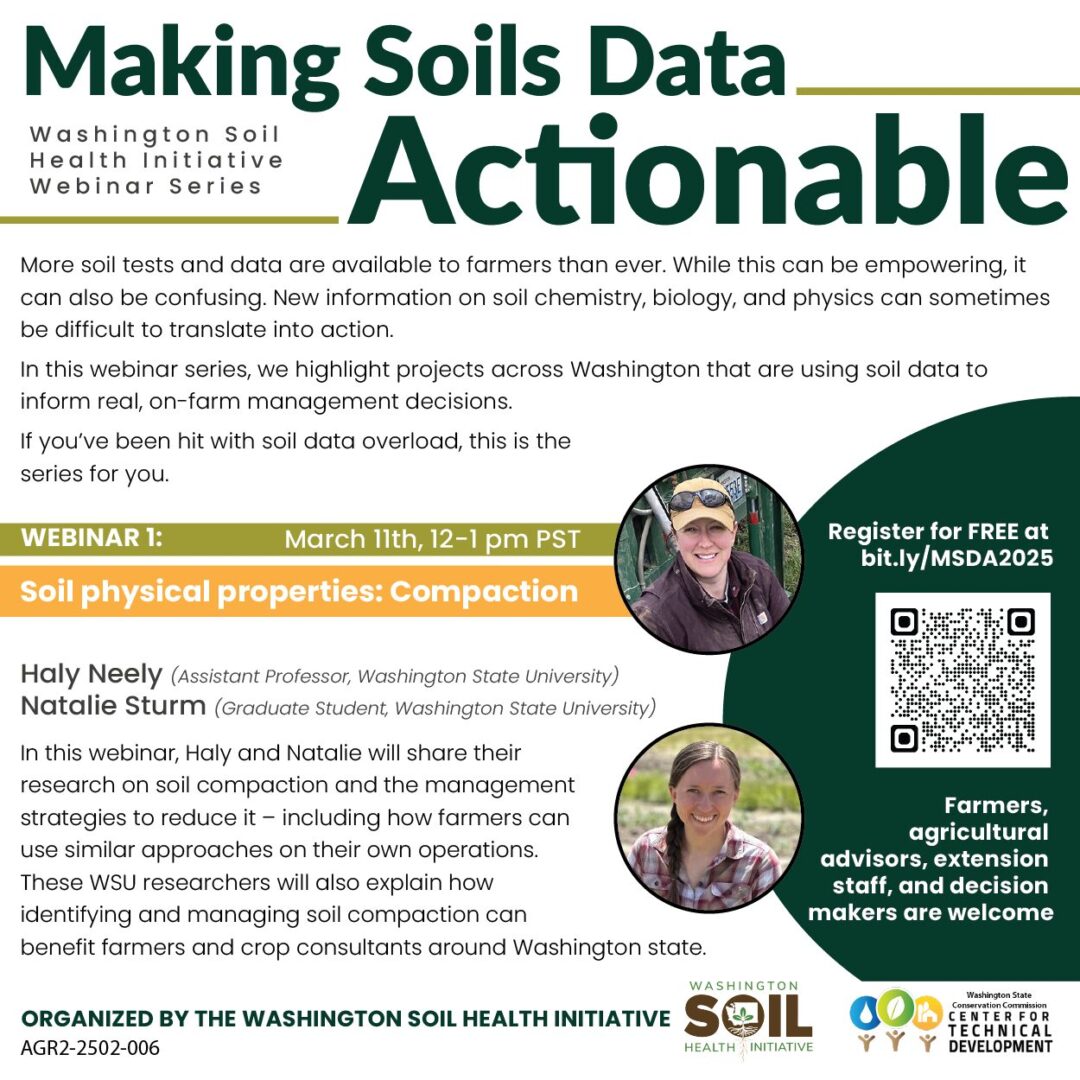
Soil Physical Properties: Compaction
with Haly Neely and Natalie Sturm
In this webinar, Haly and Natalie share their research on soil compaction and the management strategies to reduce it – including how farmers can use similar approaches on their own operations. These WSU researchers also explain how identifying and managing soil compaction can benefit farmers and crop consultants around Washington state.
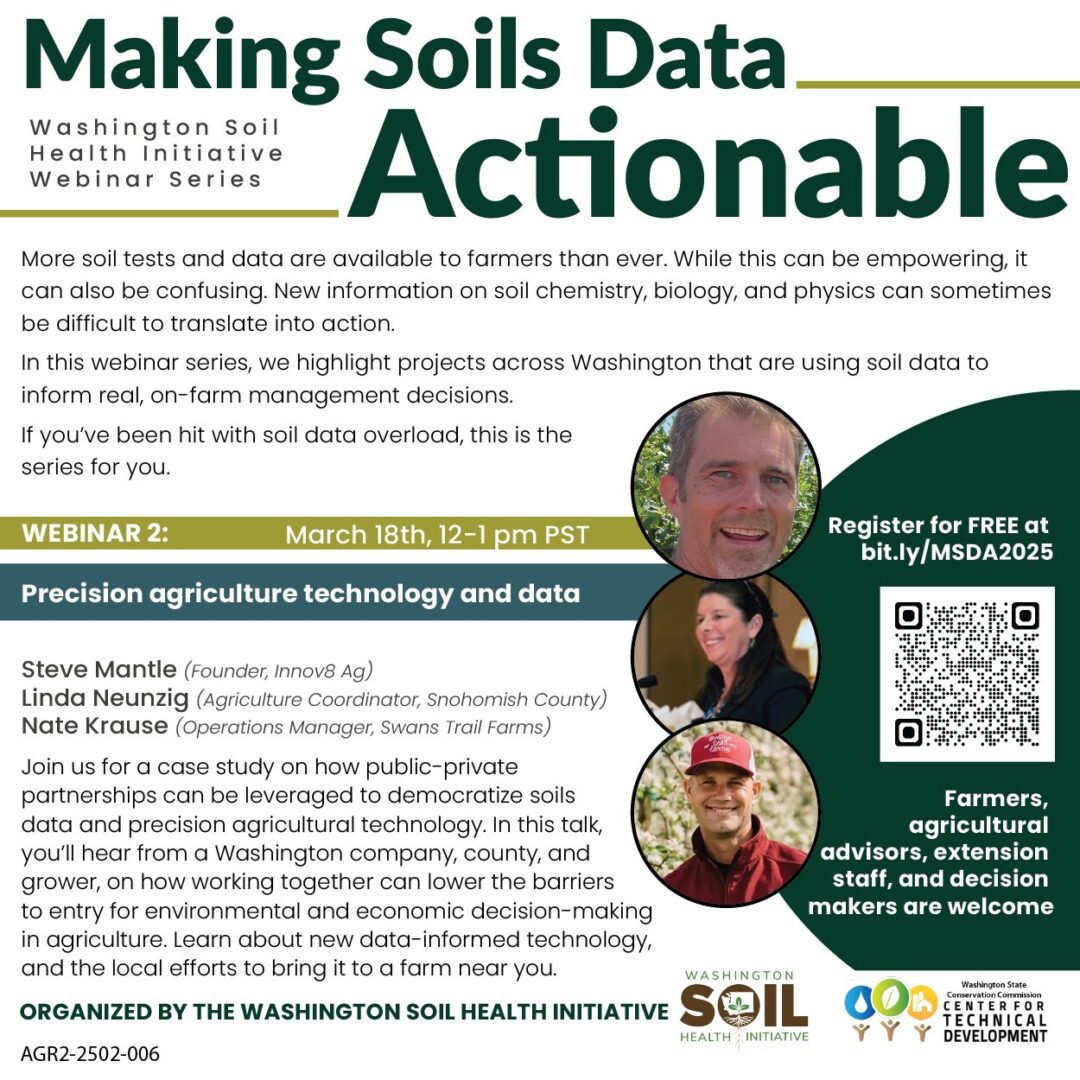
Precision Agriculture Technology and Data
with Steve Mantle, Linda Neunzig, and Nate Krause
A case study on how public-private partnerships can be leveraged to democratize soils data and precision agricultural technology. In this talk, you’ll hear from a Washington company, county, and grower, on how working together can lower the barriers to entry for environmental and economic decision-making in agriculture. Learn about new data-informed technology, and the local efforts to bring it to a farm near you.
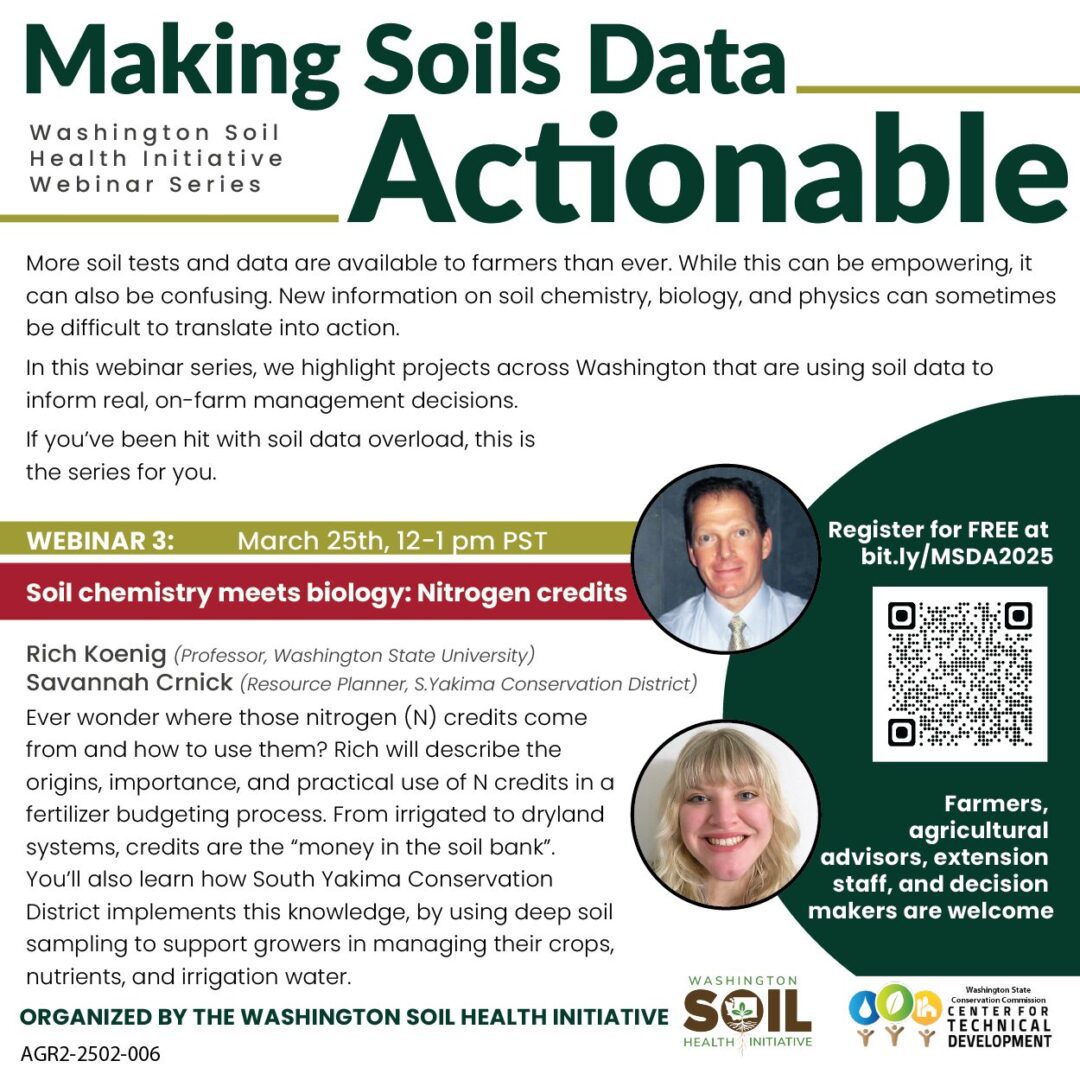
Soil Chemistry Meets Biology: Nitrogen Credits
with Rich Koenig and Savannah Crnick
Rich describes the origins, importance, and practical use of N credits in a fertilizer budgeting process. From irrigated to dryland systems, credits are the “money in the soil bank”. You can also learn how South Yakima Conservation District implements this knowledge by using deep soil sampling to support growers in managing their crops, nutrients, and irrigation water.

Dani Gelardi
Washington State Department of Agriculture