

WaSHI Annual Report FY25
Long Term Agroecological Research & Extension Site Network
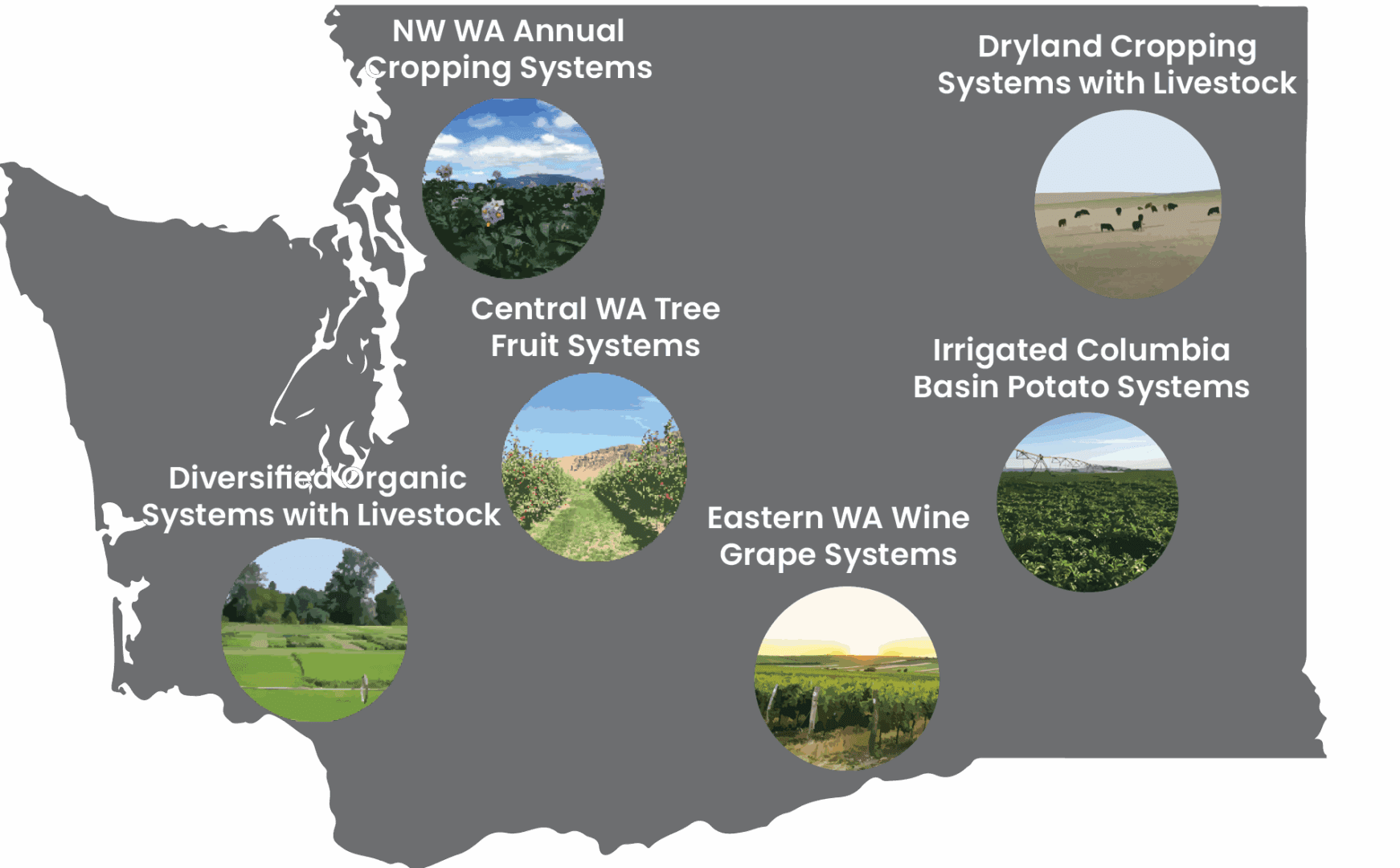
Six sites across the state
Long-term agricultural research on soil health is essential for creating resilient food systems, tracking changes in soil carbon and measuring economic benefits. To truly understand the impact of management on soil health and productivity, we need research that goes beyond typical grant cycles.
Investing in rigorous long-term soil health research
The Long-Term Agroecological Research and Extension (LTARE) sites are the large investment that WSU makes in WaSHI’s effort and are core to laying the foundation for future research and outreach activities. These six main experiments are designed to evaluate business as usual and compare variations, while representing commercial settings under respective environmental conditions.
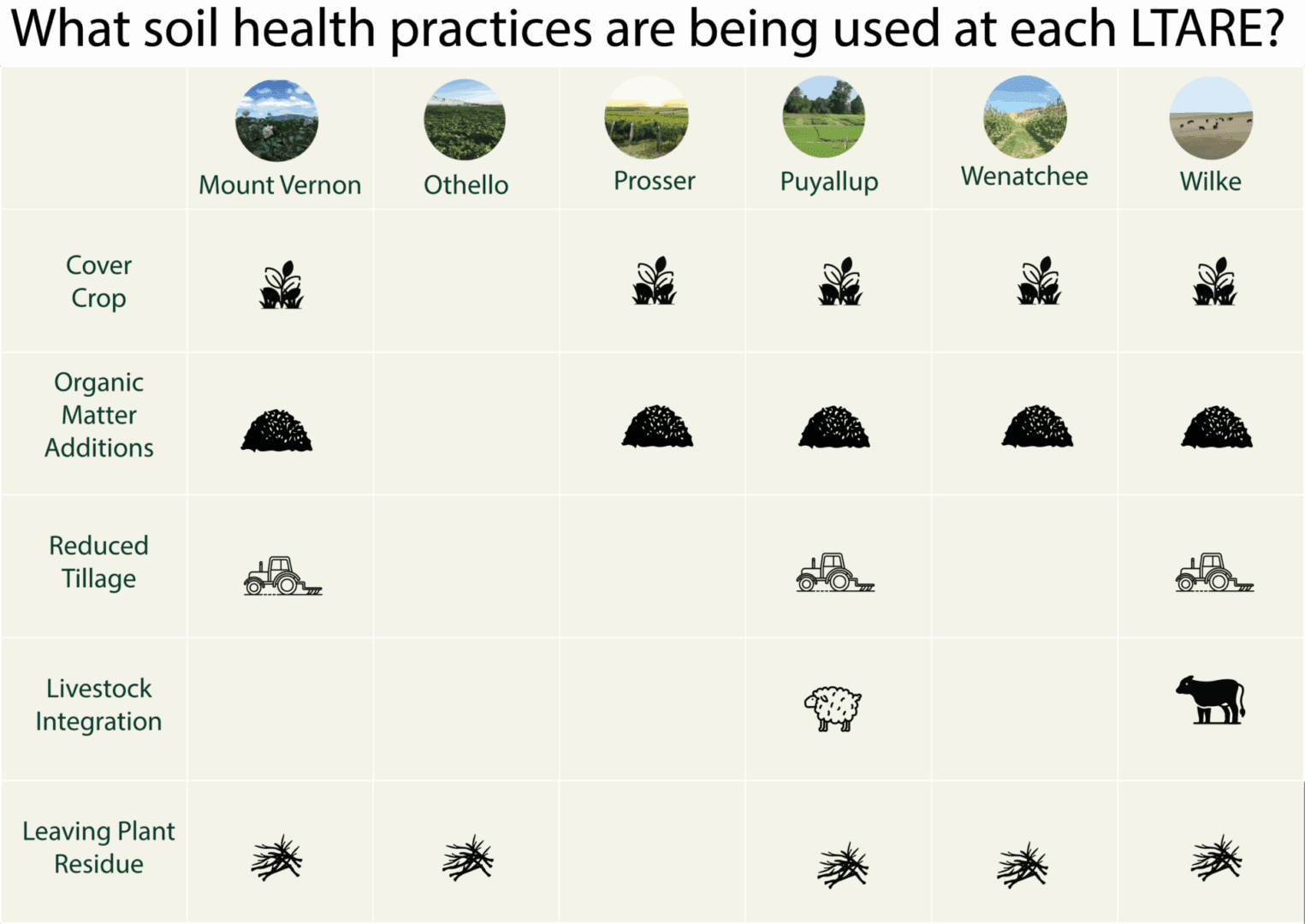
Each site represents a major agroecological system found in Washington’s diverse landscapes, but all sites perform a similar core of soil health assessments that are submitted to the same labs (if not done in-situ or at another WSU lab), which allows for common assessments across these systems. Additionally, many of the sites have common treatments as shown in the table (below) though the exact details of those treatments do vary across production systems. Lastly, each site will have a similar economic analysis that evaluates the associated costs and returns of investment in the treatments. In time, this analysis will help agricultural decision makers implement economically grounded practices that maintain soil health in the long run.

Chris Benedict
Washington State University
