
WaSHI Annual Report FY25
NW Washington Annual Cropping Systems LTARE
Mount Vernon, WA
This was an exciting year for the Mount Vernon LTARE because the 2024 season marked four years since the inception of the trial. This is significant because the site is based on a 4-year crop rotation, and as such, all experimental plots have now been through the full rotation. For example, each plot in the most aspirational treatment now has had a 3-year perennial cover crop and compost application.
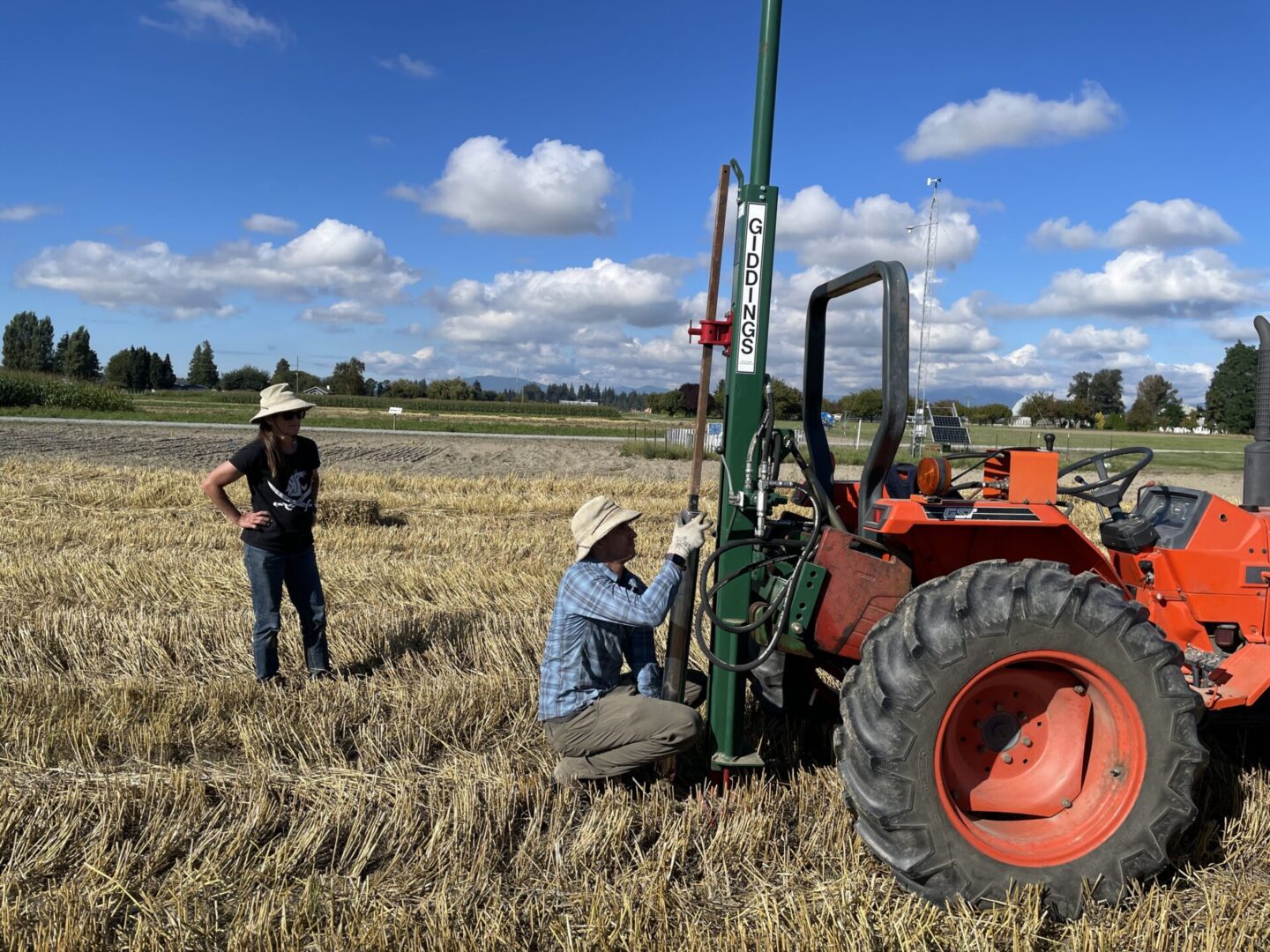
With this benchmark, we conducted our comprehensive soil sampling in spring 2025, using a hydraulic probe to get deep soil cores (down to 4 feet). These samples were divided into subsections representing different depths and are currently being analyzed for a variety of soil health parameters including soil carbon, microbial biomass, and respiration (also known as mineralizable carbon). We also collected separate samples to look at physical soil properties including infiltration, water-holding capacity, and the stability of soil aggregates (individual units of soil structure) when exposed to simulated rainfall and ponding. These are key variables in a region where compaction and flooding are issues.
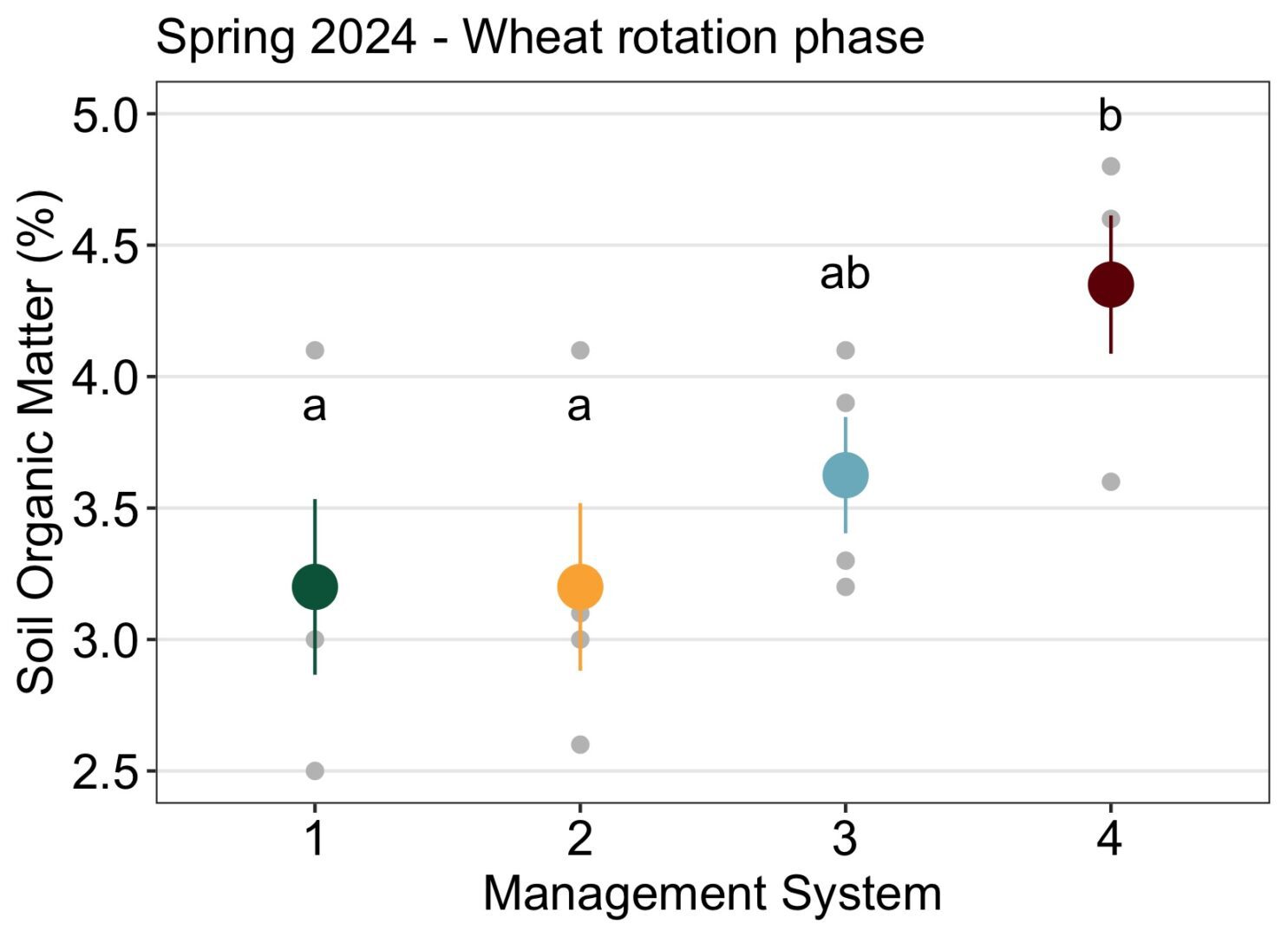
While we are not yet seeing improvements in infiltration from our soil health management systems, we have observed higher soil organic matter with Management System 4, where a 3-year perennial grass-clover cover crop is grown in the years between potato crops. Soil organic matter can take years to build, so it’s exciting to see measurable differences this early in the trial (Figure 1).
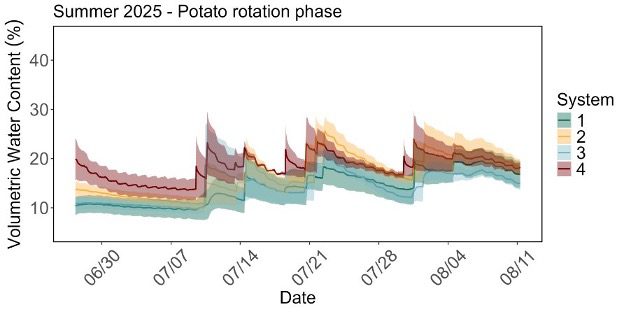
Even more exciting, this difference in soil organic matter has started to translate into subtle, yet statistically significant, increases in soil moisture during the potato phase of the rotation (Figure 2).
In addition to soil properties, partnering scientists have been investigating the impact of our management systems on weed growth and weed seed banks, soilborne pathogen and nematode pressure, and beneficial and pest insect populations. Entomologist Louie Nottingham and M.S. student Adriana Barsan have found that the perennial cover crop (Management System 4) has increased the abundance and diversity of natural predator insects, including parasitoid wasps and mites, advantages that persist in the potato phase of the rotation.

During this period, results from the Mount Vernon LTARE were presented at the annual meeting of the American Society of Agronomy, Crop Science Society of America, and Soil Science Society of America (2 presentations), the Entomological Society of America meeting, the Pacific Northwest Insect Management Conference, a WSU CAHNRS Regenerative Agriculture Showcase, the Western Washington Potato Workshop, and the 2024 Virtual SoilCon.
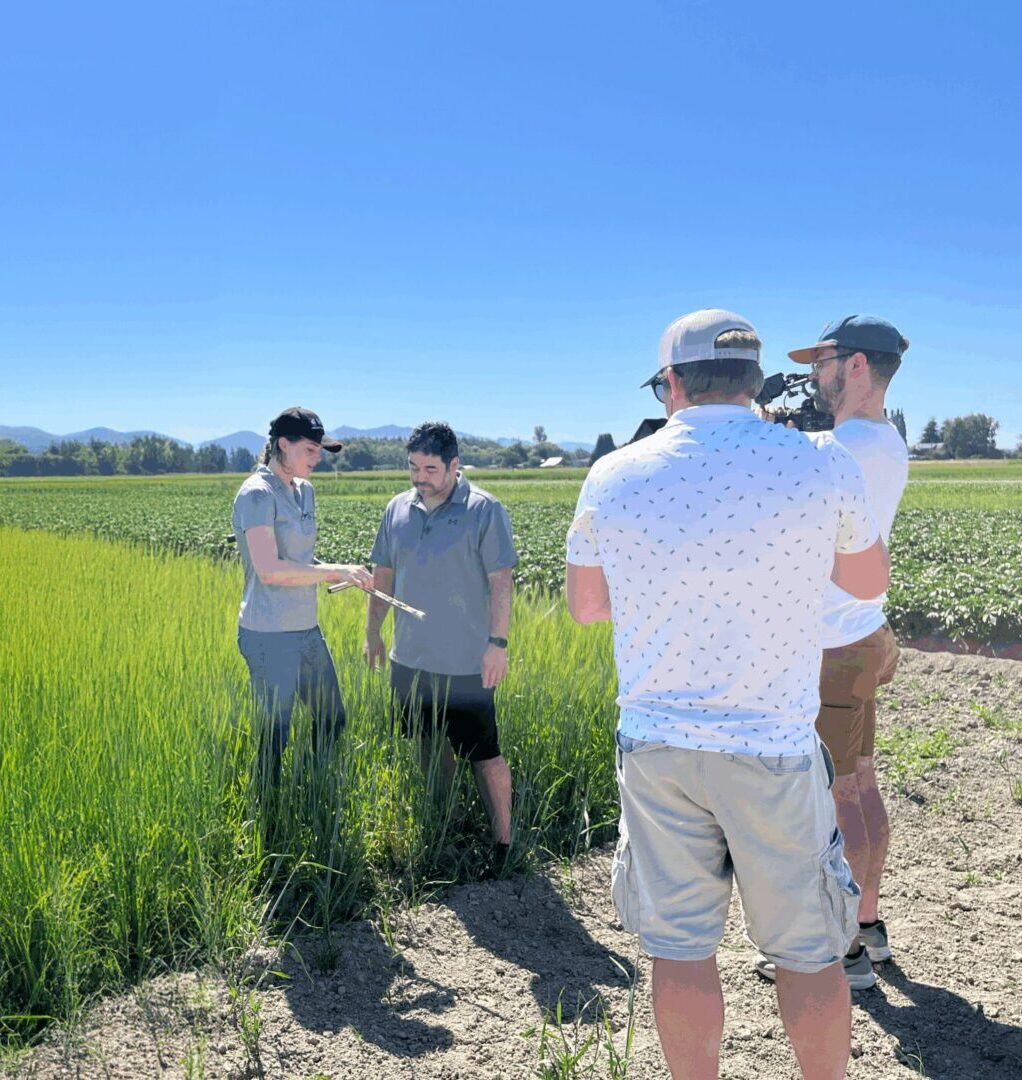
We also held a regional SoilCon event in December 2024 in conjunction with the Lynden Ag Show, with separate sessions focused on soil health in both red raspberry and potato systems. This included a well-attended panel discussion with growers and researchers on the connections between soil health and soilborne pathogen management. In January 2025, our LTARE site was featured in an episode of Washington Grown focused on potato production.

Gabe LaHue
Washington State University

Deirdre Griffin LaHue
Washington State University