
WaSHI Annual Report FY25
Irrigated Columbia Basin Potato Systems LTARE
Othello, WA
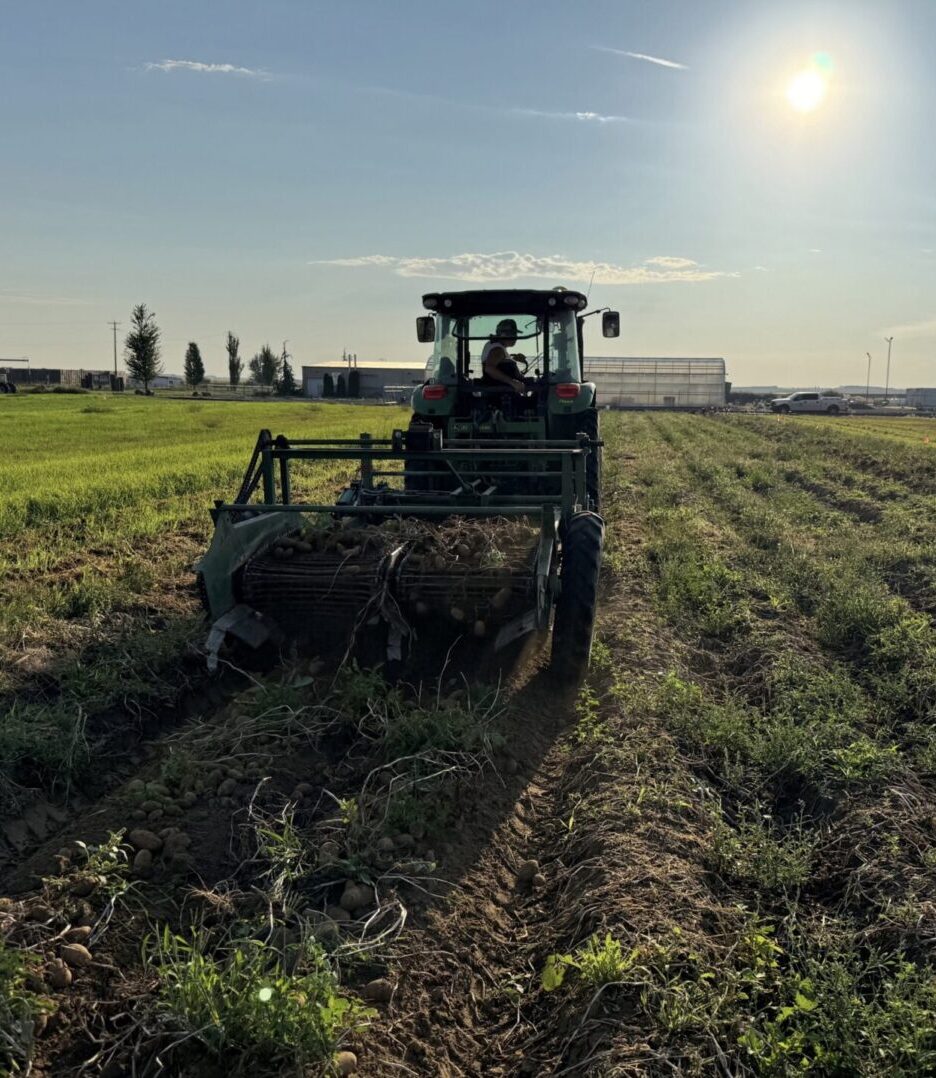
The Long-Term Agroecological Research and Extension (LTARE) site in Othello, WA was reset in Spring 2025 after extensive planning. This site represents a major step forward in understanding soil health and sustainability in irrigated potato-based cropping systems in the Columbia Basin. The overarching goal of the site is to evaluate the long-term impacts of key management practices on soil health, disease dynamics, and crop performance.
Why this site matters
Growers in the Columbia Basin face unique challenges—soil-borne diseases, declining soil health, and the need for sustainable nutrient management under irrigation. The Othello LTARE trial focuses on three conservation practices identified by stakeholders as practical and impactful:
• Fumigation (+/-) using metam sodium, a common disease management tool with potential soil health trade-offs.
• Compost application (+/-) to build organic matter, improve cation exchange capacity, and stimulate microbial activity.
• Cover cropping (+/-) with diverse species mixes, including biofumigant crops like mustard, to enhance carbon inputs and soil resilience.
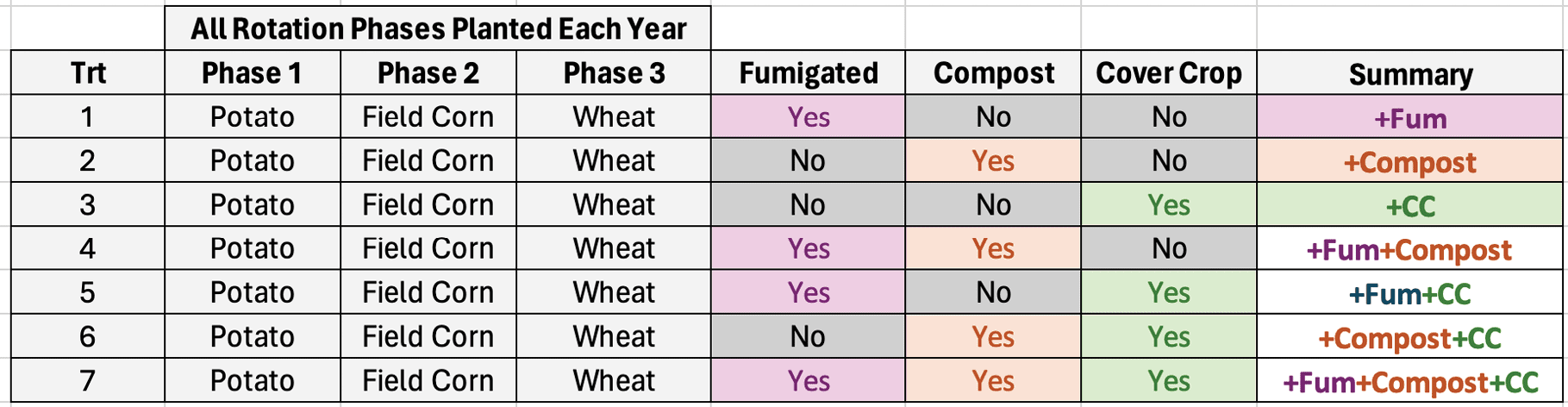
These practices are tested in all possible combinations, plus a true control, across an eight-treatment split-plot design with four replications at the WSU Honey Bee Farm in Othello. The rotation includes potatoes, field corn, and spring wheat, ensuring each crop is present every year.
The site features three crop ranges and four replications aligned with irrigation spans. There are eight plots per replication, each measuring 30 ft (E–W) by 20 ft (N–S) with buffers between east-west plots. Plots are arranged in split-plot format, where main plots contain fumigation treatments and subplots contain compost and cover crop combinations. This design ensures robust statistical analysis while reflecting real-world management constraints.
Progress in 2025
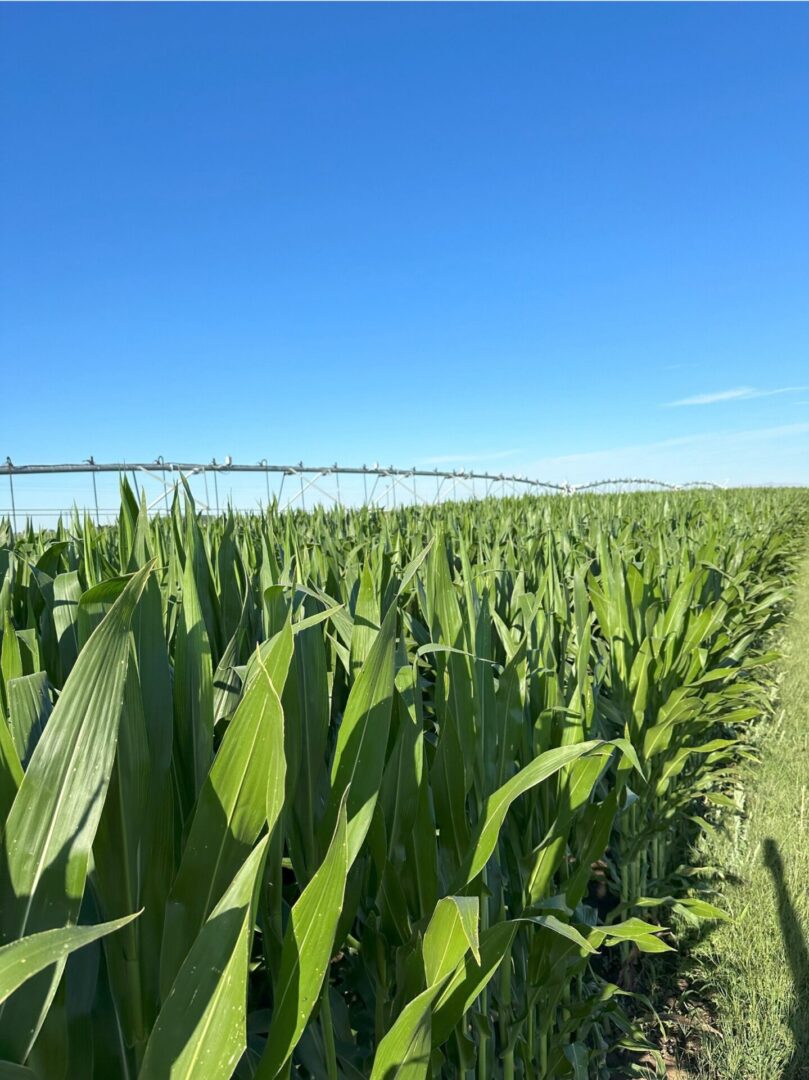
Following a 2024 test run, the trial was redesigned to accommodate a new linear irrigation system. Early challenges included low pump pressure and drought stress for potatoes and corn, prompting a major system renovation in Fall 2024. Permanent plot markers were installed, and Timothy grass was planted around the plot area to stabilize borders.
The first full season highlighted the complexity of integrating conservation practices under irrigation. In 2025, irrigation reliability improved, though hose failures in July caused temporary setbacks. Repairs required specialized equipment, delaying operations for 11 days. By late summer, a new hose system was installed to prevent future disruptions.
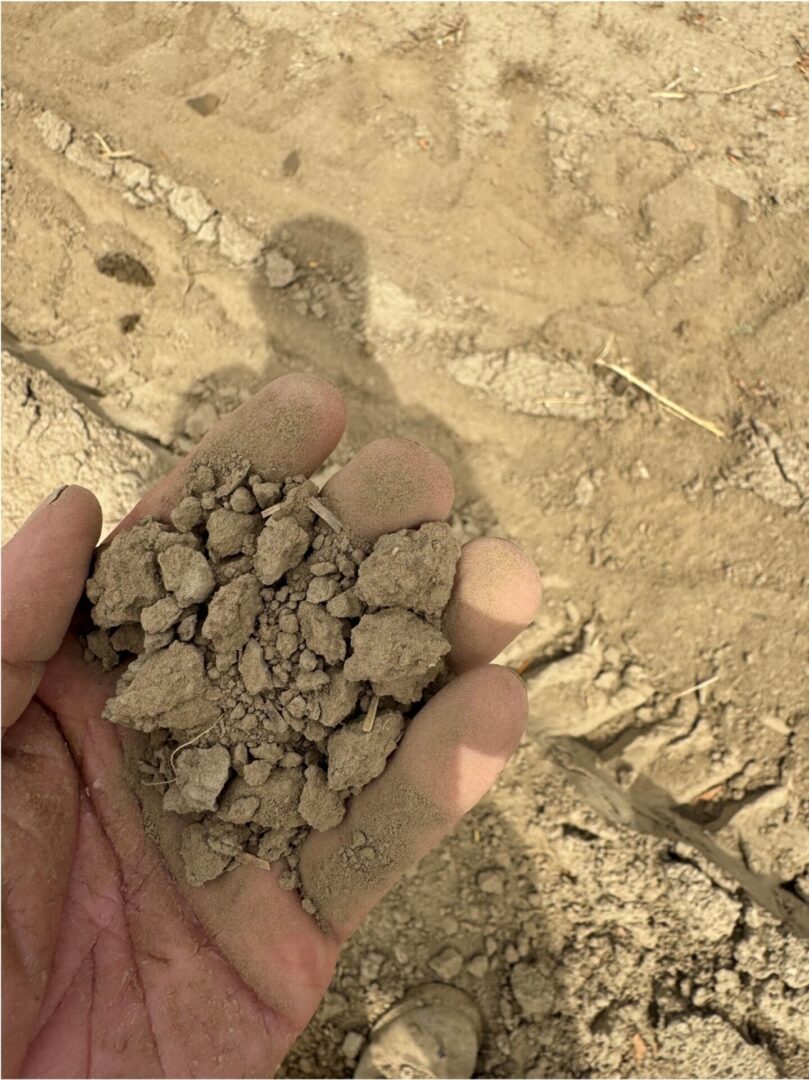
The site team led key management activities throughout the year.
- Initial soil samples taken in February 2025
- Crops fertilized in March 2025
- Compost applied in March 2025
- Crops planted May through August 2025
- Potatoes harvested and graded in September 2025
- Spring wheat harvesed
- Mustard disked
- Corn harvest is scheduled for late fall
Looking Ahead
The next steps for Othello LTARE include:
• Fumigation is lined up for late October to prepare for the next rotation cycle.
• Cover crops will be planted after cash crops, with species mixes evolving based on establishment success and stakeholder feedback.
• Comprehensive soil sampling to monitor changes in org anic matter, microbial activity, and nutrient dynamics.
• Yield and quality assessments for all crops to evaluate economic trade-offs.
• Stakeholder engagement through winter meetings to review progress and refine trial components.


Tim Waters
Washington State University