
WaSHI Annual Report FY25
Central WA Tree Fruit Systems LTARE
Wenatchee, WA

The Washington Soil Health for Tree Fruit Long-Term Agroecological Research and Extension (LTARE) had an exciting year. Researchers planted two new trials between June 2024 and July 2025 year and collected the second full year of data on trial 1 established in 2023.
Research Objectives
The Washington Soil Health for Tree Fruit LTARE aims to develop and evaluate management systems that optimize fruit yield and quality through sustainable soil health management practices. Project goals include: identifying soil health best management practices that will 1) reduce fruit disorders related to nutrient uptake and water/plant stress; 2) conserve water and buffer environmental stress, and 3) identify long-term sustainable management for soil borne disease and nematodes.
Experiments
Trial 1 and 3 (LTARE1, LTARE3) investigate practices to build soil carbon, reduce variability, conserve water, and buffer environmental stress with organic matter applications.
Trial 2 (LTARE2) investigates soil amendment-based strategies designed to mitigate apple replant disease.
Experimental Progress
Fall 2024
• Annual soil and rhizosphere sampling was conducted in the fall of 2024 for LTARE1 including measurements of biological, physical and chemical properties. Measurements included soil carbon, microbial communities and nematode soil food web indicators.
• Tree diameter was measured in the fall 2024 in LTARE1 to track tree growth.
• Treatments for experiment 3 (LTARE3) were applied in fall 2024 and spring 2025 to experimental plots in a 2.5 acre orchard. A high carbon treatment (Carbon) and organic treatment (Organic) was initiated with 10 tons per acre of compost applied in the fall. The mulch treatment was initiated in the spring with a 2 to 3 inch deep layer of apple wood chips.
Spring 2025
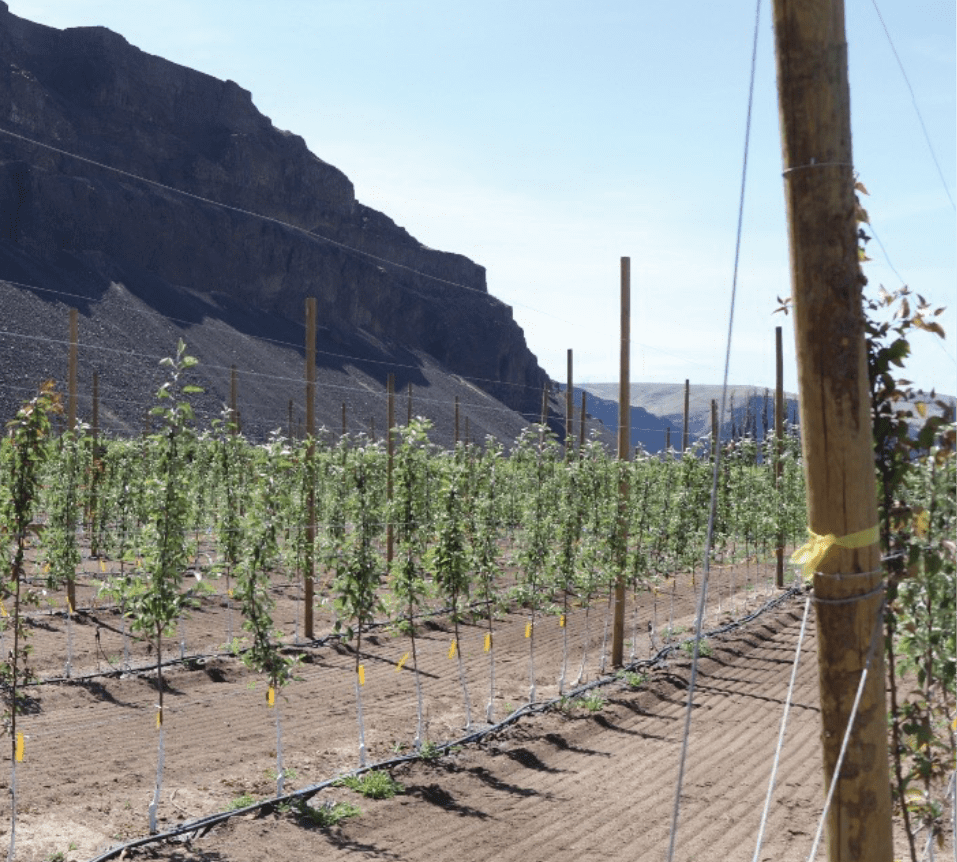
• LTARE2 was planted to apple cultivar gala on G.41 and M9.337 rootstock in April 2025 (Figure 4). Activities to establish the planting included removing rocks, preparing the soil, constructing trellis, planting trees and training young trees.
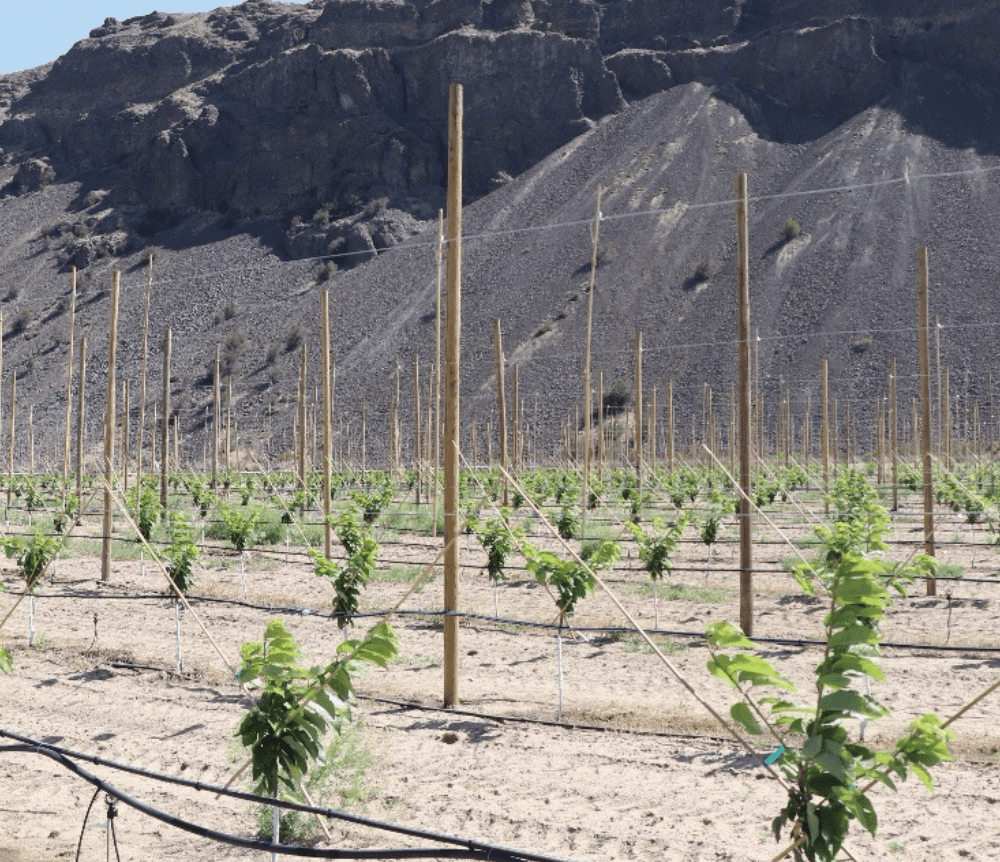
• LTARE3 was planted with cherry cultivator Skeena on Gisela 12 rootstock in April 2025 (Figure 5). Activities to establish the planting included installing the irrigation system, preparing the soil, constructing trellis, planting trees and training young trees.
• Baseline soil sampling was conducted in the spring of 2025 for LTARE2 and LTARE3 including measurements of biological, physical and chemical properties. Measurements included plant parasitic nematodes, soil borne pathogens linked to apple replant disease.
• Tree diameter was measured in new experiments LTARE2 and LTARE3 in the spring to establish their initial size.
• Soil moisture was tracked throughout the growing season in each treatment for LTARE1.
Summer 2025
• Tree stress measurements were conducted every other week in June and July in LTARE1
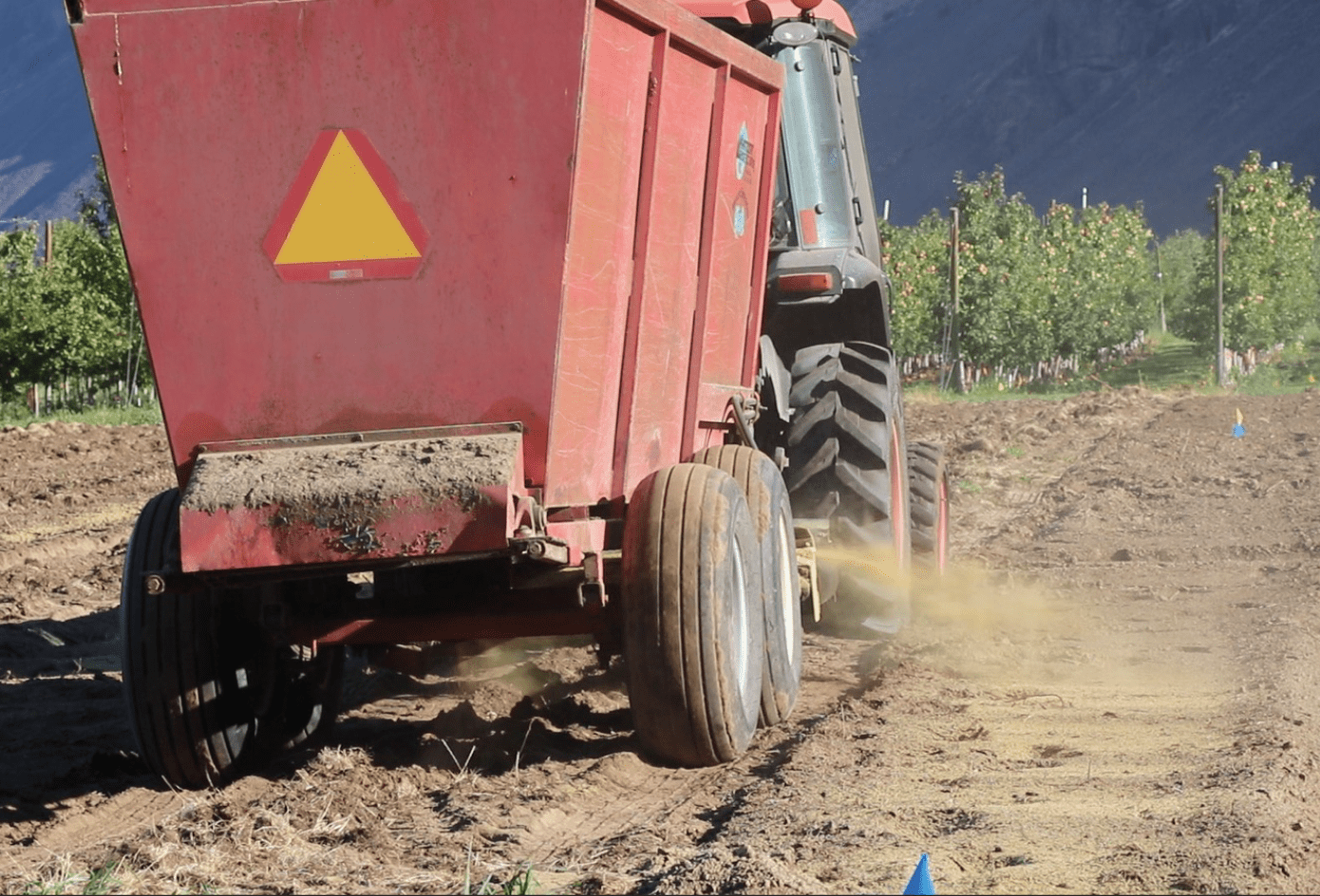
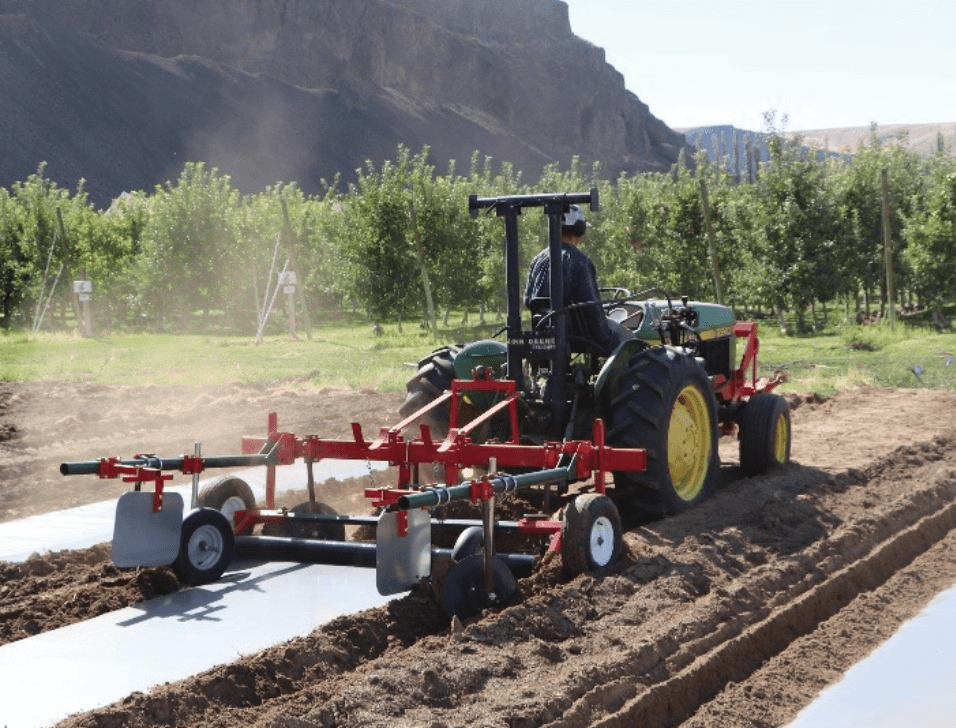
• Treatments for experiment 2 (LTARE2) were implemented in August 2025 to experimental plots in a 2.5 acre orchard (Figure 1 to 3). Treatments include anaerobic soil disinfestation (ASD), Brassica seed meal (BSM) soil amendment, fumigation (FUM) and a no treatment control (CON).
Outreach
• We presented our progress at the 2024 Sunrise Research Farm Summer Field Day, attended by 100 participants, and at the 2024 Tree Fruit Soil Health Workshop, attended by 119 participants.
• Our LTARE site was toured by two groups, one from Australia and one from Texas.
• Cumulatively, over 250 people were reached through trainings and tours.

Tianna DuPont
USDA Agriculture Research Service
