
WaSHI Annual Report FY25
Diversified Organic Systems with Livestock LTARE
Puyallup, WA
The Puyallup Long-Term Agricultural Research and Extension (LTARE) site is located on certified organic land at the WSU Puyallup Research and Extension Center. The specific site was the location of a different long-term organic farming systems experiment that ran from 2003-2015. The land was maintained as pasture for the intervening years and transitioned to the new experiment during the summer of 2022. As part of the transition, plots were located, tilled, and planted to a summer cover crop of sudangrass in late June 2022. In summer 2023 vegetables were planted and harvested for the first time.
The experiment focuses on maritime northwest organic fresh vegetable systems. The design of the Puyallup LTARE was strongly influenced by the previous organic farming experiment as well as a different multi-year organic reduced tillage experiment. The design is a split-split plot, randomized complete block with 4 replications.
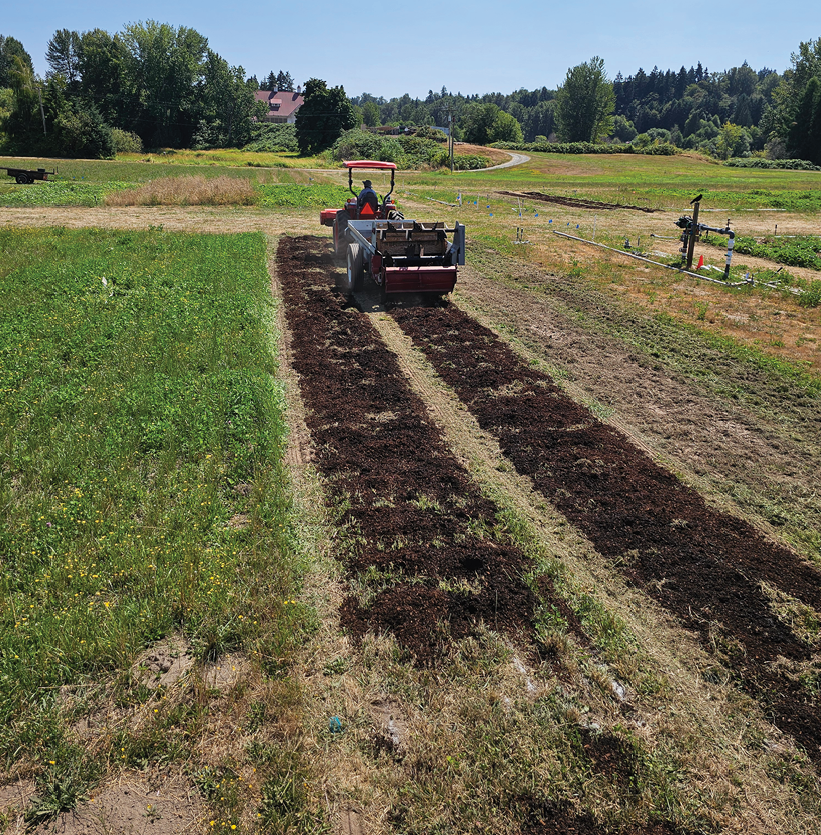
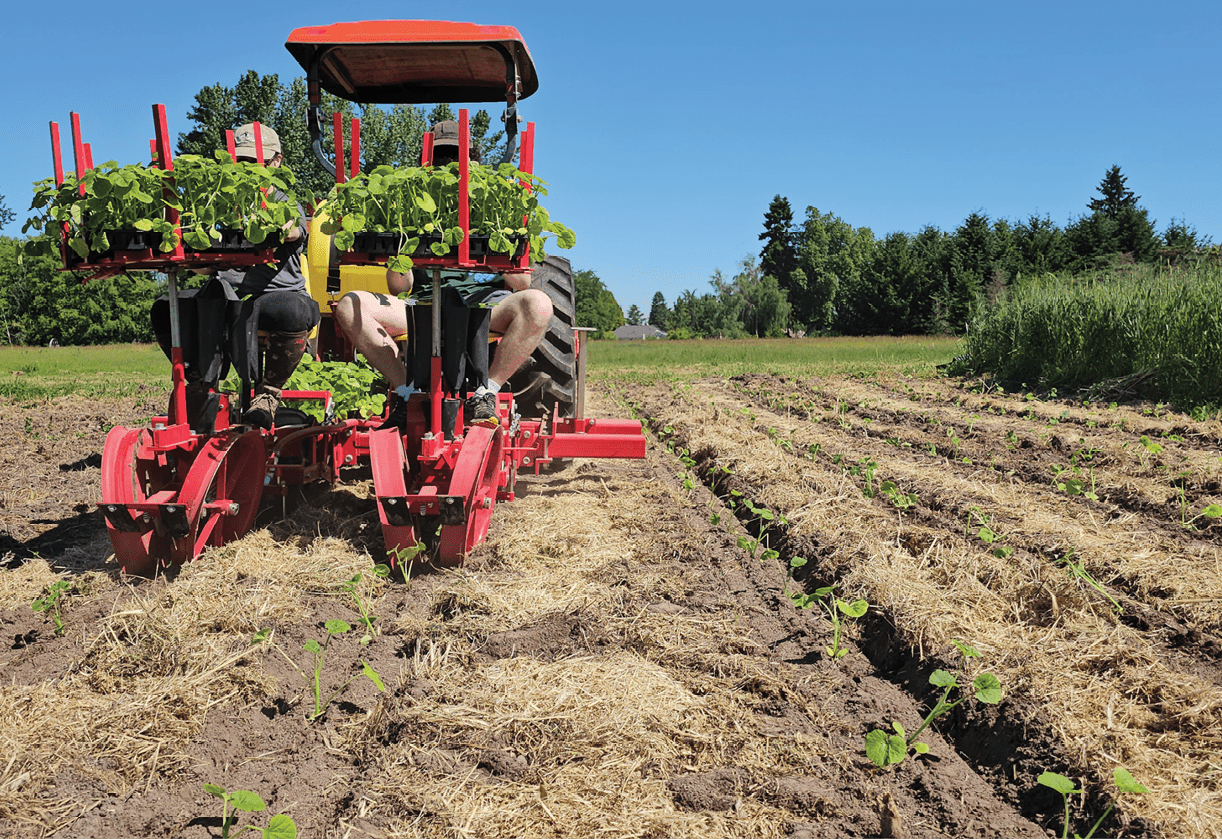
Main plots include an intensive tillage, reduced tillage, and animal integrated system. To manage residue and prepare beds for planting, the intensive tillage treatment utilizes a rotary spader which tills to approximately 30 cm. The reduced tillage treatment utilizes a no-till transplanter, no-till drill, strip tillage, and a power harrow operated at 5 cm. The animal-integrated treatment also uses the power harrow and strip tillage and additionally reduces tillage over the 3-year rotation by establishing a pasture for 22 months. The experiment utilizes a 3-year crop rotation and subplots are the year of the rotation. Sub-sub plots include compost application where compost is applied at a relatively high rate (target is 28 dry tons per acre) once every 3 years.
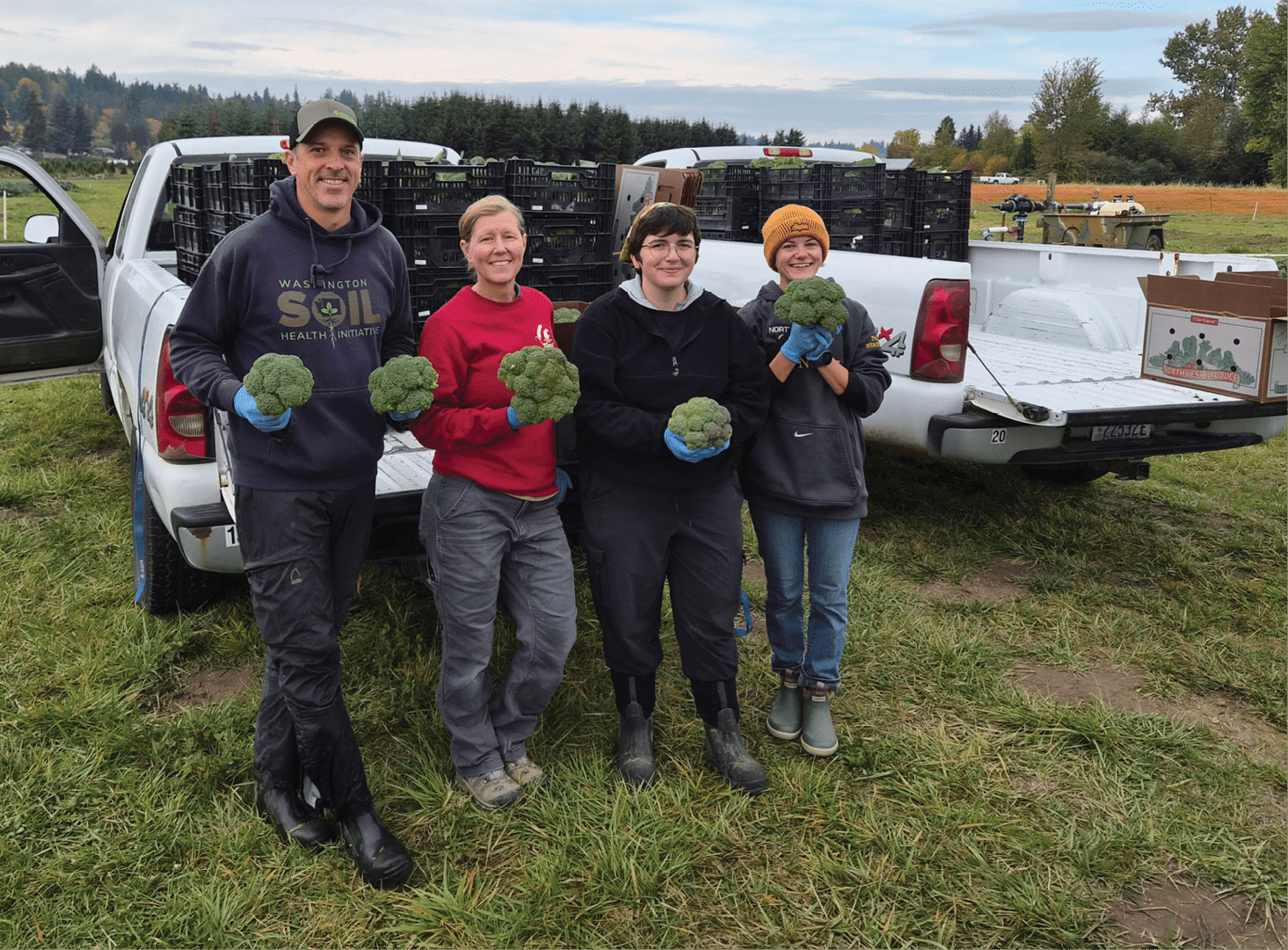
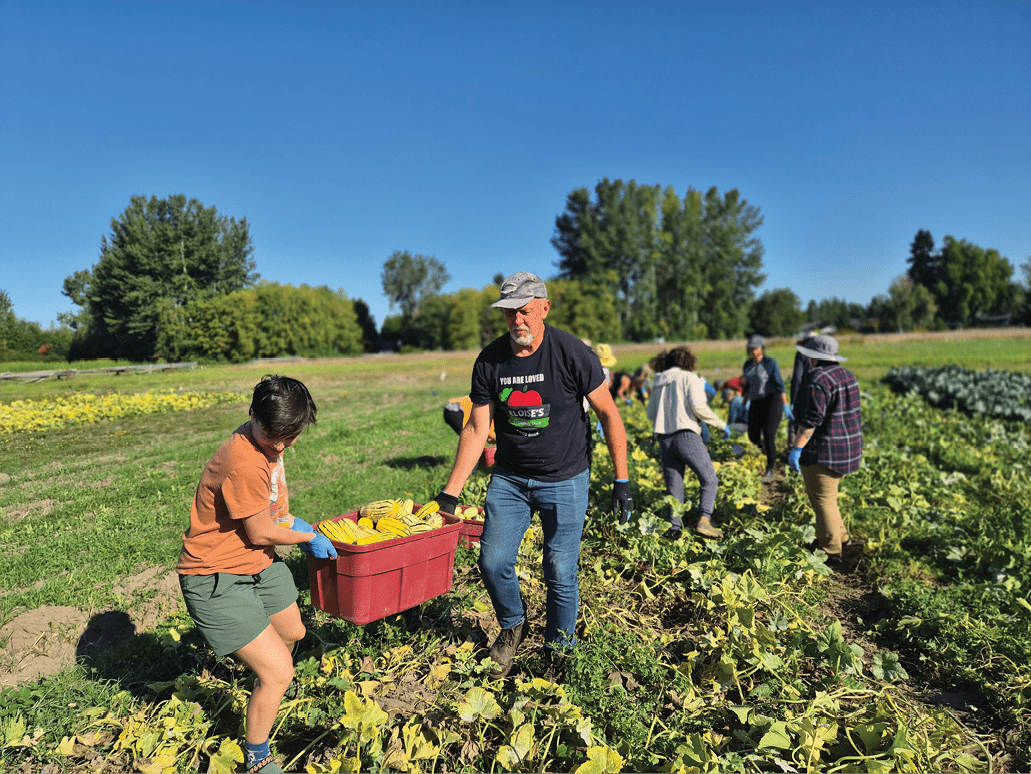
In 2024 we harvested squash, broccoli, and winter wheat from the experiment. Soil health assessments were done during the squash and broccoli phases of the experiment. Results indicated that intensive tillage benefited all crop yields, especially compared to the reduced tillage treatment. Compost was applied before broccoli and had a positive effect on broccoli yield across tillage treatments. Squash and broccoli harvest are donated to local food banks.
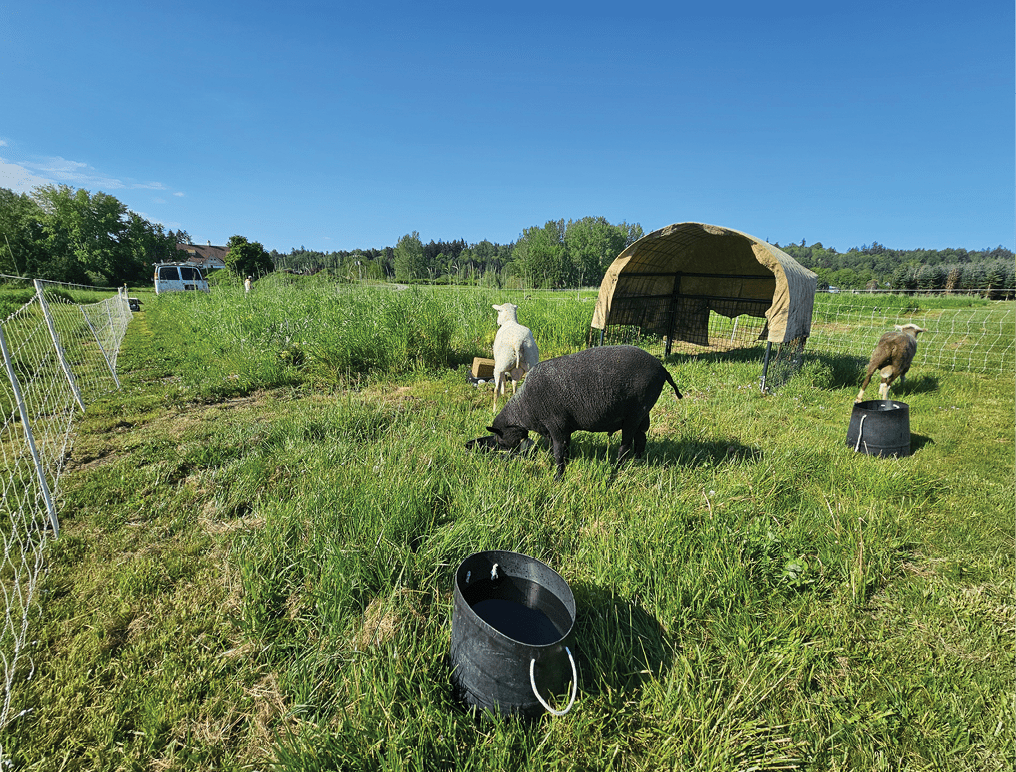
An exciting development in 2024 was the introduction of sheep to the animal-integrated treatment. The sheep grazed on pasture (red clover, annual ryegrass, and perennial ryegrass) in summer 2024 and 2025. Pasture was rotated to broccoli in mid-August, so effects of pasture and grazing on nitrogen availability and broccoli yield can be assessed.
In 2025 we utilized soil moisture monitoring equipment to regulate irrigation in squash. We are still finessing this strategy and hope to share our soil moisture monitoring approach as a webpage in 2026.
A bonus of the LTARE is our ability to explore related research questions that could not fit into the long-term experiment. In a field adjacent to the LTARE, we completed an additional pasture experiment in 2024-2025 that yielded interesting results. Based on soil test data, we applied three different soil minerals before planting pasture: 1) micronutrients + dolomitic lime, 2) calcitic lime, and 3) no treatment. The results were exciting and showed clear promise for the micronutrients + dolomitic lime to increase legume (red clover) production. This pasture also serves as extra grazing land for the sheep.
Doug Collins
Washington State University
