
WaSHI Annual Report FY25
Dryland Systems with Livestock LTARE
Davenport, WA
The Long-Term Agroecological Research and Extension (LTARE) site in Davenport, WA continues to advance its mission of improving soil health and sustainability in dryland cropping systems. Since its inception, the LTARE has focused on addressing key challenges faced by growers in the region—loss of soil organic matter, soil acidification, herbicide-resistant weeds, and moisture management. The site incorporates management activities that aim to:
• Increase soil organic matter in annual crop and crop-fallow transition systems.
• Shorten fallow periods to improve moisture capture and storage.
• Integrate livestock and cover crops into conventional rotations to diversify income streams and improve soil function.
Cover Crop Trial
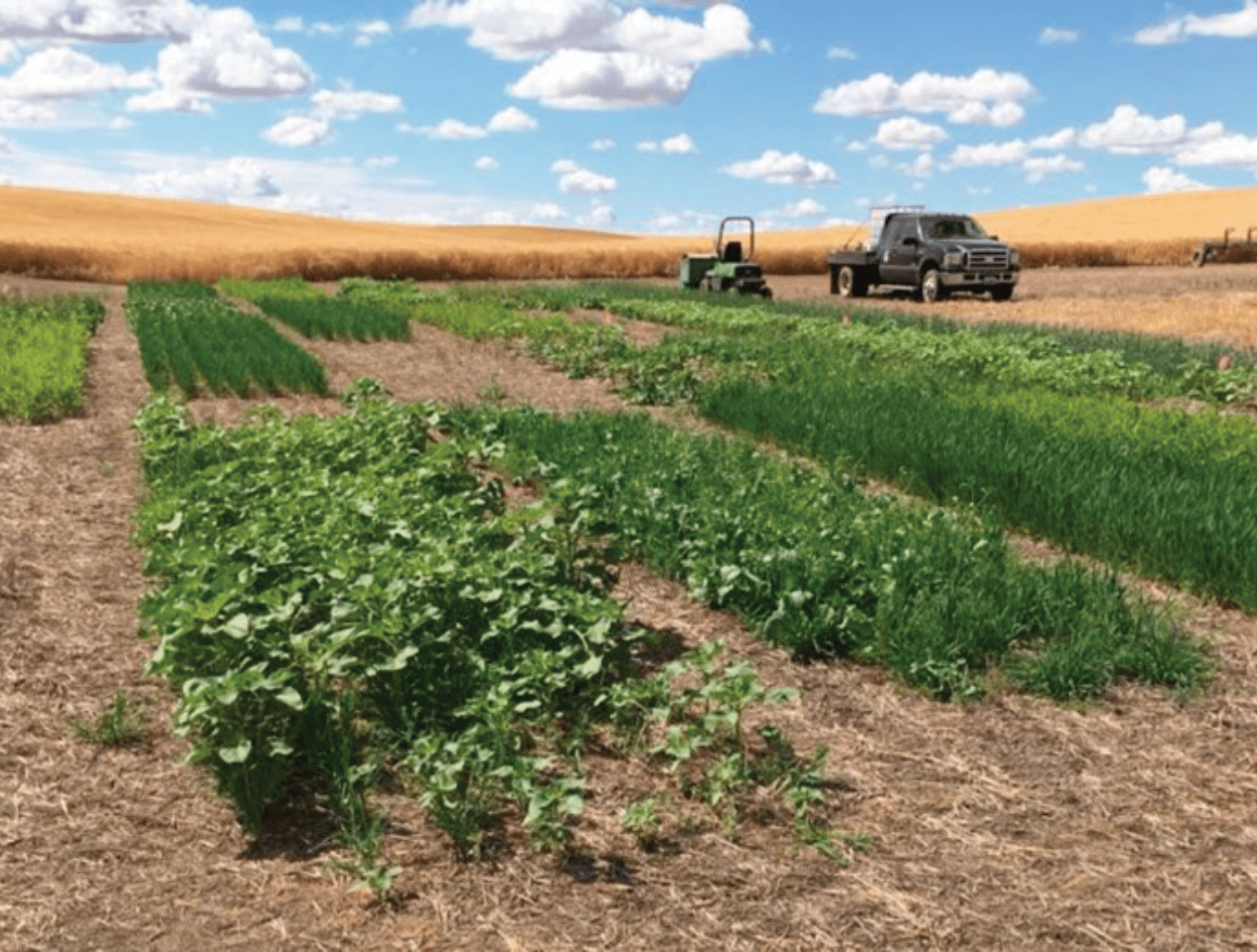
In 2024, the LTARE site launched a new cover crop experiment. The trial compared five distinct cover crop mixes under a randomized complete block design. Species combinations range from traditional mixes (millet, peas, barley) to innovative blends featuring sorghum, sunn hemp, crimson clover, and radishes.
The mixes included:
Mix 1: tillage radish, turnips, white mustard, faba bean and sunflower
Mix 2: proso millet, spring forage peas, beardless barley, blackoil sunflower, and purple top turnips
Mix 3: Rye, oats, crimson clover, hairy vetch, daikon radish, and rapeseed
Mix 4: Sorghum and sunnhemp
Mix 5: Spring triticale
These treatments aimed to identify optimal strategies for balancing biomass production, nutrient cycling, and feed quality. Results from the trials informed cover crop plantings in 2025.
Progress in 2025
This year marked significant milestones for the LTARE site at Wilke Farm.
Cover Crop Integration - In June 2025, the team seeded a diverse cover crop mixture designed to provide forage, improve soil structure, and enhance nutrient cycling. The mix included species such as proso millet, spring forage peas, beardless barley, blackoil sunflowers, and purple top turnips, building on previous trials while incorporating lessons learned from 2024.

Grazing - Six yearling steers grazed the cover crop in mid-September, continuing the site’s integrated livestock approach.
Soil and Forage Monitoring - Biomass samples were collected and sent to a lab for feed quality analysis to ensure that forage meets nutritional standards while supporting soil health objectives. Prior to winter wheat seeding in September, soil moisture samples were collected across multiple depths (0–100 cm). These measurements help us understand how grazing and cover cropping influence water availability for subsequent crops.
Engagement and Outreach
The Dryland LTARE site’s commitment to stakeholder engagement remains strong. In 2025, the team hosted the second SoilCon in January, coinciding with the WSU Lincoln County Wheat Producer Meeting. These sessions provide opportunities for growers, researchers, and industry partners to exchange insights and guide future LTARE activities. Looking ahead, a full advisory meeting is scheduled for February 2026, where researchers will share comprehensive results and next steps.

Looking Forward
The coming year will focus on:
• Completing soil and forage analyses from 2025 trials
• Continuing long-term rotation sampling to assess cumulative impacts on soil health
• Finalizing infrastructure for advanced soil stability testing at Lind
• Preparing manuscripts for publication
Thank you to the LTARE collaborators, advisory panel, and stakeholders for your continued support. The goal of our research remains unchanged: to deliver actionable, science-based solutions that help dryland growers maintain productive, resilient systems.

Haly Neely
Washington State University

Shikha Singh
Washington State University
