


© Leslie Michel, WSDA
Soil Health Ambassadors: Bringing Life Back to the Soil with AMF in Raspberry Production
Learn how one Washington raspberry grower is using arbuscular mycorrhizal fungi (AMF) to improve soil biology, plant vigor, and long-term farm resilience.
Author: Leslie Michel, Washington State Department of Agriculture, Quotes from Riley Spears
May 26, 2026
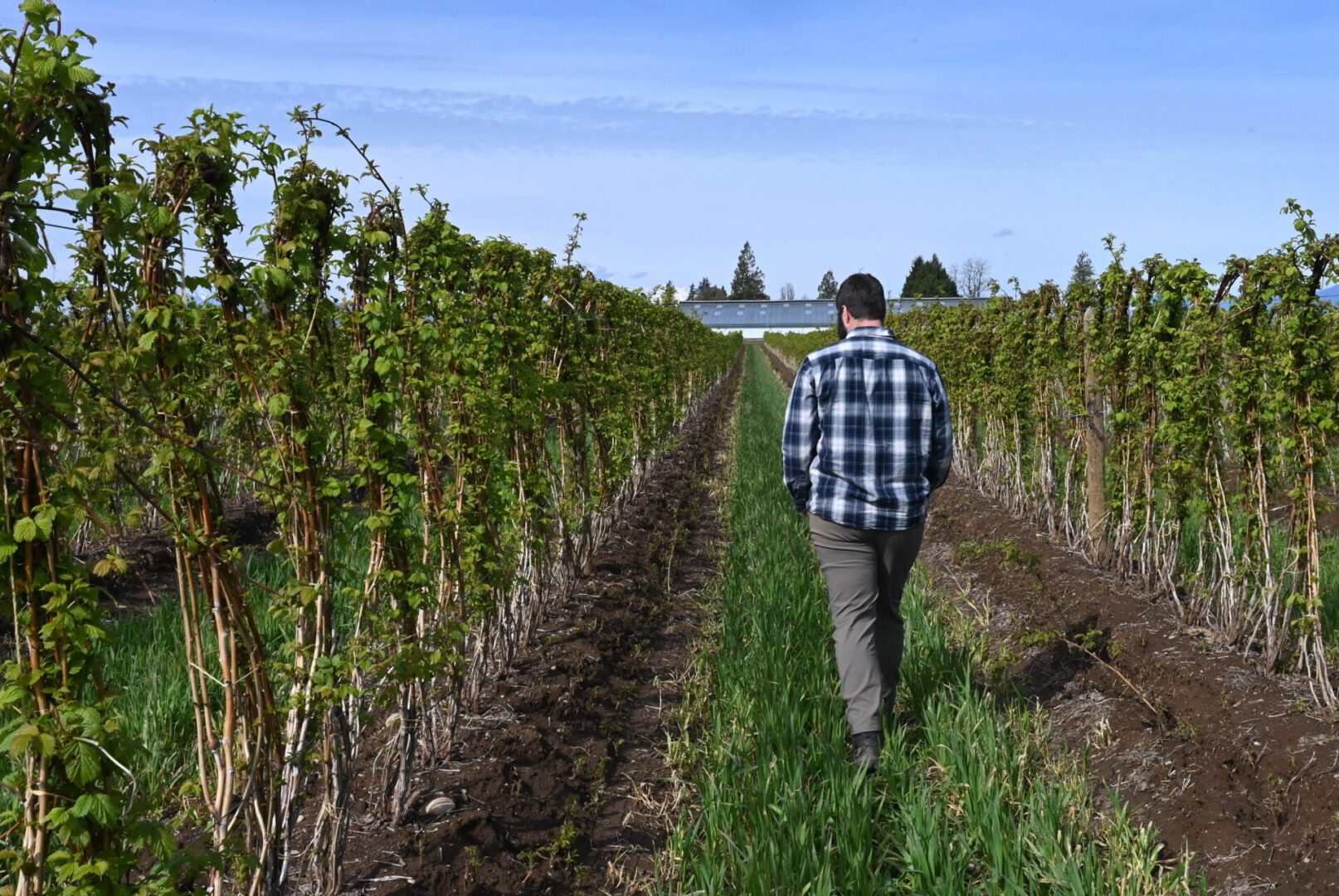
In Lynden, Washington, Riley Spears manages production at Rader Farms, a large raspberry operation focused on balancing productivity with long-term soil stewardship. With approximately 1,000 acres in production, including nearly 600 acres of raspberries, Riley oversees a constantly rotating system of planting, harvesting, and field renewal.
Because raspberry fields remain productive for up to ten years, healthy establishment in the first season is critical. Every year, older fields are rotated out while new fields are planted, creating regular opportunities to evaluate soil conditions and implement new practices.
For Riley, improving soil health is both practical and philosophical. After years of working within conventional systems, he began asking bigger questions about what a productive farm should look like.
“The problem I was seeing was just 20 years of conventional agriculture that didn’t really focus on the life in the soil,” Riley explained. “Something I always come back to is whether or not the farm is fostering life. We’ve started to focus on the amount of life on the entire field, not just the small areas we’re farming in.”
What is AMF, and how did you get interested in using it in your operation?
Arbuscular mycorrhizal fungi (AMF) form beneficial partnerships with plant roots. The fungi colonize roots and extend into the surrounding soil, helping plants access nutrients, minerals, and water that may otherwise be unavailable.
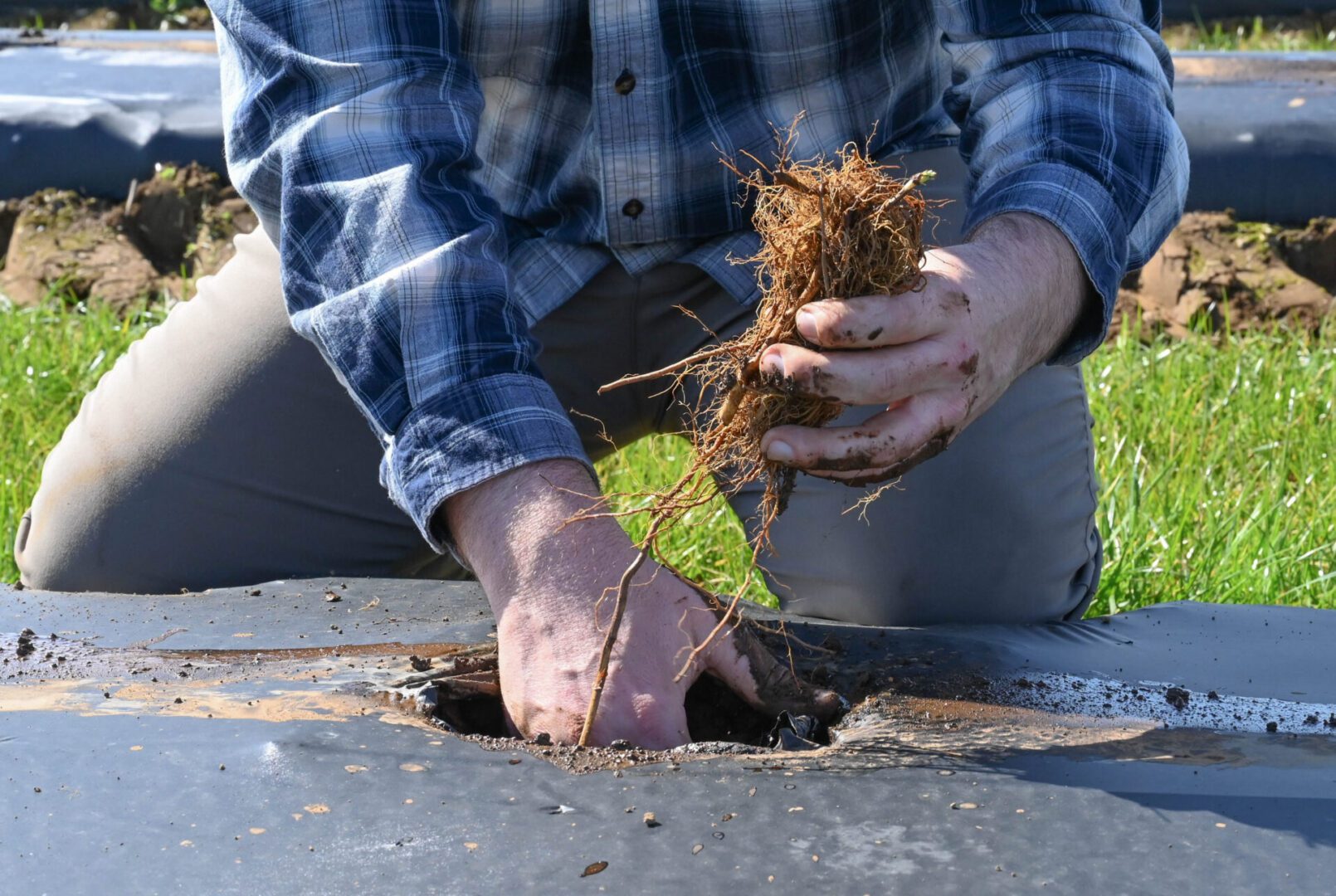
“I was first exposed to mycorrhizal fungi at some soil health conferences, I learned about the benefits of AMF and how it could help the plants, and I wanted to try it.” Today, AMF is integrated directly into Radar Farms pre-plant process for new raspberry fields by mixing it with the starter fertilizer, so that the fungi are expanding around the root base of the plant.”
The solution is delivered through a tractor-mounted water wheel system that creates evenly spaced holes for plants, while applying a measured amount of fertilizer solution.
“There’s lots of different ways you can apply mycorrhizal fungi. On a smaller scale, a root dip is probably the most common. But with how much we’re planting, mixing it into fertilizer is more economically feasible for us.”
What benefits have you seen since applying AMF?
Rader Farms is now in its third year using AMF as a pre-plant treatment. “For the last two years, we’ve been using it on our newly planted raspberries, and we’ve seen increased growth and vigor.” The most immediate improvements have been visible during establishment. “In that initial planting year, once we started using the mycorrhizae, we were seeing really good stands, faster initial growth, better root mass, and just healthier, better color on the plants.”
Although it is still early to evaluate long-term impacts in perennial raspberries, the early signs are promising. “We’re hoping to see better disease management in the long run as well.” Beyond plant performance, Riley sees potential economic benefits from improving nutrient efficiency.
“By improving soil health and utilizing things like AMF, we can tap into nutrients and minerals already available in the soil,” he said. “Ultimately, that can reduce the amount of fertilizer and other inputs that increase our costs.”
What have been the biggest challenges, and how have you overcome them?
“The primary challenge was trying to figure out how to use it and how to get it into the field,” Riley said. “With most agricultural systems, labor is probably the most difficult thing to get around.” Because labor efficiency is critical in large-scale planting operations, any added practice must fit into an existing workflow.
“We were trying to figure out the most cost-effective way to get it into the field without having to treat every plant,” he explained. Integrating AMF into the existing fertilizer and water wheel system ultimately made the practice work.

“One thing you do need to consider when applying AMF is available phosphorus,” Riley explained. “Phosphorus is the main nutrient AMF can help bring into the plant.” Because of this, Rader Farms adjusted its fertility program to reduce phosphorus levels when using AMF.
Importantly, Riley noted that AMF itself has been relatively affordable. “The cost is not that much, It’s only a few dollars an acre to add a product like this for us. The biggest cost is figuring out how to make the application work within your system.”
What would you tell other farmers about applying AMF?
For growers interested in AMF, Riley’s advice is simple: start small.
“I would definitely say give it a shot. A lot of the things I’ve been experimenting with have been on a really small scale first,” he explained. “If you’re not convinced AMF can help, just use it on a few small plants or in a garden. That’s how I started.”
Riley also emphasized that soil health improvements take time. “Soil health doesn’t just shift overnight—it’s a long-term thing.”
Transitioning away from conventional systems can be challenging, especially in commercial agriculture where profitability remains essential. Still, he believes many growers are interested in making that shift. “Everybody cares about this stuff and wants to make that switch… there’s just not always a real clear avenue on how to do it.”
Looking ahead
For Riley, AMF is one piece of a larger effort to improve soil biology and build a more resilient farming system at Rader Farms. Alongside AMF, he has experimented with reduced herbicide use, cover crop trials, pollinator habitat, and alternative fertility strategies.
“Every day out here is an opportunity to learn and experiment with something,” Riley said.
That willingness to test, adapt, and rethink conventional systems continues to drive innovation at Rader Farms.
“Trying to bring more natural symbiotic relationships back to the farm is what really excites me,” he said. “At the end of the day, I just want to know the farm is fostering life.”
Want to connect with Riley?
As a Soil Health Ambassador, Riley has agreed to help other producers interested in AMF and experimenting on their farms. To get in touch with Riley, email WaSHI@agr.wa.gov
To learn more about Rader Farms:
- Watch Rader Farms on Washington Grown
- Follow them on Instagram or Facebook
If you or someone you know would like to participate in our Soil Health Ambassador Program,
email Leslie Michel at lmichel@agr.wa.gov

Leslie Michel
Leslie works with counties on the Voluntary Stewardship Program through the Washington State Department of Agricutlure, providing technical support on their monitoring plans. She also assists with the Washington Soil Health Initiative and Sustainable Farms and Fields program by providing support for soil sampling.
This article was published by the Washington Soil Health Initiative. For more information, visit wasoilhealth.org. To have these posts delivered straight to your inbox, subscribe to the WaSHI newsletter. To find a soil science technical service provider, visit the Washington State University Extension website or the Washington State Conservation District website.