
Washington Soil Health Initiative Roadmap
Western Washington Diversified Farming Systems
1
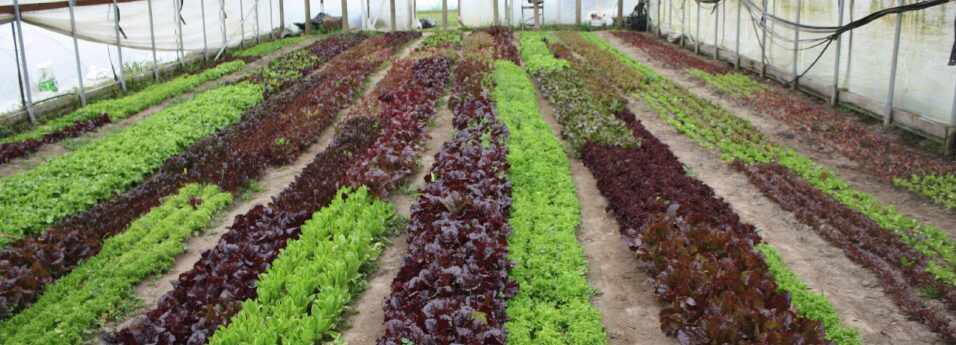
Photo: Benedict
Primary Author: Doug Collins
Summary
Current understanding of soil health is strong with this group as it is a principle of organic production. Challenges were described as reliance on tillage, soil fertility, and farm flooding. Goals included reduction in off-farm inputs, improved understanding of carbon sequestration, better management of soilborne diseases, and creation of policies to increase access to NRCS funding. Gaps in information focused on carbon sequestering, soil biology, successful methods to reduce tillage, soil management, use of cover crops, and other innovative solutions. Lack of local capacity in Extension offices and better incentive program design were both listed as barriers to adoption. Education, technical assistance, and funding could help to overcome these barriers.
Changes in existing policy was listed as a way to alleviate these barriers as well funding for on-farm experimentation. Investment in key personnel at WSU with extension appointments to provide technical support was listed as a key investment area.
Information Collection
Eighteen farmers representing 16 farms in nine counties of Western Washington participated in three virtual listening sessions held March 2-3, 2020. These individuals were nominated by agricultural professionals in the region or self-nominated.
Current Situation
In general, organic growers in western Washington have a good basic understanding of soil health, in part because it is an important tenet of organic agriculture. Producers following organic standards are expected to be fostering soil health, per the soil fertility and crop nutrient management practice standard (National Organic Program). These producers are interested in the aspects of soil health that allow them to produce quality crops (sufficient nutrients, low pest/disease pressure), but many are also interested in less tangible functions of soil health (e.g., carbon sequestration, fostering biological diversity, water quality). Many see themselves as stewards of the soil and would welcome additional focus and resources toward an aspect of agriculture to which they are already paying attention. A focus on soil health by consumers and policy makers would highlight the work of organic growers who are already implementing a host of soil health practices. There is interest in this group in moving away from granular fertilizer and towards cover crops for soil fertility, allowing the reduction of off-farm inputs.
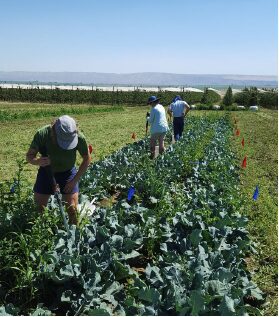
Figure 35. Researchers gather soil samples in organic fertilizer trial. (Photo: Collins)
2
Soil Health Issues
The most common soil health issues faced by western Washington organic producers are described below.
Tillage
Tillage is used to prepare ground for planting and is an important method of weed suppression in organic production. However, tillage can lead to a loss of organic matter and is detrimental to soil microbial populations. Reducing tillage is challenging in organic systems, especially for annual vegetable production as tillage is also typically used to prepare ground for, terminate, and incorporate cover crops. Participants observed an increase of wireworm and symphylans when tillage is reduced. Producers see obvious trade-offs between production and reducing tillage. For example, one participant mentioned using precision direct seeders, which can improve stands and reduce seed costs, but noted that this equipment requires even better bed prep, thus more intensive tillage of soil.
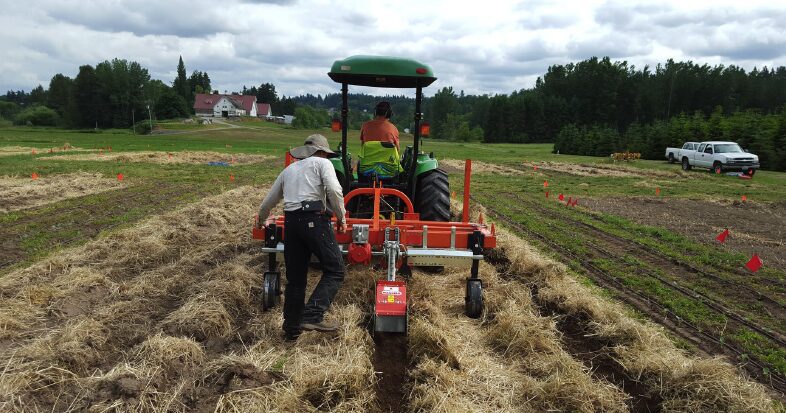
Figure 34. Researchers evaluating strip tillage as a means to protect soil health. (Photo: Collins)
Soil Fertility
Producers using organic methods have more limited options to provide adequate nutrients for crops than those using conventional methods. One option is the use of bulky organic amendments such as compost or manure that benefit soil health as well as provide nutrients. Participants mentioned issues with sourcing compost or animal manure from off-farm in areas where these are in short supply. Some growers are worried about potential herbicide contamination of compost. While incorporating livestock into the farming operation would be one way to supply manure, the animal aspect of the farm is not always profitable, and growers are challenged to add another facet to already busy and diverse operations. Some growers struggle to find affordable organic fertilizer for lower value crops (e.g., hay) where return on investment is limited. Estimating nutrient availability for plants (particularly nitrogen), can be challenging in organic production. Likewise, nutrient, organic amendments and cover crop management were mentioned to be challenging to implement effectively with a diverse portfolio of crops grown.
Soilborne Pests
Soilborne pests were discussed as issues for these growers, including insect pests (e.g., wireworm, root maggot/cabbage maggot, flea beetles, and symphylans); weeds (particularly grasses such as barnyard grass and cockspur grass); and diseases (e.g., club root, white rot, downy mildew). Participants emphasized that alterations to the production system to improve soil health can have unintended consequences, particularly with regard to increasing pressure from some soilborne pests. More specifically, increases in damage from wireworm and symphylans in reduced tillage situations, increased wireworm populations after cover crop incorporation, and one participant reported onion stunt caused by a bloom in Rhizoctonia after plowing in a cereal cover crop. These types of unintended consequence are not unique to organic agriculture, but growers following organic practices have fewer options for addressing the issues.
Flooding
Much of western Washington’s fertile farm ground lies in flood plains. Flooding benefits soil fertility through mass deposition of micronutrients and silt, but leads to difficulty maintaining cover crops, permanent beds (important in reduced tillage systems), and washing away of expensive soil amendments such as compost. Likewise, flooding can impact profitability by shortening the season, cause damage to overwintering crops (e.g., brassicas), and decreased summer production in parts of the field that are wet during the winter.
Other specific challenges identified by this group include suburbanization and land use changes around these farms, many of which are in peri-urban areas lacking strong agricultural infrastructure; knowing how to maximize soil health for the diversity of crops on each farm is challenging; growers’ ability to experiment is limited by finances and time.
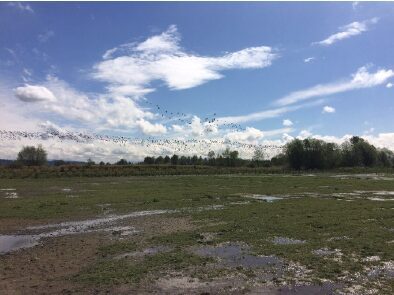
Figure 36. Researchers gather soil samples in organic fertilizer trial. (Photo: Jobe)
3
Goals and Priorities
- Reduction of off-farm inputs.
- Moving toward cover crops and away from granular fertilizers.
- Incorporation of soil health into planning, development, and policy considerations at the county and state levels.
- Growers understanding and implementing practices resulting in carbon sequestration, following needed research in these areas.
- Accessible soil health metrics specific to diversified organic production systems in western Washington.
- Growers understanding and effectively managing soilborne disease, a common issue for small acreage producers growing many high demand crops on small acreage.
- Paradigm shift from reframing question: “Why do my plants/soil have unbalanced pest pressure?” instead of “How do I get rid of these pests?”
- Policy that provides cost share and encourage access to NRCS to increase soil testing, cover crop seed costs, revolving loan programs to assist beginning farmers would all be good programs to invest in that provide immediate support where it matters; to make investments into soil fertility and building carbon reserves.
Information Gaps
The following were identified as important information gaps related to soil health:
Sequestering carbon and building soil organic matter
- More information is needed on best ways to sequester carbon in the soil, thereby building organic matter as well as targets for soil organic matter levels to reach and how to successfully incorporate soil-building practices into production systems
Soil biology
A better understanding is needed of how the biological health of soils impacts a crop’s ability to access nutrients and how soil health affects the nutritional quality of the resulting crop.
Strategies for successful reduced tillage in organic production
- Management of perennial weeds and pest problems in reduced tillage systems, including non-tillage weed control for paths in perennial berry fields.
- Management of early crops in the spring in a no-till situation (e.g., how to get soil warmed up and introduce oxygen without tillage).
- How to ameliorate impact from tillage that is needed for seedbed preparation.
- Identifying rotations that are compatible with reduced tillage.
- How to achieve high-quality, good-looking produce in a reduced tillage situation (e.g., carrots that aren’t knobby).
- More information on the pros/cons of various kind of tillage for organic farming.
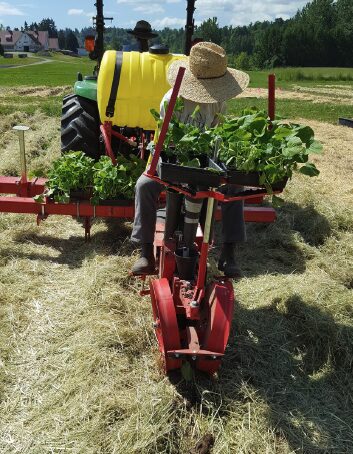
Figure 37. Transplanting squash into cover crop residue. (Photo: Collins)
4
Information Gaps
The following were identified as important information gaps related to soil health:
Cover crops
- Trying to figure out what works best for understory cover cropping.
- Cover crop combinations and timing/methods of cover crop termination.
- Effective strategies for use of winterkill cover crops for soil nutrients and early spring plantings (e.g., timing, density).
- Fine tuning use of leguminous cover crops for providing nitrogen, particularly in soils with high phosphorus levels.
Management
- Best practices shifting from pasture to annual crop production (especially for managing pH and compaction).
- More information on managing wet soils, managing unused ground to maintain fertility, and soil testing.
Other innovative solutions
- Perennial vegetables as a method for soil health improvement (or other innovative production practices).
- More information on terminating cover crops.
- Information on how to scale up innovative solutions coming out of small farms.
- How to incorporate larger livestock (larger than chickens) with vegetable production.
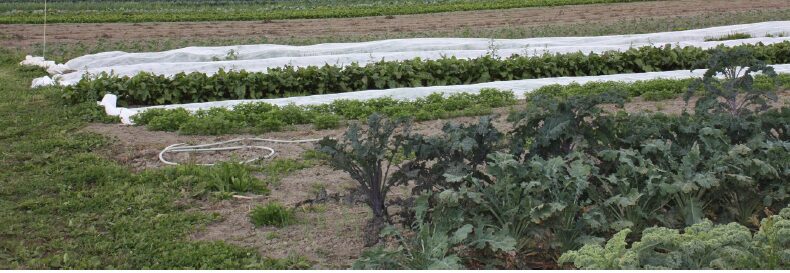
Figure 38. Diversified vegetable farmscape common in western Washington. (Photo: Benedict)
5
Barriers to Adoption
Recent decades have seen significant erosion in public funding for WSU Extension agents that has affected all agricultural producers, including diversified growers in western Washington. There is a need for both more technical support in the form of agricultural staff in local WSU Extension offices, and for more researchers paying attention to the problems of organic vegetable producers at this scale.
Many farmers report operating on very thin margins and while many have interest in trying innovative strategies, they often don’t have the funds necessary for on-farm experimentation. These growers mention the need for financial support both for the time and resources needed to implement soil health practices. The practice of cover cropping can result in taking an area out of production, sometimes for two to four years, which represents significant loss of revenue. While cost-share programs (e.g., through NRCS or Conservation Districts) can help defray costs, growers expressed that currently cost-share programs do not reflect the reality of costs, including the time spent managing funds. Growers use of cost-share programs often need to invest their own money, with sometimes a lag of several months before receiving payment, which can be financially difficult. Growers in this group are often challenged to find affordable equipment that is suitable for the scale of their operations. Many of the practices for improving soil health (e.g., reduced tillage, cover crop incorporation) may require investment in expensive, specialized equipment that they do not currently own.
Related are the barriers involving the time and effort needed to access resources and existing information and figuring out how to apply the research to their own farm. Further complicating the effort involved are the facts that the variability in crops grown is substantial, especially for market farms, resulting in significant recordkeeping needs.
Overcoming the Barriers
Direct technical assistance is needed to help growers navigate the complexities of their farming operations and to assist with planning and application of soil health strategies.
“Since we don’t have a specific agricultural person to go to, we just share among farmers. It would be nice if we had one place where we knew where to look.”
“If we are going to adopt a no-till truly sustainable system, maybe we have to retrain our customers not to expect a wide variety of crops over a long season.”
Education is needed, including 1) education to help growers understand their soil health and effects of practices over time, including a centralized place to look up information on soil health and translation of scientific information into some usable information for farmers; and 2) education of non-growers, specifically of policy makers and the general public to help them understand the need for soil health and the links between soil health, productive farmland, and organic practices. Several participants expressed that it is important to change customer expectations (e.g., seasonal availability) as a part of addressing soil health concerns.
Funding for time and resources necessary to implement soil health practices that are available and should be provided up front, and at a level that realistically reflects the cost of such practices. There is a role for plant breeders to work with growers to develop locally adapted crop varieties that do well in no-till systems.
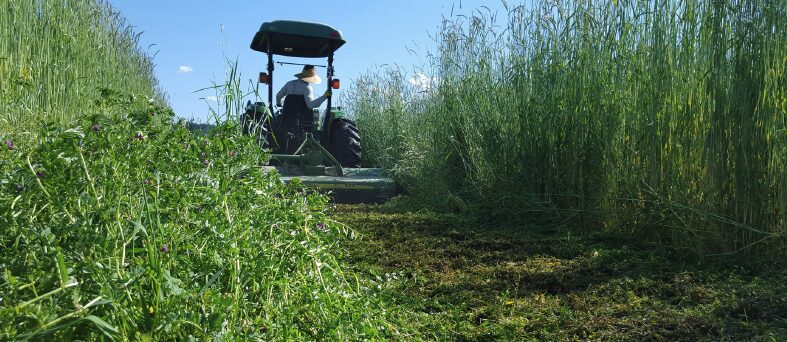
Figure 39. Researchers evaluating novel cover crop termination methods for use in organic farming. (Photo: Collins)
Soil Health Policies
Incentives for soil health practices are needed to reward farmers who implement practices that improve soil health (e.g., overwintering cover crops) including payments to growers for sequestering carbon in their soils, and incentives for practices that preserve the health of waterways and Puget Sound. Participants specifically mentioned that a policy supporting biochar could provide a win-win for fire resiliency and agricultural soil health. Technical assistance and education were mentioned by growers as important ways to overcome barriers to improving soil health. Funding for on-farm experimentation to try different practices and document how they affect soil health and crop production. One participant noted that “the key is that the money has to come first.