
Washington Soil Health Initiative Roadmap
Dryland Agriculture in Eastern Washington
1
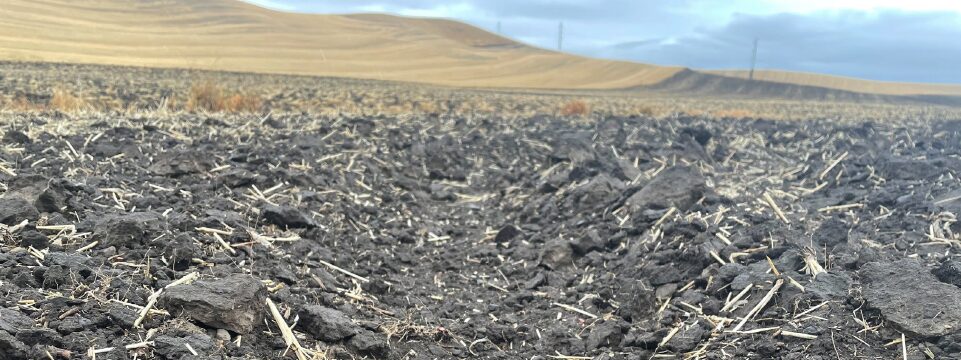
Photo: Sullivan
Primary Author: Rich Koenig
Summary
Dryland production in eastern Washington over the last 130 years has led to several soil health issues such as erosion and soil acidification. Farmers’ understanding of soil health is rooted in the issues that this production region faces such as physical and chemical components. Use of innovative tactics such as no-till/direct seeding have overcome some of the issues, but other factors (environmental/economic) can limit their use. Goals and priorities for this region are diverse but examples include improved understanding of soil biology/plant interaction, use of additional offfarms inputs (e.g., amendments), and better soil health assessment tools. Barriers to improvements include economic barriers, sociological barriers, and lack of information. These can be overcome through improved research capacity, innovative extension/outreach methods, and long-term investments in education.
Methods
Content for this section of the roadmap was assembled from knowledge of historical and presentday soil health challenges in the dryland agriculture areas of eastern Washington, north-central Oregon, and northern Idaho. Sources of information include published research, perspectives from the long-running Solution To Environmental and Economic Problems (STEEP) and Columbia Plateau PM10 wind erosion (CP3) project special research grants, the more recent Regional Approaches to Climate Change (REACCH) project, stakeholder meetings, and various other reports.
Recent stakeholder meetings (Washington State Soil Health Summit, 2018, Pullman, WA; Healthy Soils-Healthy Region Workshop, 2019, Pendleton, OR) involving over 200 participants and facilitated by the Washington State University (WSU) Center for Sustaining Agriculture and Natural Resources provided current stakeholder perspectives and priorities. These meetings included a broad cross-section of stakeholders from farmers to those who serve them, including university research, extension, ag industry, and state/federal agency personnel.
2
Current Situation
Farming in dryland areas of the inland PNW began in the late 1800’s. Early settlers found the area to be perfectly suited to wheat production due to the combination of deep, fertile, loess soils and Mediterranean climate that combine to effectively store winter moisture and produce high yields of winter wheat. Erosion was likely the first soil health challenge in the inland PNW and has been a perennial problem in this area since the inception of farming. In the early to mid-1900’s, annual erosion rates were estimated at 10 to 30 tons per acre per year (approximately ⅛ inch of topsoil) with conventional farming practices (USDA 1978). By some estimates this was equivalent to 3/4 ton of topsoil eroded for each bushel of wheat produced.
Erosion in the inland PNW has been the result of several factors including: 1) extensive use of conventional tillage; 2) predominance of winter precipitation with the potential for frozen soil and runoff; 3) steep and irregular topography that does not lend itself to conventional structure or landscape modification practices to control erosion; and 4) a winter wheat cropping system that leaves the soil nearly bare during the winter precipitation season. While erosion by water has been a major soil health and environmental concern, wind erosion is also a problem, particularly in the Columbia Plateau region of the inland PNW where, historically, lower annual rainfall amounts led to rotations that alternate between crop and tillage fallow.
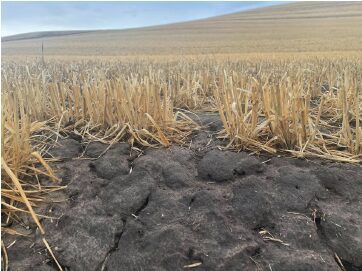
Figure 3. Soil erosion within wheat stubble. (Photo: Sullivan)
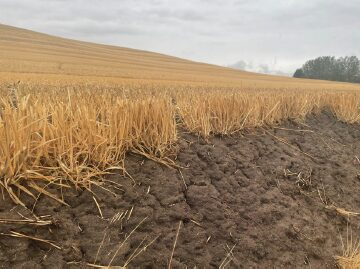
Figure 3. Soil erosion within wheat stubble. (Photo: Sullivan)
By the 1970’s it became clear that major changes in farming practices were needed in the inland PNW to reduce erosion rates. The STEEP special research grant was initiated in 1975 (Kok et al. 2009) to address soil erosion concerns in the inland PNW. The CP3 special research grant was initiated in 1993 to focus primarily on wind erosion on the Columbia Plateau sub-region of the inland PNW. Both projects involved integrated research and education and a systems approach that addressed all of the characteristics of conservation farming from planting to harvesting. Through the successful development of conservation technology and farming systems, soil loss rates were reduced to five tons per acre per year or less per year with longterm benefits of improved soil, water, and air quality (Kok et al. 2009).
Today (Schillinger and Papendick 2008), dryland crop production areas of the inland PNW (Washington, Idaho, and Oregon) encompass nearly 8.2 million acres (5.5 million acres in Washington) and produce some 13% of the nation’s wheat supply and 80% of its specialty soft white wheat for export. While soil erosion by wind and water has been greatly reduced throughout the dryland areas, it is still an ongoing concern. Further, conservation measures adopted to control erosion have created new soil health challenges that in many cases threaten to undermine progress made in soil conservation to reduce erosion.
3
Current Understanding of Soil Health
Farmers in the dryland region broadly interpret soil health to include a myriad of physical, chemical, and biological properties that impact short-term yield and the long-term sustainability of farming practices in dryland areas of the inland PNW. These properties are inherently interrelated and influenced by management practices in complex ways and over a range of time scales.
Farmers in the dryland region understand that soil biology is complex but fundamentally important to disease causation and resistance, residue decomposition, nutrient cycling, herbicide carryover, soil structure, and several other important outcomes. While they understand the importance, soil biology is a “black box” and largely unknown and untapped in terms of understanding management implications and opportunities. The concept of a microbiome in soil adds both promise and complexity to the understanding and management of soil biology.
Farmers in dryland areas understand that no-till/direct seeding has improved soil structure and water infiltration and percolation rates. However, they are concerned about soil physical properties such as compaction associated with the adoption of reduced tillage practices. With no-till/direct seeding, farmers can enter a field earlier in the spring to spray and plant while the soil is at a higher moisture content. This has promoted more soil compaction and, coupled with less tillage, has made it more challenging to remediate subsoil compaction.
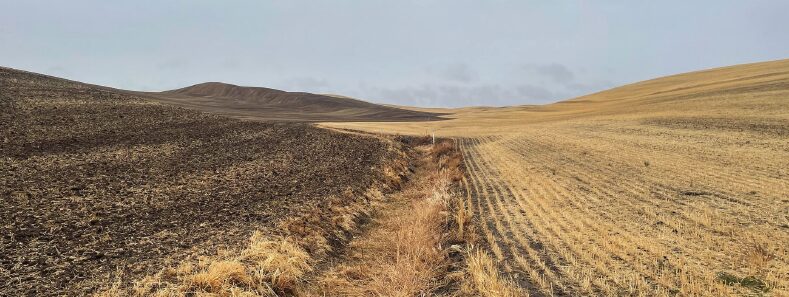
Figure 5. Tilled wheat field (left) and no-till wheat field (right). (Photo: Sullivan)
Nutrient depletion has been a concern as farmers focus on nitrogen and phosphorus, but perhaps neglect other nutrients. Increasing occurrence of micronutrient deficiencies and potential concern or opportunities associated with subsoil nutrient levels have been cited. Farmers also question the reliability of conventional soil testing assays for plant nutrients that may not accurately assess availability.
No-till/direct seeding coupled with high yields can pose problems with residue (particularly winter wheat) management. Increased restrictions on residue burning have led to more baling and removal, which removes large quantities of basic cations such as potassium, calcium, and magnesium in the residue, as well as smaller quantities of other secondary and micronutrients. The opening of a straw pulping plant in Starbuck, Washington has provided an economic incentive to remove more residue. The long-term consequences of residue removal bear careful monitoring.
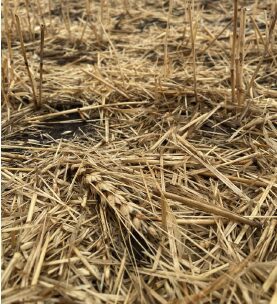
Figure 6. Surface wheat residue in the Palouse. (Photo: Sullivan)
Soil pH has emerged as a major concern in the higher rainfall areas of the inland PNW. Early work by Mahler et al. (1985; 2016) documented soil acidification in northern Idaho as a yield-limiting factor for dryland wheat and pulse crops and projected that this problem would grow and encompass a larger area of the high rainfall zone in northern Idaho and eastern Washington as farmers continued to use ammoniumbased fertilizers. This projection has come true, though perhaps not on the scale or timeline originally predicted by Mahler. Interactions between soil pH and plant diseases, nutrient availability and cycling, and herbicide residue carryover complicate soil acidification issues. Stratification of soil acidity in reduced tillage systems also has unknown consequences. Further, residue removal (described above) has the potential to accelerate acidification and associated problems (e.g., aluminum toxicity).
Farmers increasingly understand and appreciate that necessary steps taken to reduce soil erosion through conservation tillage have created new soil health and cropping systems challenges that require ongoing research to develop solutions to these emerging problems. Examples of these include increased soil compaction in conservation tillage systems, stratified acidity in no-till/direct seeding, and diseases that are more prevalent when tillage is reduced.
Farmers associate improved soil health with improved function, productivity, and resiliency in the face of climate and other challenges, both known and unknown.
4
Goals, Priorities, and Milestones
- Adoption of known soil health practices is widespread and “automatic.” Equipment for no-till is easily accessible/affordable.
- Economic improvements are experienced by producers via soil health practices. Soil health is valued in the marketplace and supports thriving businesses and communities.
- Healthy food is grown sustainably in a system rooted in soil health.
- Erosion reduced, in turn decreasing dust storms, road closures, and soil runoff.
- Water quality improved through lowered nutrient and sediment loads.
- Water infiltration and storage increased, creating better drainage in winter and drought resistance in summer.
- Soil organic matter levels increased.
- Resiliency to climate stressors, leading to more stable crop yields.
- Disease, pest, and invasive weed pressure reduced as well as herbicide resistance.
- Metrics and measurements have been developed that are cheap, universally accepted, relevant to specific cropping systems, and can be easily used to inform management decisions.
- Grazing/livestock practices improved through the integration of crops and livestock or crop and organic wastes.
- Soil amendment knowledge and adoption increased and accepted within soil health initiatives (e.g., biosolids, compost, biochar, other organic materials).
- Reduction of fertilizers and pesticides use while maintaining stable yields.
- Cover cropping systems relevant to PNW are developed and adopted.
- No-till/reduced tillage practices are widely adopted.
- Policy approaches emphasize voluntary, incentive-based approaches (as opposed to regulatory), are consistent among agencies and reduce barriers to improving soil health.
- The general public understands soil health and its relationship to sustainable land management, ecosystem services, and healthy food.
- Effective diagnostic tools and tests for soil health.
- Understanding soil biology/ecology.
- Understanding plant-soil interactions.
- Long-term soil health research.
Soil Health Issues
- Defining and understanding what soil health is…not getting lost in the complexity of the issue and putting existing knowledge to use to manage soil health for specific end goals.
- Identifying a specific set of soil health indicators that can effectively be monitored and tied to production and sustainability outcomes.
- Quantitatively connecting economic and environmental outcomes to soil health indices.
Information Gaps
Effectively and rapidly translate the science/understanding of soil health to implementation. Innovative growers are often ahead of university researchers. Some of the best work that Extension can do is facilitating interaction with and between innovative growers (e.g., a former extension agent started a direct seed breakfast club and facilitated interaction between farmers that are innovators). It’s very difficult for researchers to stay ahead of the farmer/rancher leaders as research funding is generally directed at the majority of the growers. Extension is an important component, with the majority of effort directed at keeping the middle of the pack moving forward.
5
Barriers to Adoption
- The most critical barrier is the inherently complex nature of soils – and how little is actually known.
- The lack of clarity and consistency in terms of soil health metrics used across the region and cropping systems and inconsistency in measuring the benefit of improved soil management over time.
- Sociology/psychology of adoption: major barrier is the individual’s mindset – particularly as it relates to the difficulty of correlating management investments with measurable outcomes.
- The economic incentive at the farm level is often unclear. We need to better understand return on investment (ROI) of soil management practices.
- The disconnect between producers and consumers as it relates to management of soils. Producers don’t get paid to manage soils; they get paid for a crop.
Overcoming the Barriers
Research
- Stable funding pool to invest in soil health research.
- Long-term research that links soil health to environmental and economic outcomes.
- Capacity – human (new hires, cluster hires) and facilities.
- Taking on-farm and analyzing it in meaningful ways to develop regional best practices. (Though this should be seen as low hanging fruit, some clarity is needed about what the questions are first, think about a comparative score card approach?).
Outreach/Extension
- Create new partnerships in industry and cultivate better partnerships to reach a more diverse group of producers to effect change.
- Central website for information.
- Collaboration, resource pooling, and training: farmer-researcher collaborations and interactions
- (foster two-way influences), grower to grower mentoring, education and training for crop consultants.
- Communication plan reaching producers where they are with understandable language; Improvements in communications down the supply chain (potential tool example: potato sustainability project).
- Encourage ‘out of box’ work in extension and agriculture service.
- Risk assessment tool (e.g., Farm Assist or Home Assist programs established in the 80’s: guide a user through protecting water resources that can guide farms through sustainability decisions).
- Monitoring should always be part of the protocol for implementing new practices.
- Better communication from researchers to farmers about the practices that ARE making a difference.
- “Cultivating a pioneer culture” –identifying innovators.
- Long-term demonstration of proven ideas critical for grower buy in.
- Finance on farm research with research, growers, industry.
- Matching extension with growers willing to do large scale plots/demos.
- Development of meaningful soil health metrics, development and use of existing studies to better understand soil health metrics.
Education
- Add capacity to teach soil health-related courses.
- Need a broad base of knowledge, encourage cross-disciplinary training for students (no silos).
- Encourage training in more effective technical communication (e.g., among soil scientists).
- Re-introduce conservation ethics and add more training in social sciences part of soils course and standard curriculum.
6
Soil Health Policies
- Cost-share programs that help reduce the risk of experimentation are critical. Especially, programs that offer direct payment for building soil organic matter.
- Soil health checkoff.
- Fertilizer tax.
- Carbon tax.
- Soil erosion tax.
- Invest in recognizing (award program), validating (replicated studies) and sharing practices that innovative producers are implementing successfully.
Resources/Tools/Opportunities
- “Sustainability audits” for various crops.
- Address the dwindling human capacity issue with good hires (i.e., research, extension, crop advisors, agency / Conservation District staffing).
- Focus on utilizing current resources and create a clearinghouse for new innovation.
- Enhance the research and technical support connectivity between researchers and innovative producers.
- Explore opportunities for accessing databases on soils collected by the private sector.
- Further evaluation of various soil health indicators / tests across cropping systems and the region.
Cropping System Specific Issues
- Lack of irrigation/limitations imposed by natural rainfall amounts and distribution may pose challenges to altering management practices.
- Limited options for economically viable crops and diversification of crop rotations (including cover cropping).
- Heavy reliance on synthetic nitrogen and other fertilizers with few off-farm sources of nutrients or organic matter amendments.
- Heavy reliance on glyphosate tied for reduced tillage.
- Increasing occurrence of herbicide resistant weeds coupled with few new options in terms of active ingredients and new herbicide modes of action.
Core Investments Areas
- “The goals of our consumers should be our goals”; Bringing more stakeholders (i.e., those who eat) to the table will ideally result in more money for research.
- Funding mechanisms are needed to support soil health over time (e.g., soil health checkoff, fertilizer tax, carbon tax, soil erosion tax). Establish public, private partnerships similar to those that have been successful in Midwest.
- Invest in recognizing (award program), validating (replicated studies) and sharing practices that innovative producers are implementing successfully.
- Invest in and fund long-term, on-farm, research and demonstration projects. Involve growers with operations of different scales, researchers, and industry.
- Invest in dedicated, multi-disciplinary soil health science positions. Fund a dedicated soil ecology center, endowed chairs, with state government leadership and industry support.
- Invest in a research and outreach team to collect stories on and market the benefits of soil health to producers and the public.
7
Resources
Awale, R., S. Machado, R. Ghimire, and P. Bista. 2017. Soil Health. Chapter 2 in Advances in Dryland Farming in the Inland Pacific Northwest, 47–97. Washington State University Extension. http://pubs.cahnrs.wsu.edu/wpcontent/uploads/sites/2/2017/06/em108-ch2.pdf.
References
- Kok, H., R.I. Papendick and K.E. Saxton. 2009. STEEP: Impact of long-term conservation farming research and education in Pacific Northwest wheatlands. Journal of Soil and Water Conservation 64: 253-264. https://doi.org/10.2489/jswc.64.4.253
- Mahler, R.L., A.R. Halvorson, and F.E. Koehler. 1985. Long-term acidification of farmland in northern Idaho and eastern Washington. Communications in Soil Science and Plant Analysis 16: 83-95. https://doi.org/10.1080/00103628509367589
- Mahler, R.L., S. Wilson, B. Safii, and W. Price. 2016. Long-term trends of nitrogen and phosphorus use and soil pH change in northern Idaho and eastern Washington. Communications in Soil Science and Plant Analysis 47: 414-424. https://doi.org/10.1080/00103624.2015.1118119
- Morrow, J. G., D. R. Huggins, L. A. Carpenter-Boggs, and J. P. Reganold. 2016. Evaluating measures to assess soil health in long-term agroecosystem trials. Soil Science Society of America Journal 80(2): 450-462. https://doi.org/10.2136/sssaj2015.08.0308
- Schillinger, W.F. and R.I. Papendick. 2008. Then and now: 125 years of dryland wheat farming in the Inland Pacific Northwest. Agronomy Journal 100: 166-182. https://doi.org/10.2134/agronj2007.0027c
- USDA. 1978. Palouse Co-operative River Basin Study. Economics, Statistics, and Cooperatives Service, Forest Service, and Soil Conservation Service. US Dept of Agriculture, Washington, DC.