
Washington Soil Health Initiative Roadmap
Environmental Community
1
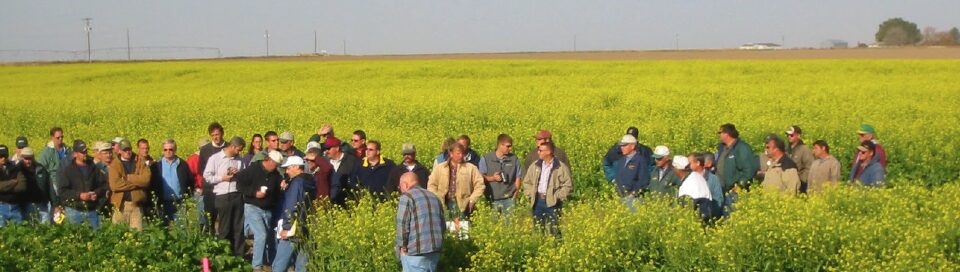
Photo: McGuire
Primary Author: Karen Hills and Chad Kruger
Summary
The Environmental Community views soil health from a very different perspective than other focus areas. Current soil health issues are related to many other ecosystem functions such as climate and flooding. This is highlighted by the emphasis of benefits (e.g., water quality, environmental resiliency) that come about as soil health improves. There was additional emphasis that this focus area perceives a win-win for both the farming community and the environment as soil health is protected and improved. This group noted that the farming community should get paid directly for undertaking practice that benefit soil health, but also agreed that there is a knowledge gap on how to assess this at scale. Importantly, this group emphasized the need to rely on entities that have existing relationships with the farming community rather than take the lead themselves.
Information Collection
Implementation of soil health practices in agricultural systems has the potential to not only improve soil function and agricultural productivity but also have positive impacts on other ecosystem services (e.g., water quality biodiversity). As a result, government agencies and environmental organizations have shown interest in better understanding the role soil health can play in improving the environment and promoting implementation of soil health management practices. However, barriers exist for the environmental community to effectively communicate with farmers in supporting the adoption of management practices that improve soil health. There is a general perception that environmental policies are often weaponized (e.g., costly regulatory compliance burdens and prohibitions) to damage rural and agricultural communities as the environmental movement has largely been urban-centric and often out of touch with rural / agricultural concerns. Because this perception that environmental and agricultural priorities often don’t align and are sometimes in opposition with each other, this road-mapping process directly engaged participants with environmental perspectives in order to find opportunities for win-win scenarios for soil health.
To better understand these concerns and to help prioritize soil health research and education investments, a virtual listening session was held on August 18, 2020 with five participants representing the following organizations: American Farmland Trust, Carbon Washington, Sightline Institute, Washington Department of Natural Resources, and Washington State Conservation Commission. Additional organizations were invited to provide input and comment on the prioritization. Participants were invited based on their interest in the topic and existing involvement in issues in the nexus of agriculture and environment.
2
Current Situation
When asked what the most important soil health issues are in Washington State, participants responded with the following:
- Climate Resiliency. Understanding how soil health ties into climate resiliency – to what extent does soil health improve resiliency in the face of climate change.
- Soil Organic Carbon. Carbon storage can potentially lead to increases in yields while protecting our farmland from long-term climate impacts (e.g., increased waterholding capacity, thus increased drought resilience) and help to mitigate carbon emissions. However, much more research is needed on carbon storage in PNW agricultural soils.
- Farm Economic Viability. How does improved soil health affect the bottom line for farmers – either through internal benefits (improved yields and/or reduced costs for inputs such as irrigation, fertilizer, or fuel) or payments for external benefits (incentives).
- Regulatory Compliance. Improving soil health may be a tool to help farmers better comply with environmental protection regulations. Ideally, voluntary soil health investments could reduce the need for regulations on farmers.
- Flood Mitigation. There are questions that focus on the inter-relation of healthy soils (e.g., good soil structure) and water dynamics, including flooding and water inundation in certain environments (e.g., western Washington).
- Topsoil Protection. Participants mentioned improved soil health leads to protected topsoil, lower water and wind erosion, and overall improvements in water quality by reducing sedimentation and nutrient leaching.
Environmental Benefits that Could Result from Improved Soil Health
Participants ranked the following environmental benefits in order of importance (high to low).
- Soil water-holding capacity
- Climate benefits (e.g., carbon sequestration and greenhouse gas emission reductions)
- Water health (water quality), reduced runoff
- Ecosystem health (e.g., soil microbial community, habitat quality, biodiversity)
- Resilience (economic)
- Agro-economic growth
- Resilience (ecosystem)
- Reduced soil erosion
- Air quality
Benefits can either be thought of as “internal” if they are captured on-farm (e.g., better yields) or “external” if they occur off-farm (e.g., carbon sequestration, reduced downstream pollution). Farmers are likely to be more motivated when the benefits of a soil health strategy accrue directly to the farmer than when the benefits accrue more broadly to the environment. Participants mentioned that there may be a need for marketplaces and incentives that recognize the external benefits to motivate farmers to move in that direction.
In the group discussion the idea of “stacked benefits” was as, or more, important than prioritizing the list of benefits. One respondent described the “layered cake analogy.
Participant Comment
“We want everyone to recognize all the layers of the cake. It’s ok to talk about just the carbon layer, as long as we recognize that there’s a water quality layer on top of it and an agricultural productivity benefit on top of that. We want everyone to be aware of all of the layers of the cake and get to a point where we can value the indirect [or external] layers of the cake as well.”
3
Goals and Priorities
Priorities for moving forward in soil health improvement can be distilled into three major categories:
- We need to know more. Much more research is needed. Initial research should be aimed at carbon storage, water management, and links between soil microbial activity/diversity and food nutritional quality. Crop-specific recommendations and soil health metrics specific to production systems are needed as well as faster, cheaper, and more robust verification methods.
- Make information more accessible. There is a need for an open-source database with metrics for soil health improvement in the region that enables better sharing of data. There is also a need for effective communication of best practices for soil health to conservation districts so that information can be delivered to the producers to implement. Sustainable (longterm) funding sources are needed to help producers adopt practices using science-based information.
- Figure out how to pay people for it. Implementing new practices involves cost and financial risk for farmers. Incentivizing soil health practices makes them more affordable to implement and reduces risk of trying something new. In some cases, the benefits of soil health investments may not accrue directly to the farmer, making incentives critical as a mechanism to support soil health investments by farmers. One idea that was raised is the development of a carbon marketplace that recognizes the contributions of soil carbon sequestration.
Additional comments:
For public lands leased for agricultural use, the question of how to incorporate long-term stewardship of these lands for more sustainable management of the soil and maintain productivity was raised. Carbon sequestration provides a side benefit of soil health that is critical for the planet but isn’t necessarily easy to include in a land lease.
- The linkage between rural economic development and positive climate contributions and better land productivity needs to be explored.
- Resources should be targeted toward researchers to generate leading edge concepts to inform the entire system.
- Resources should be targeted toward encouraging field trials from early adopters who are using practices outside of an academic setting, or where the “study” portion of the grant is small in comparison to the funds to implement the practice.
Participant Comment
“We want everyone to recognize all the layers of the cake. It’s ok to talk about just the carbon layer, as long as we recognize that there’s a water quality layer on top of it and an agricultural productivity benefit on top of that. We want everyone to be aware of all of the layers of the cake and get to a point where we can value the indirect [or external] layers of the cake as well.”
4
Information Gaps
Participants ranked the following information gaps related to environmental benefits of soil health, in order of importance (high to low).
- Data on soil health and crop productivity and quality (cost benefit analysis).
- Data on practices that improve carbon sequestration and length of storage.
- Could incentive-based soil health programs create jobs in Washington? Where? How many? What types of jobs?
- Timing of relationship between management practices and measurable changes in soil health.
- The under-valued importance of soil organic carbon levels for water retention and microbial growth in addition to climate benefits.
- Need for most current information (regionally specific).
- What types (payment levels) of incentives would encourage farmers to enroll in a voluntary program for soil health practices?
- General lack of knowledge among scientists, legislators, farmers, the environmental community, and the general public on benefits of carbon sequestration.
- Data on intercropping vs. cover cropping vs. crop rotation diversification and water use, especially for the inland PNW.
Other topics that were mentioned: What are the main barriers stopping farmers from enrolling in existing incentive-based conservation programs? Relationship between soil health and food quality; Better understanding of practices to affect carbon sequestration; Implications of soil health for nitrous oxide emissions (increase or decrease).
Milestones
Participants listed the following soil health milestones as priorities for Washington State.
- 100% of farms, reporting their soil samples, being financially recognized for the sequestration benefits they produce, funded by a revenue from a carbon tax on 100% of fossil-fuel based CO2 emissions in the state. This type of program should be set up in such a way that protects farmers if things don’t go as expected (five years).
- Leading the nation in soil health programming with opportunities to provide leadership using the diversity of Washington’s agricultural systems to reach and influence other regions (five years).
- Dominant paradigm shift among agricultural producers involving soil health in which people who aren’t thinking about soil health are outliers (10 years).
- Farmers include revenue from ecosystem services in their business plan (15 years).
- A 30% increase in enrollment of farmers and ranchers over the first five years in the Washington Sustainable Farms and Fields grant program for technical and financial support implementing soil carbon enhancement practices.
- A coordinated network of farms established to track short- & long-term improvements in soil health, environmental co-benefits, and economics.
- More education targeted to producers and the general public leading to more people who understand the value of soil health.
- Increased percentage of farms that use annual cover crops (western Washington), or intercrop (in inland PNW).
- Reduced rates of soil erosion.
- Accessible information on benefits, practices, and funding to support soil health practice implementation.
- Increases in soil organic carbon.
- Increases in the number of green jobs supported by soil health initiatives.
- The Voluntary Stewardship Program goals of Washington State have been met.
- Endorsement of soil health efforts by agricultural interest groups, environmental interest groups, tribes, and state and local governments.
5
Barriers to Adoption
The major barriers for agricultural producers to adopt soil health practices, from the perspective of participants were:
- Fear of diminished crop yields, loss of crop insurance, and uncertainty (i.e., producers want to know that a practice will work).
- Expense.
- Timing - how quickly it takes to get an economic return and see the positive impact.
- Lack of technical assistance/knowledge of what will work in a particular situation and metrics used to assess.
- Lack of a critical mass of implementation and demonstration projects (e.g., not seeing neighbors adopt practices).
- Need for promotion by leaders in the agricultural space.
- Resistance to the idea that climate action is needed.
- Reluctance to change, especially if doing so might imply that a long-term, conventional farming method has been “wrong” or “bad”.
Overcoming the Barriers
As previously mentioned, the perception that environmental and agricultural priorities are in opposition can limit the capacity of the environmental community to effectively communicate with farmers in supporting the adoption of soil health practices. Solutions include advancing more successful programs that clearly demonstrate financial benefits for farmers and farmrelated businesses rather than just academic research-related work. As such, it was felt that the environmental community should not be out front on this issue, but rather should support and engage with trusted groups (e.g., local conservation districts, WSU Extension staff, other land managers) and need to raise awareness in the general public about soil health and the benefits that agriculture can create for climate.
Education is needed in urban communities to foster a better sense of appreciation for rural landowners and land managers. It is important for rural participants to feel proud of their landscapes and have benefits of their landscapes and farming practices recognized by urban participants (e.g., innovative intensive grazing practices in beef cattle to benefit climate action). Ecosystem services that land managers can provide should be compensated as a product in addition to the products they are harvesting.
The diversity of the state’s production system is a challenge as there is a need for crop-specific recommendations and soil health metrics specific to diverse production systems to provide feedback to farmers. Likewise, there is a need to measure, report, verify impacts of soil health practices.
The Sustainable Farms and Field Bill was successful because the bill’s proponents were able to show that farmers and environmental groups have shared goals in this case. Agricultural producers want to be good environmental stewards.
Participant Comment
“We need to continue inviting [agricultural producers and environmental groups] to come together and have these conversations on their own turf instead of at the capital. Communication, understanding, and mutual respect are key to developing relationships between the environmental groups and farmers.”
Some financial support could go towards a communications campaign to highlight the good work that farmers are doing and acknowledge the pressures and stress that farmers are trying to manage might help make those human connections easier.
6
Resources/Tools/Opportunities
When asked about current support mechanisms, participants mentioned opportunities to learn from what is underway in other states that could be applied in Washington State. For example, Healthy Soils programs exist in Maryland, California, New Mexico, and Colorado. Other relevant programs include: Maryland’s Ag Water Quality Cost Share Program, Illinois Cover Crops Premium Discount Program, Iowa’s Cover Crop Crop Insurance Demonstration Project, and Michigan’s Agricultural Environmental Assurance Program.
A consortium of groups (American Farmland Trust, Coalition on Agricultural Greenhouse Gases, U.S. Climate Alliance) published Agricultural Solutions for Mitigating Climate Change: A Policy Toolkit for US Climate Alliance State Governments (USCA 2020). Washington State is one of the 25 states within the U.S. Climate Alliance.
Participants also pointed out these possible future opportunities:
- Ecosystem Services Marketplace Consortium has launched a carbon ranching pilot program in Oregon
- Public-private partnerships
- COVID Economic Recovery Funds
- Participants mentioned that economic downturns can slow the momentum of efforts like the soil health initiative. The state of Washington needs to assure that economic recovery efforts and resources include efforts to sustain agricultural productivity and imprint resilience in our food system. This priority needs to take shape in the short-term (next 2-years) so that the positive long-term impacts have time to mature.
- The Washington Food Policy Forum recommendations to the legislature (Food Policy Forum 2019) included soil health in its recommendation to “Promote research and programmatic investments in agricultural viability, resiliency, and market development.”
Current Soil Health Related Support Mechanisms
Participants named the following mechanisms and efforts available at either federal, state, or local levels.
Federal
- NRCS Environmental Quality Incentives Program, federal loans, and other grants.
- USDA cover crop and federal crop insurance (https://www.rma.usda.gov/en/Fact-Sheets/National-Fact-Sheets/Cover-Crops-and-Crop-Insurance)
- Carbon markets (e.g., Nori, Ecosystem Services Market Consortium, Indigo Ag, Soil and Water Outcomes Fund), both voluntary and regulatory (within California)
- Farming for the Future: A Forum Exploring Ecosystem Markets (webinar by American Farmland Trust with Illinois Sustainable Ag Partnership)
- Ecosystem Market Information (handout with summary table of four markets)
Local
Conservation districts cost share and equipment loan programs (e.g., for no-till equipment) and technical assistance (e.g., use of cover cropping, manure, and composted amendments)
Other
- PNW Direct Seed Association’s Farmed Smart Certification (https://www.directseed.org/ farmed-smart-certification)
- Industry-led sustainability initiatives (e.g., Potato Sustainability Alliance)
7
Conclusions
The highest priorities for moving forward on soil health efforts were described as:
- Research that produces convincing data that defines what practices improve or maintain soil health and how soil health benefits agricultural producers and the environment in general.
- Leadership support of soil health efforts from the agricultural community.
- Long-term funding to support implementation of soil health efforts across the state.
- The installation of demonstration sites, specifically linking the economic benefits, shifting the concept from “XYZ doesn’t work here” to “XYZ does work here.”
- The creation of a network community of practice that supports dissemination of information.
- Raising awareness amongst all parties from rural farmer to urban legislator about the opportunities, both environmental and economic, for sequestering carbon in rural landscapes
It’s important to make sure that soil health is tied to resiliency. For example, COVID-19 exposed many vulnerabilities in our agriculture and food system. Understanding how soil health is inter-connected with other aspects of our agriculture and food system is critical for creating a comprehensive effort. Participants emphasized that soil health efforts need to be aligned with issues that are currently of high priority that include food security, environmental justice, support for new farmers, underrepresented groups and prioritization of programs to help targeted groups.
References
Food Policy Forum. 2019. Recommendations Report to the Legislature. Prepared by Washington State Department of Agriculture and Washington State Conservation Commission. June 2019. https://uploads-ssl.webflow.com/5ec2d4f7da309c68cdc0655a/5f400d5fcfb2cc043cfa740c_2019-Forum-Final-Report.pdf
U.S. Climate Alliance. 2020. Agricultural Solutions for Mitigating Climate Change: A Policy Toolkit for US Climate Alliance State Governments. August 2020. http://www.usclimatealliance.org/uscaimpactpartnership.