
Washington Soil Health Initiative Roadmap
Tree Fruit
1
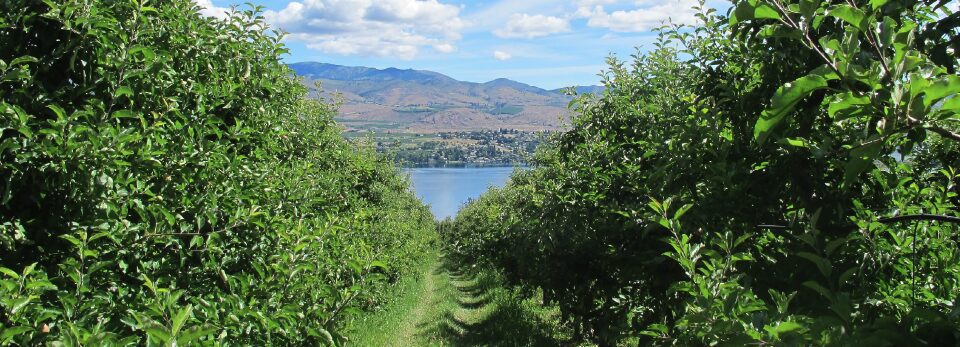
Photo: DuPont
Primary Authors: Tianna DuPont and David Granatstein
Summary
While there is great interest in soil microbiology, soil health is generally not well understood by the tree fruit industry. Soil health related issues include fruit quantity and quality issues as well as soilborne diseases and soils with low water-holding capacity. Replant disease is ranked highly as a research topic by the industry as well as ways to improve soil organic matter, soil health testing, and testing of various inputs. Identified milestones include but are not limited to education/awareness of soil health, improved soil health indicators, adoption of soil health practices, and improved orchard health and productivity. The industry noted barriers that include lack of definition of soil health, clear cohesive best management practices (BMPs), and lack of knowledge. Listed investments included long-term research, soil health indices, soil health outreach, and strategic hiring in the soil microbiology arena.
Challenges related to soil type include:
- Lack of uniformity
- High pH
- Low water-holding capacity
- Low or excess nutrient availability
- Restricted root growth resulting from soil hardpans, impermeable soil layers, physical barriers, and shallow rocks.
- High salinity in soils irrigated with well water or soils that are overfertilized.
Information Collection
In 2020 feedback was collected via in person and online survey as well as focus groups from 37 individuals representing more than 8,170 acres of apples, pears and cherries, the predominant types of tree fruit grown in Washington State (Appendix 2). Participants included orchardists and consultants representing small acreage (13 respondents < 80 acres), mid-sized (20 respondents, 100- 250 acres), and large (four respondents > 1,000 acres). This survey builds upon a previous needs assessment survey in 2015, Washington Tree Fruit Research Commission research priorities, and research and extension surveys of organic growers in 2016 (focus group of nine growers) and 2017 (104 survey respondents). Additional needs assessment was conducted as part of an Orchard Soil Health Workshop held November 4 and 5, 2020 which facilitated feedback from 92 participants through discussion groups and a follow up survey (Appendix 3,4).
2
Current Situation
Knowledge and Definition of Soil Health
In general, soil health is not well understood in the tree fruit industry. Some growers are unfamiliar with the term. Of those who think about soil health many associate soil health with microbial activity and soil life. Others think more about the ability of the soil to provide nutrients. Some growers are very aware and interested in soil health, for example, defining it as “the ability of the soil to provide an environment conducive for the healthy development of plants with an abundant and thriving rhizosphere” (DuPont 2020). Lack of understanding of basic soil fertility is considered a problem. Some industry professionals also point out that many orchardists follow the supplement recommendations of the commercial representatives who have a vested interest without other unbiased information.
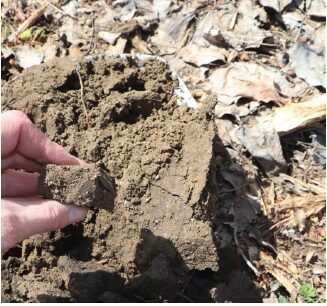
Figure 32. Soils from a gala block. (Photo: DuPont)
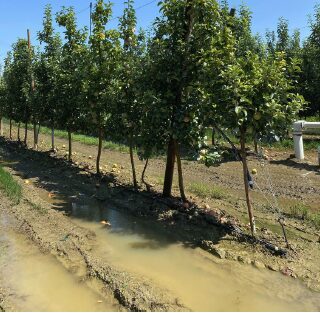
Figure 31. Soil compaction in tree fruit leads to reduced water infiltration. (Photo: Sallato)
Soil Health Issues
Many of the important challenges voiced by industry representatives focus on how soil health is related to tree health, productivity and fruit quality:
- Fruit quality problems related to nutrition (e.g., bitter pit);
- Low yields;
- Low fruit quality (packout);
- Replant disease, nematodes and soilborne pathogens;
- Light/ droughty soils;
- Soils with lead/arsenic toxicity;
- Compaction
Soil types in the Central Washington tree fruit growing region contribute to the challenges. Soils are notoriously patchy with individual fields sometimes composed of multiple soil types resulting in a lack of uniformity throughout the field. In some areas caliche (hardened calcium carbonate) soils result in layers which constrict root growth and water movement and contribute to increased pH, buffering capacity and nutrient imbalances. The soils in the growing region also tend to have a high pH, which can limit micro-nutrient availability.
Additionally, perennial cropping systems have both advantages and disadvantages related to building and maintaining soil health. Because plantings are semi-permanent (13 to 30 years) there are few opportunities to incorporate large amounts of organic matter and few opportunities to rotate for disease management. Cover crops other than grass generally cannot be grown because of the high amount of traffic from equipment down the drive rows and potential to host viruses. Apples, pears, and cherries also do not export very high amounts of phosphorus and so yearly compost applications are not advised as they would lead to build-up of phosphorous levels which contribute to fruit disorders. Recycling of wood material after trees have been removed requires costly machinery for chipping, therefore, most growers prefer to burn the wood instead of incorporating it into the soil.
3
Goals and Prioriies
Research Priorities
In organic grower focus groups, replant disease has been cited as the number one challenge (Dupont 2016a and 2016b). In the 2020 Washington Tree Fruit Research Commission Apple Crop Research Priorities, soil health improvement priorities including testing of available biostimulants was listed as high priority and developing standard operating procedures for alternative controls for replant disease was a medium priority (Hanrahan 2020). The 2016 and 2020 surveys identified a range of research needs including soil biology, soil health testing, replant disease and input testing (DuPont 2020, DuPont 2016a and 2016b). Specific soil health research needs identified by survey participants are listed below.
- Investigate soil biology in relation to disease suppression, nutrient uptake, nutrient availability, and microbiome interactions.
- Identify soil health analysis with simple action steps to rectify deficiencies.
- Analyze non-synthetic and microbial inputs (e.g., mycorrhizae, green manures, biostimulants, microbial inoculants).
- Identify how to improve organic matter (e.g., from wine/ hop residue, compost, green
- manures).
- Research soilborne disease mitigation (replant, crown rot, and nematodes).
- Investigate ways to conserve water, improve water holding ability, manage water across uneven soil types, and buffer from stress.
- Look at interactions between herbicides and soil health.
- Examine how cultivation practices in organic production impact soil organic matter, soil biology, and soil health.
- How to interpret soil tests, fertilize optimally, correct nutrient imbalances, and optimize timing.
Knowledge gaps include:
- What makes quality soil?
- How to build healthy soil?
- Information on soil biology (microbiome) how it can extend the life of an orchard, enhance nutrient cycling, improve root health.
- Testing of ‘natural’ products, bio-stimulants and microbial inoculants.
- Increased understanding of soil fertility and soil chemistry.
- Correlating soil health to fruit pack outs and fruit storage.
Figure 33. Sweet cherry intensive cropping systems. (Photo: Sallato Camona)
4
Milestones
Short-Term (1 to 5 years)
- Provide education (extension) on soil health basics including nutrition and soil biology.
- Increase awareness of the importance of soil health.
- Increase understanding of the biological, and physical as well as chemical properties of soil.
- Understand economics of soil health related practices as they relate to yield, fruit quality, tree health, efficiency, reduction of losses, integration into production system.
- Hire Washington State University Endowed Chair in tree fruit soils.
- Implement new research projects investigating soil biology in orchards.
- Identify a suite of soil health tests/indicators that relate to yield and fruit quality in orchards which can be used to test for limiting factors and track soil health gains.
- Implement new research projects looking at long-term sustainable approaches to managing replant disease.
- Initiate research projects on soil health to conserve water and buffer environmental stress in the face of climate change.
Medium-Term (5 to 10 years)
- Build a database of soil tests and fruit quality so we can look at correlations.
- Soil health testing available to growers through university or commercial labs.
- Establish program of soil health education (extension) helping growers understand and apply new research on soil biology, replant disease, soil health testing, nutrition, and climate change mitigation.
- Growers using refined soil health test/ indicators to identify limitations and track soil health building practices.
- Establish best practices and standard operating procedures for optimal soil health.
- Reduce variability in orchards with organic matter amendments or other soil health building practices.
- Reduce bitter pit and other disorders related to nutrient uptake and water/plant stress.
Long-Term (10 to 20 years)
- Growers and consultant have tools and knowledge to examine limiting factors beyond nutrients AND fix them.
- Growers using practices which build and sustain large, active biological communities in their soils which support healthy trees and nutritious, high-quality fruit.
- Orchard health, productivity, and fruit quality improved.
- Orchard ability to conserve water and provide environmental benefits improved.
5
Barriers to Adoption
- Lack of a definition of soil health for perennial fruit crops and lack of consensus on how to measure it.
- Lack of clear cohesive BMPs for soil health in perennial tree and vine crops.
- Lack of knowledge by producers about what soil health is, its importance and how to manage it.
Core Investment Areas
- Long term research plot for tree fruit to look at BMPs for soil health over time including organic practices.
- Research on soil health indices and BMPs.
- Funding for creating soil health outreach and training materials such as videos, animations, illustrations, demonstrations.
- Research/ extension faculty position focused on soil microbiology in perennial crops.
- Engineering solutions for soil health monitoring (data analysis, integration of data collection and sensors, image technology), and/ or solutions for pesticide/weed management. Incentives or restrictions to burning, while economic alternatives to processing residues/compost.
References
- DuPont, S.T. 2020. Tree Fruit Soil Health Initiative Survey. Washington State University: Wenatcheee, WA. Appendix 2.
- DuPont, S.T. 2016a. North Central Washington Tree Fruit Extension Program Needs Assessment. Washington State University.
- DuPont, S.T. 2016b. Organic Research and Extension Needs Focus Group. Washington State University:Wenatchee, WA.
- DuPont, S.T. and D. Granatstein. 2017. Organic Tree Fruit Producers Needs Assessment. Washington State University: Wenatchee, WA. Appendix 3.
- DuPont, T., A. McGuire, B. Sallato, D. Grantsetstein, L. Kalcsits, and T. Forge. 2020. Discussion Groups and Survey results from the Soil Health in Orchards Workshop, November 4-5 2020. Appendix 4.
- Hanrahan, I. 2020. 2020 Apple Crop Protection Research Priorities. Washington Tree Fruit Research Commission.