

Washington Soil Health Initiative Roadmap
Juice and Wine Grapes
1
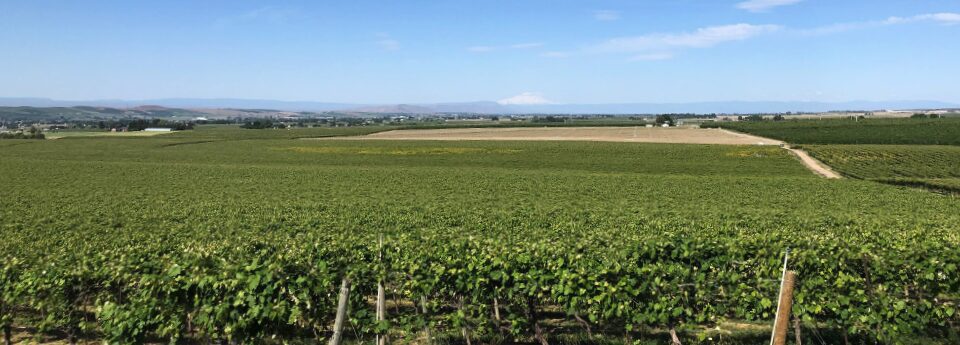
Photo: Sullivan
Primary Authors: Gwen Hoheisel, Michelle Moyer, and Markus Keller
Summary
Juice and wine grape growers have distinct soil health needs. Nutrient cycling and soilborne pests were listed as the biggest issues. Potential solutions to these issues include the use of rootstocks; a topic that needs more research. The industry noted a need for an increased investment in public university research capacity in the form of additional faculty and improved facilities.
Overview
Washington is the second-leading wine grape (Vitis vinifera) producing state in the nation. The state has 16 American Viticultural Areas (AVA), up from only five a decade ago. Wine grape acreage exceeds 60,000. The number of wineries in Washington State has more than quadrupled in the past 15 years, from 240 to over 1000. The Columbia Valley AVA comprise 94% of the state’s total wine grape acreage (NASS 2019, WA Wine Commission 2020). Ninety-nine percent of Washington State’s wine grapes are produced east of the Cascade Mountains, where production is dependent on the use of irrigation. Vineyards west of the Cascade Mountains represent a small part of the state’s wine grape industry. The vineyards in this cooler climate have historically been small in acreage but are increasing in number, focusing on northern European varieties suited for the climate (Moyer and O’Neal 2014). Eastern Washington is also the nation’s leading producer of juice grapes with nearly half of the tonnage produced in the US. However, there is a downward trend in juice grape production with now less than 200,000 tons annually and an annual reduction of 7-10% in acreage and tonnage for the last five years. The price of juice grapes has recently fluctuated between $110 and $230 per ton and an acre can produce on average between 8 and 15 tons depending on age of the vines and farming practices (WA State Concord Grape Research Council). In contrast, Washington wine grape production was increasing until recently with annual yields between 200,000 and 270,000 tons in the past five years. The price of wine grapes is highly variable ranging from $800 to over $4,000 per ton and dependent on specific cultivar, location grown, and fruit quality.
Current Situation
A survey on soil health sent through WSU’s Irrigated Ag listserv in early 2020 had 23 respondents listing grapes (wine or juice) as their primary crop. Of a variety of issues listed, nutrient cycling was rated as an issue of high importance by the greatest number (77%) of grape respondents. The soil improving practices of greatest interest in grape production are cover cropping and compost application. Topics for research or additional information that were considered highly important by grape respondents included strategies for improving soil health (85%), benefits of soil health (73%), monitoring soil health (67%), and economics of soil health (65%). The full survey results are detailed in Appendix 1.
The term ‘soil health’ can vary in meaning to many in the grape industry. Historically, soil research and priorities have focused on nutrient management/deficiencies, soil structure and irrigation, and terroir as it relates to a specific AVA. The industry has funded decades of research on nutrient management and Concord foliar chlorosis as well as irrigation practices and their effects on vine vigor and grape quality. Other major soil issues include nematodes, phylloxera, and replant disease. Recently in Concord grapes, the industry has explored functional microbe ecology to improve nutrient uptake, but that work is not yet conclusive. Despite the longterm reliance on irrigation in this arid climate, including the use of deficit irrigation for wine grapes since the mid-1990s, salinity is not yet considered a concern among industry members.
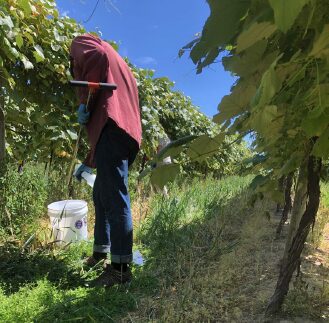
Figure 24. Researchers soil sampling to evaluate soil health in vineyards (Photo: Sullivan)
2
Goals and Priorities
Juice and wine grape grower priorities differ based on the factors influencing the price of grapes. The juice grapes must meet a minimum sugar content (Brix level) but then profit is based almost entirely on tonnage. Juice grape farmers try to maximize yields per acre. Wine grape farming goals are rarely driven by maximum yield but rather by berry attributes desired by a winemaker, and include qualities such as Brix, various fruit chemistry attributes, berry size, and color. In fact, many wine grape sale contracts limit the allowable yield far below the vine capacity. Therefore, the function of soil health would have different goals in each commodity. However, two common goals would be: 1) to improve soil health that maximizes nutrient uptake to minimize nutrient input under specific irrigation strategies, and 2) to improve control methods for soilborne pests (plant parasitic nematodes and the insect pest phylloxera) and replant disease without detrimentally affecting soil health and beneficial nematodes, fungi, and bacteria.
The Washington State Wine Commission and the Concord Grape Research Council identify priorities annually. Those specifically related to soils involve nutrient, water, and pest management and are listed below:
Viticulture Production Efficiency and Profitability
- Improve water use efficiency/water savings to optimize grape production and wine flavors.
- Understand impact of water quality (e.g., salinity, alkalinity) on vine health.
- Develop nutrient management for optimal vine health.
- Explore strategies for iron chlorosis, particularly in juice grapes.
Pest Management (including sustainable and organic)
- Develop/refine strategies for all pests (e.g., insects, weeds) of economic impact potential, with emphasis on stable, biological systems.
- Develop nematode management strategies (i.e., efficacy of control measures, economic thresholds, resistant rootstock).
Management of plant parasitic nematodes and newly discovered populations of phylloxera can have a direct negative impact on soil health as chemical strategies have non-target impacts on soil biology. New plantings are particularly susceptible to pest pressure and can be difficult to establish without some control mechanism. Unfortunately, all registered pesticides used at standard rates essentially suppress, rather than eliminate, pest populations. The hope is to minimize populations long enough to allow newly planted, young vines enough years to become established and basically tolerate pest populations as they increase. Long term control options and research have focused on use of rootstocks and green manures like mustards planted prior to vineyard establishment. Rootstock research has been conducted worldwide since the late 1800s and in Washington since the late 1990s, and there are many viable choices that are resistant to both nematodes and phylloxera.
Rootstocks can also have an impact on horticultural parameters like growth patterns, yield and fruit composition, water and nutrient uptake, and winter survival. An understanding of the performance of specific rootstock-scion combinations in various soils and microclimates will only occur through long term research and extension projects and knowledge gained from grower plantings.
Iron-induced chlorosis is a yellowing of leaves due to high soil pH and the lack of plant-available iron. Symptoms are relatively common in heavily irrigated Concord grapes; they can be seen on a single vine or entire sections of a vineyard and often lead to reduced grape yield and quality due to a lack of photosynthesis. Own-rooted (ungrafted) juice grapes are more susceptible than wine grapes, due to their natural preference for low pH soils. Anything minimizing photosynthesis, which produces energy and carbohydrates for the plant, can be a problem for juice grapes given that they are grown for maximum yield. Years of work on iron chlorosis has been funded, yet it persists as a problem with Washington juice grape growers. Looking at the role of soil health, microbes, and microbe function has been listed as a priority in juice grapes.
Cover cropping to prevent soil erosion and aid in weed management is critical. Grapes are drip irrigated so there is minimal moisture mid-row.
Growers are often concerned that cover crops compete with water and nutrient resources for grapes and may possibly decrease berry quality. Yet research has shown that in the right conditions it can be a powerful tool to help control vine vigor and assist with canopy management (Tesic et al. 2007).
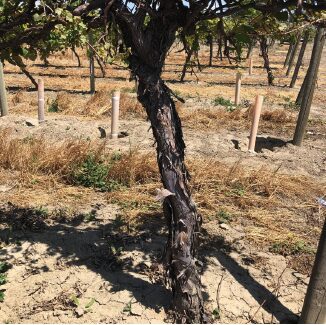
Figure 25. Grape plant exhibiting chlorotic symptoms. (Photo: Sullivan)
Volunteer plants can easily establish as cover crops mid-row, but intentional establishment of specific cover crops can be more challenging with the limited water. More than a decade ago, there was research on testing different grasses and legumes as cover crops. There has also been research on native plants used to attract beneficial insects and cover crop use, but it has not been widely adopted. Current research is focusing on the use of Litchi Tomato, oilseed radish, clover, and/or brassicas as a pre-plant cover crop with the intent of baiting nematodes. Of interest to viticulturists is the use of complementary cover crops that mitigate soil erosion, weeds, and possibly fix nitrogen.
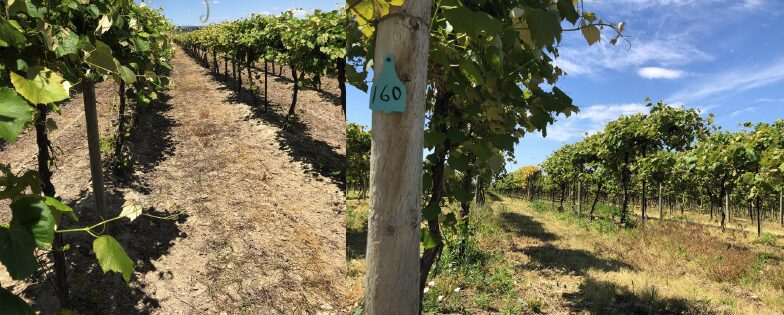
Figure 26. Juice grapes with no ground cover (left) and with grass cover (right). (Photo: Sullivan)
3
Milestones
Many milestones have already been accomplished. In particular, a 30% reduction in irrigation water use and pumping costs is attributed to WSU research on deficit irrigation strategies for red wine grapes to control canopy growth and improve fruit quality. Improving nutrient and pest management strategies continue to be priorities. However, significant knowledge must be gained on rootstock-scion combinations in various mesoclimates and soils to meet the demands of new plantings and replant situations as the wine grape industry is embarking on large-scale vineyard replanting in the face of ongoing or increasing pest pressure. Some Washington studies have shown minimal effects of rootstock on grape quality yet some effects on growth and yield of different rootstock-scion combinations (Harbertson and Keller 2012; Keller et al. 2012). Juice grape production is a struggling industry with a narrow profit margin and producers would benefit from nutrient management strategies that optimize production.
Barriers to Adoption
Grapes are a perennial crop meaning that it is at least three years until full production with plantings lasting 30 to more than 50 years, and replanting is a significant economic decision. Likewise, many modifications or improvements to soil health need to be conducted after plant establishment. Soil modifications pre-plant are an option, but that only serves the grower for a short period in the life of a vineyard and a small part of the industry.
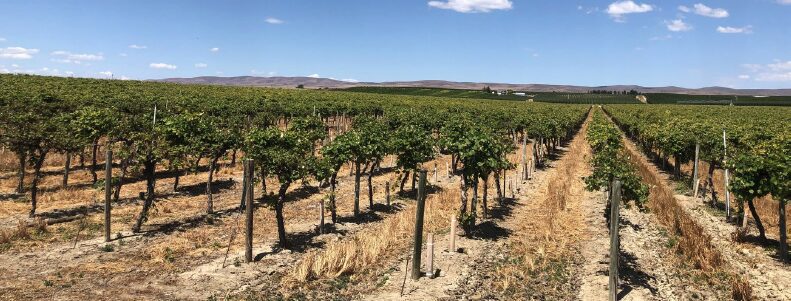
Figure 27. Mowed ground cover between juice grape rows. (Photo: Sullivan)
Resources/Tools/Opportunities
Both wine and juice grapes have an engaged industry that has funded research and is very well organized. There is a dedicated set of researchers in pathology, entomology, and horticulture. A Viticulture and Enology (V&E) major was created in 2002 for undergraduates, and the V&E extension certificate for industry members was created in 2003. In 2006 a V&E building was constructed at the WSU Irrigated Agriculture Research and Extension Center (IAREC) in Prosser, and in 2015 the Ste. Michelle Wine Estates WSU Wine Science Center (WSC) opened at WSU Tri-Cities. The program is supported by vineyards at IAREC and WSC, a research and teaching winery at the WSC, and specialized laboratories at the WSC and IAREC. The program’s national and international reputation continues to grow, and the working relationship between its faculty and the industry is exemplary.
Recently, federal Specialty Crop Research Initiative funds and WSDA Specialty Crop Block Grant funds were awarded. The goal is to improve precision irrigation and nutrient management as well as conduct a statewide soil health assessment of seven specialty crops including wine grapes. These efforts, led by a WSU viticulturist, WSU soil health specialist and the WSDA Natural Resources Assessment Section, hope to improve metrics for evaluating and tracking soil health as well as management in Washington wine grape systems.
Washington State University no longer has dedicated weed or soil scientists working in grapes or perennial fruit crops. In 2021, USDA Agricultural Research Service hired a soil scientist located in Prosser, Washington, and his research focus on soil microbial communities is a collaboration opportunity for scientists working in related disciplines. There is a strong relationship between industry and research scientists and extension educators. Some industry members participate on national boards, like the National Grape Research Alliance, that bridge state and national issues and opportunities. WSDA also supports and cooperates with the grape industry. The industry has continually asked for quick and assertive registration of new products that allow for proper rotation of chemistries to minimize pesticide resistance. In addition, WSDA has developed regulations related to the import of plant material. Continued industry engagement and input is essential in making these regulations function well for the industry while protecting it from invasive pests, diseases, and viruses.
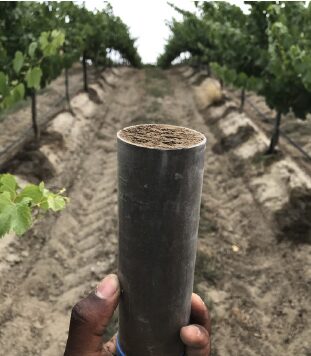
Figure 28. Soil scientists sampling soil bulk density in vineyards to quantify soil health. (Photo: Sarpong)
Core Investment Areas
The WSU Viticulture & Enology (V&E) strategic plan (http://wine.wsu.edu/2021/09/01/ve-strategicplan/) prioritized many research, teaching, and Extension needs. However, those related directly to soil health are included here. Despite the infusion of five new faculty positions in 2003 and expanding facilities, the V&E Program has been unable to keep pace with the tremendous growth of Washington’s grape-related industries to more than 70,000 acres and nearly 1000 wineries and juice processors by 2019. Compared to other V&E programs in different states, we have half the number of faculty fully engaged in the V&E program. Prioritized faculty positions related to the Washington Soil Health Initiative would include soil and weed scientists specializing in irrigated soil management in perennial crops as well as a plant biochemist/molecular biologist to progress knowledge in fundamental grapevine biology and the plant’s interaction with the biotic and abiotic environment. Support positions include a vineyard and greenhouse manager for WSU Prosser and Tri-cities as well as permanent funding for technicians who support research and Extension.
There is a need for additional core facilities and other infrastructure that are crucial to achieve the strategic goals of the V&E Program. These include greenhouses for year-round pot experiments in viticulture (2100 ft2), bird-proof screen house (2100 ft2) for outdoor pot experiments, two plant growth rooms, expansion and support of research vineyards (10 acres) to permit alternating field trials under homogeneous conditions, upgrades and maintenance of vineyard and laboratory equipment, and a mechanical harvester and pruner to reduce labor costs.
4
References and Resources
- East, K., I. Zasada, J. Tarara, and M. Moyer. 2020. Field Performance of Winegrape Rootstocks and Fumigation during Establishment of a Chardonnay Vineyard in Washington. American Journal of Enology and Viticulture https://doi.org/10.5344/ajev.2020.20023
- Harbertson, J. and M. Keller. 2012. Rootstock Effects on Deficit-Irrigated Winegrapes in a Dry Climate: Grape and Wine Composition. American Journal of Enology and Viticulture 63:40-48. https://doi.org/10.5344/ajev.2011.11079
- Keller M. 2005. Deficit irrigation and vine mineral nutrition. American Journal of Enology and Viticulture 56: 267-283.
- Keller M., Smithyman R.P., Mills L.J. 2008. Interactive effects of deficit irrigation and crop load on Cabernet Sauvignon in an arid climate. American Journal of Enology and Viticulture 59: 221-234.
- Keller, M., Mills, L., Harbertson, J. 2012. Rootstock effects on deficit-irrigated wine grapes in a dry climate: Vigor, yield formation, and fruit ripening. American Journal of Enology and Viticulture 63: 29-39. https://doi. org/10.5344/ajev.2011.11078
- Moyer, M and O’Neil, S. 2014. Pest Management Strategic Plan for Washington State Wine Grape Production. Industry white paper. https://ipmdata.ipmcenters.org/documents/pmsps/WA_WineGrape_PMSP_2014.pdf
- United State Department of Agriculture National Agricultural Statistics Service. 2019. https://www.nass.usda.gov/
- Tesic D., Keller M., Hutton R.J. 2007. Influence of vineyard floor management practices on grapevine vegetative growth, yield, and fruit composition. American Journal of Enology and Viticulture 58: 1-11.
- Washington Wine Commission. 2020. https://www.washingtonwine.org
- WSU Viticulture and Enology Program (V&E) Strategic Plan 2017-2026. http://wine.wsu.edu/2021/09/01/ ve-strategic-plan/